The Revolutionary Response That Changed Television Forever
In the early 1970s, American television was still clinging desperately to the sanitized fantasy world of previous decades. Married couples slept in twin beds. Problems were solved in thirty minutes. Nobody discussed race, religion, or politics. And heaven forbid anyone acknowledge that married people actually shared a bedroom—or worse, that they might not look like Hollywood starlets while doing so.
Then “All in the Family” exploded onto screens in 1971, and suddenly everything changed. The show didn’t just push boundaries—it demolished them entirely. And when critics inevitably came for the groundbreaking series, Jean Stapleton, the brilliant actress who portrayed Edith Bunker, delivered one of the most perfect responses in television history.
The Outrage Machine Kicks Into Gear
The backlash against “All in the Family” was immediate and fierce. Viewers wrote angry letters. Religious groups organized complaints. The criticism came from every direction, but some of the most passionate outrage centered on something that seems almost quaint by today’s standards: Archie and Edith Bunker shared a bed on television.

Not only did they share a bed, but they appeared together in their nightclothes. They behaved like an actual married couple of several decades, complete with all the unglamorous reality that entailed. For audiences accustomed to the pristine perfection of Lucy and Desi Ricardo—who famously had to sleep in separate beds on “I Love Lucy”—the Bunkers were shocking, even offensive.
Jean Stapleton received mountains of correspondence from outraged viewers. In an interview with The Morning Call, she shared some of the criticism: “Some think All in the Family is dirty. I get a lot of, ‘How could you, a Christian woman, do this?’ notes. Others are highly offended when Archie and I are in bed together, and one viewer pointed out that ‘you and Mr. O’Connor aren’t attractive in your nightclothes.'”
Let that sink in for a moment. Viewers were so scandalized by the show’s realism that they took time to write letters complaining that Jean Stapleton and Carroll O’Connor weren’t attractive enough in their pajamas. The implication was clear: if television was going to show married couples in bed together, they should at least be glamorous about it.
Two Words That Changed Everything
Stapleton’s response to all this criticism was neither defensive nor apologetic. She didn’t launch into a lengthy explanation about artistic freedom or the importance of breaking taboos. She didn’t cite statistics about how real marriages work or defend the show’s creative choices with complex arguments.
Instead, she delivered two perfect words: “We’re real.”
That simple, powerful statement cut through all the manufactured outrage and exposed the real issue. Critics weren’t upset because “All in the Family” was dirty or vulgar or inappropriate. They were upset because it held up a mirror to actual American life, and many viewers found their own reflection uncomfortable.
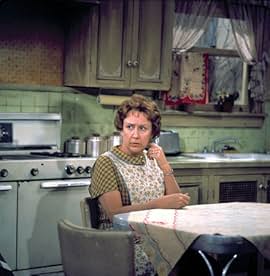
Archie and Edith Bunker, originally based in part on creator Norman Lear’s own parents, represented something television had never truly shown before: an authentic marriage. Not a Hollywood fantasy. Not a sanitized sitcom version where problems resolve neatly and everyone looks perfect. A real marriage, with all its complexities, contradictions, frustrations, and genuine affection.
Yes, they shared a bed. Yes, they wore unglamorous nightclothes. Yes, they sometimes bickered and disagreed and struggled with difficult topics. That’s what actual married couples do. The Bunkers felt like people you might know—or be—rather than idealized characters performing marriage for an audience.
The Deeper Impact of Reality
Stapleton understood that the show’s realism extended far beyond bedroom scenes. In an interview with The Christian Science Monitor News Service, she articulated the broader impact: “I believe that the overall effect of the show was positive and constructive.”
She also recognized something profound about the relationship between television and society. The show wasn’t just reflecting reality—it was participating in real-time social change. Speaking with the Corpus Christi Caller-Times about her character’s evolution, Stapleton observed: “Edith is growing, as women are growing.”
That statement reveals the genius of both the character and the actress who portrayed her. Edith Bunker started as what appeared to be a stereotypical submissive housewife, the “dingbat” that Archie routinely dismissed and patronized. But over the course of the series, Edith developed into something far more complex and powerful. She questioned authority, including Archie’s. She stood up for her beliefs. She experienced genuine crises of faith and identity. She grew as a person, mirroring the broader women’s liberation movement happening across America.

The show’s willingness to tackle unsanitized, in-depth views of society—from racism to women’s rights to economic struggles—meant that the writers weren’t shy about getting to the real meat of every story, regardless of what censors demanded. But that authenticity came with a price: constant criticism from viewers who preferred television to remain a comfortable fantasy.
The Legacy of “We’re Real”
Jean Stapleton’s two-word response—”We’re real”—became more than just a clever comeback to critics. It became the philosophical foundation for everything “All in the Family” represented and everything modern television would eventually become.
Today, we take for granted that television shows depict authentic relationships, tackle controversial topics, and show characters who look and behave like actual human beings rather than Hollywood fantasies. We expect our entertainment to engage with real social issues, to feature diverse perspectives, and to present marriage and family life with all its messy complexity.
None of that would exist without shows like “All in the Family” and performers like Jean Stapleton who had the courage to insist on authenticity even when audiences resisted it.

The Uncomfortable Truth
The critics who complained that Archie and Edith shared a bed, who objected to their unglamorous nightclothes, who called the show “dirty” and “vulgar”—they weren’t really upset about what they were seeing. They were upset about what they were recognizing: themselves.
The Bunkers made viewers confront the reality of their own marriages, their own prejudices, their own struggles with social change. That’s uncomfortable. It’s much easier to watch television that presents an idealized version of life, where everyone is attractive, all problems are solvable, and real issues simply don’t exist.
But as Jean Stapleton understood, that comfort comes at a cost. Television that refuses to engage with reality becomes irrelevant, a pretty distraction that offers nothing meaningful. Television that embraces reality—with all its imperfections, contradictions, and uncomfortable truths—becomes something far more valuable: a mirror that helps us understand ourselves and our society better.
“We’re real” wasn’t just a response to criticism. It was a revolution in two words.