The Role That Got Away: How Jean Stapleton’s Rejection Created Television Magic
When Jean Stapleton finally hung up Edith Bunker’s apron after nearly nine unforgettable seasons on “All in the Family,” Hollywood came knocking with another career-defining opportunity. What happened next would shape television history in ways no one could have predicted, leaving fans to forever wonder about one of the greatest “what ifs” in entertainment history.
The Woman Behind America’s Most Beloved Sitcom Wife
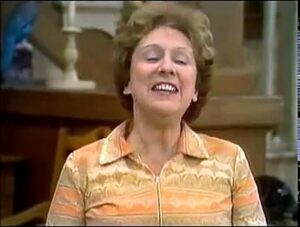
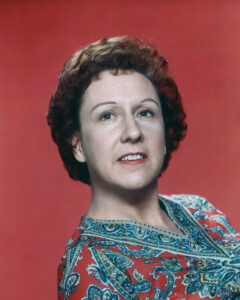
Jean Stapleton didn’t just play Edith Bunker—she embodied her. For eight and a half seasons, she brought to life a character who was simultaneously naïve and wise, simple yet profound. In a revealing interview with the Television Academy Foundation before her death in 2013, Stapleton opened up about the woman who made her a household name.
“A very compassionate individual,” Stapleton reflected on Edith’s essence. “A peculiar way of arriving at things. Not very bright. Not well educated. But a great sense of wisdom and heart.” She described Edith as someone with “just great love for everyone” and “a perception about people that was instinctive, intuitive. But certainly not intellectual.”
This wasn’t just acting—it was alchemy. Stapleton transformed what could have been a one-dimensional character into a beloved icon who represented the heart and soul of one of television’s most groundbreaking comedies. Edith’s character was particularly special to creator Norman Lear, who had based her on his own mother, a fact that would later make Stapleton’s departure even more emotionally complex.
The Offer That Could Have Changed Everything
In 1983, fresh from her departure from “All in the Family,” Stapleton received an offer that would make most actors jump at the chance. She was approached to play Jessica Fletcher, a mystery novelist turned amateur detective, in a new series called “Murder, She Wrote.”
The role seemed perfect on paper—a leading character in a primetime drama, a chance to showcase a different side of her talent. But Stapleton saw something different. She saw another lengthy commitment to a television series when she had just escaped from one.
“I had just come off of eight and a half years on a series,” Stapleton explained candidly. “It didn’t seem to be the kind of role that I could really get my teeth into. It didn’t have enough color for me.”
But there was more to her hesitation than creative concerns. Stapleton had discussions with the show’s producers about potential changes to the character, hoping to add more depth and dimension to Jessica Fletcher. What she encountered was resistance.
“I found that those in charge were rather rigid about changes, which I had discussed,” she recalled. The collaborative, creative freedom she had enjoyed on “All in the Family”—what she called “free theater”—seemed absent from this new opportunity. She thought to herself, “Well, it’d be a hard row. This isn’t for me now, this time. I don’t want to commit to this.”
Enter Angela Lansbury: The Perfect Jessica Fletcher
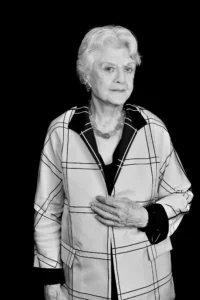
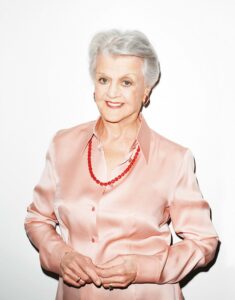
When Stapleton turned down the role, the producers turned to another legendary actress: Angela Lansbury. The British-American star, known for her work in film and theater, was looking for television exposure—and “Murder, She Wrote” would give her exactly that, and so much more.
The show became a phenomenon, running for 12 successful seasons from 1984 to 1996 and cementing Lansbury’s status as a television icon. Jessica Fletcher became as synonymous with Angela Lansbury as Edith Bunker had been with Jean Stapleton.
Years later, whenever the two actresses crossed paths, Lansbury would express her gratitude in the most gracious way possible. “Every time I saw Angela during those years, she’d say, ‘Thank you, Jean,'” Stapleton remembered with warmth.
There was no bitterness in Stapleton’s recollection, only admiration for how perfectly things had worked out. “It’s quite right and perfectly cast,” she said. “Angela was standing in the wings wanting some TV exposure, which she didn’t have. So that gave it to her. She was wonderful. Just right for it.”
The Heartbreaking End of Edith Bunker
When Stapleton finally decided to leave “All in the Family,” the show faced a dilemma: what to do with Edith? For creator Norman Lear, whose own mother had inspired the character, the decision was particularly painful.
In a phone conversation that Stapleton would never forget, Lear struggled to accept Edith’s fate. “Norman said on the phone, ‘I just haven’t been able to say yes to this,'” Stapleton recalled. Trying to ease his pain, she gently reminded him, “Norman, you realize don’t you, she is only fiction.”
The long pause that followed spoke volumes. When Lear’s voice finally returned, it carried the weight of genuine grief: “She isn’t.”
But the consummate professional, Lear eventually gave his approval, and the show wrote Edith’s death into the storyline—a moment that devastated fans across America and marked the end of an era.
Legacy of Two Icons
Looking back, it’s impossible to imagine “Murder, She Wrote” without Angela Lansbury, just as “All in the Family” without Jean Stapleton is unthinkable. Stapleton’s decision to turn down Jessica Fletcher wasn’t about fear or regret—it was about knowing herself, understanding her limits, and recognizing what she needed creatively.
Both actresses left indelible marks on television history, proving that sometimes the roles we don’t take are just as important as the ones we do. Jean Stapleton gave us Edith Bunker’s compassionate wisdom, while Angela Lansbury gave us Jessica Fletcher’s sharp intellect and tenacity. Television—and audiences—were richer for having both.
The question of “what if” will always linger, but perhaps that’s the beauty of it. We got to see two extraordinary actresses shine in roles that were perfectly suited to them, creating characters that continue to resonate with audiences decades later. And isn’t that, after all, what great television is all about?