The Mirror We Didn’t Know We Needed: How “All in the Family” Forced America to Face Itself
Television has always been more than just entertainment. It’s a mirror, a teacher, and sometimes, an uncomfortable wake-up call that forces us to confront truths we’d rather ignore. But what happens when that mirror reflects something we don’t want to see—especially when that something is ourselves?
The Universal Search for Connection
We’ve all been there, haven’t we? Scrolling through endless personality quizzes at midnight, desperately trying to figure out which “Friends” character matches our personality, or which “Office” character we’d be in real life. It’s more than just fun and games—it’s a fundamental human need to feel understood, to find validation that we’re not alone in this chaotic world.
Finding characters on television who mirror our quirks, our struggles, and our triumphs gives us a sense of belonging. We laugh at their jokes because we’ve told the same ones. We cry at their heartbreaks because we’ve felt that pain. We root for their victories because we’re searching for our own.
But sometimes, the reflection staring back at us from the screen isn’t quite what we expected—or wanted—to see.

When the Mirror Reveals Too Much
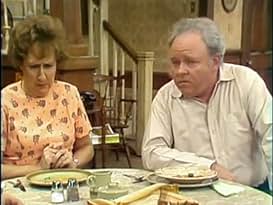
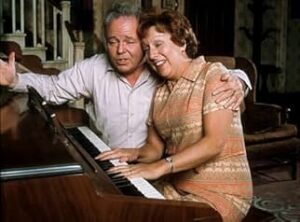
Jean Stapleton, the legendary actress who brought Edith Bunker to life on “All in the Family,” received thousands of letters during her time on the groundbreaking sitcom. Fan mail was nothing new for the beloved star, but one particular letter stood out among the rest—not because it was filled with praise, but because it revealed something far more profound about the show’s impact.
In an interview with The Star-Phoenix, Stapleton shared a story that perfectly encapsulated the transformative power of Norman Lear’s revolutionary series. A woman had written to her describing what she called her “most glorious moment”—a moment that didn’t involve her at all, but rather her husband.
The scene was ordinary enough: her husband was outside doing yard work, growing increasingly frustrated with whatever task had him stumped. The air filled with the kind of colorful language that would make sailors blush. He cursed, he grumbled, he complained—all the typical reactions of a man battling with stubborn lawn equipment or an uncooperative garden.
Then, suddenly, everything stopped.
In a moment of stunning self-awareness, the husband froze mid-rant. The realization hit him like a thunderbolt. “Good grief,” he exclaimed, his voice likely a mixture of horror and embarrassment, “I sound just like that Archie on TV.”
The Power of Uncomfortable Recognition
This wasn’t just a funny anecdote for Stapleton to share at cocktail parties. It was evidence of something revolutionary happening in American living rooms every week. “All in the Family” wasn’t just making people laugh—it was holding up a mirror to American society, and that mirror wasn’t always flattering.
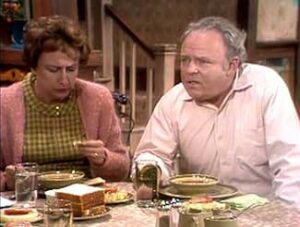
Archie Bunker, played brilliantly by Carroll O’Connor, was designed to be a caricature of the working-class bigot. He was loud, opinionated, narrow-minded, and often downright offensive. Creator Norman Lear intentionally made Archie an exaggerated version of the prejudices that lurked in many American households, hoping that by making these attitudes ridiculous, people would recognize their own biases and question them.
But here’s what made the show genius: Archie wasn’t a monster. He was human. He loved his family. He worked hard. He had fears and insecurities like everyone else. And that made him relatable—uncomfortably relatable.
When that husband in his yard recognized himself in Archie Bunker’s outbursts, he wasn’t just noticing a similarity in vocabulary. He was confronting a deeper truth about his own behavior, his own attitudes, and perhaps his own need to change.
The Art of the Subtle Lesson
In her interview with the Commercial Appeal-Chicago Daily News Service, Stapleton touched on something crucial about what made “All in the Family” so effective. The show didn’t need to be preachy or heavy-handed like an after-school special. It didn’t need characters breaking the fourth wall to explain the moral of the story.
Instead, the true power of the series lay in its understated moments—the quiet looks exchanged between characters, the subtle reactions, the way Edith’s gentle wisdom would cut through Archie’s bluster without a single raised voice. These moments allowed viewers to draw their own conclusions, to have their own epiphanies, just like that husband in the yard.
The show trusted its audience to be intelligent enough to recognize themselves, even when that recognition was uncomfortable. It didn’t tell people they were wrong; it showed them, through comedy and humanity, why certain attitudes and behaviors were worth questioning.
Television as a Catalyst for Change
That letter Stapleton received represents countless untold stories of personal transformation sparked by “All in the Family.” How many dinner table conversations were changed because of what families watched together? How many people reconsidered their prejudices after laughing at Archie’s absurd logic? How many relationships were strengthened because someone finally saw themselves clearly and decided to do better?
This is the true legacy of groundbreaking television. It’s not just about ratings or awards or cultural impact measured in academic studies. It’s about that one husband who stopped cursing in his yard and had a moment of clarity. It’s about his wife feeling so moved by that transformation that she took the time to write a letter to an actress she’d never met, just to say, “Your show changed something in our home.”
The Mirror Still Reflects Today
We still search for ourselves in television characters today, taking those quizzes, debating which character we’d be, finding pieces of ourselves in fictional people. But the real question isn’t which character we’re most like—it’s what we do when we recognize aspects of ourselves we don’t like.
That husband in the yard had a choice when he heard Archie Bunker in his own voice. He could have laughed it off, dismissed it, gone back to cursing and complaining. Instead, his wife described it as her “most glorious moment,” suggesting he chose differently.
That’s the power of truly great television. It doesn’t just entertain us. It challenges us, reflects us, and sometimes—if we’re brave enough to really look—it changes us.
And sometimes, that change starts with a simple, startling realization: “Good grief, I sound just like that Archie on TV.”