When Television’s Most Famous Father Faced His Most Impossible Role
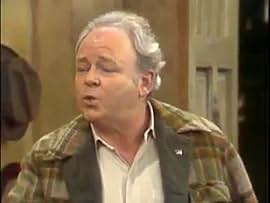
Carroll O’Connor spent nine seasons making America laugh, cringe, and think as Archie Bunker, the lovable bigot from Queens who became one of television’s most iconic characters. He won four Emmy Awards, became a household name, and created a character so memorable that decades later, people still quote his malapropisms and mispronunciations. But behind the cameras, behind the studio audience laughter, behind the accolades and the fame, Carroll O’Connor was living every parent’s worst nightmare—and he was losing.
On March 28, 1995, Carroll received a phone call that would shatter his world completely. His only son, Hugh O’Connor, had taken his own life at the age of thirty-two. The decades-long battle against drug addiction had finally claimed its most devastating casualty. In the raw aftermath of that unspeakable loss, Carroll spoke words that cut straight to the bone of parental grief: “Nothing will give me any peace. I’ve lost a son. And I’ll go to my grave without any peace over that.”
But this story doesn’t end with despair. What Carroll O’Connor did next transformed personal tragedy into a legal crusade that would save countless other families from experiencing the same devastating loss.
A Love Story That Began in Rome and Spanned Five Decades
To understand the depth of Carroll’s pain, you need to understand the love story that preceded it. Carroll and Nancy Fields married in 1951 in Dublin, Ireland, beginning a partnership that would last fifty years until Carroll’s death in 2001. While Carroll was building his acting career, working as a character actor in television and film, the couple traveled to Rome where they adopted a baby boy. They named him Hugh, and from that moment forward, he became the center of their universe.
Nancy and Carroll weren’t just celebrity parents going through the motions. They were devoted, hands-on, determined to give Hugh every opportunity and every ounce of love they possessed. When Hugh was diagnosed with Hodgkin’s disease at age sixteen, they fought alongside him through treatment until he beat the cancer. It should have been their greatest victory. Instead, it became the beginning of their longest war.
The Battle That Never Ended
Around the time Hugh conquered Hodgkin’s disease, another enemy emerged—one that proved far more insidious and devastating. Hugh developed a drug problem, and despite Carroll’s fame, fortune, and connections, despite Nancy’s unwavering support, despite every intervention and every treatment program, addiction tightened its grip on their son with terrifying persistence.
Carroll refused to give up. He employed Hugh as a courier on the “All in the Family” set, keeping him close, keeping him working, hoping that purpose and proximity would provide the lifeline his son desperately needed. Later, when Carroll transitioned to starring in “In the Heat of the Night,” he cast Hugh in a regular role, once again using his platform to give his son structure, opportunity, and hope.
Denise Nicholas, who worked alongside both father and son on “In the Heat of the Night,” witnessed the depth of Carroll’s devotion firsthand. “Carroll loved Hugh,” she recalled, her voice breaking with emotion decades later. “He tried to save him from drugs. Hugh’s death broke his heart. I can barely talk about it without crying.”
Grief Transformed Into Purpose
In the immediate aftermath of Hugh’s suicide, Carroll could have retreated into private mourning. Hollywood would have understood. America would have given him space. Instead, something extraordinary happened. Carroll learned about the Drug Dealer Liability Act—legislation that allows families and employers to sue drug dealers whose products cause death or injury. Where others saw a legal statute, Carroll saw a weapon in the war against the people who profit from addiction.
He became a vocal, relentless advocate for the law, appearing before state legislatures, giving interviews, using his celebrity platform not for personal gain but for a crusade that had become his reason for waking up each morning. Steve Boreman, an attorney who worked closely with Carroll on the legislation, witnessed this transformation. “He was one hundred percent supportive, and it was perhaps cathartic for him to have something he could do in response to his son’s death,” Boreman explained. “He felt like something needed to be done as far as the people who are profiting from selling poison.”
The Hugh O’Connor Memorial Law: A Father’s Legacy
Carroll’s advocacy succeeded beyond what many thought possible. California adopted the Drug Dealer Liability Act in 1997, and it became known as the Hugh O’Connor Memorial Law. The legislation has since been adopted in seventeen states and the U.S. Virgin Islands, creating a legal framework that holds drug dealers accountable in ways criminal prosecution alone cannot achieve.
This wasn’t just symbolic legislation. The law has allowed grieving families and devastated employers to pursue civil action against dealers, creating financial consequences that complement criminal penalties. It empowers communities to fight back against the people destroying lives for profit. And it ensures that Hugh O’Connor’s death—and the deaths of countless others like him—weren’t meaningless tragedies but catalysts for change.
Carroll distilled his mission into words every parent should remember: “Get between your kids and drugs any way you can if you want to save their lives.” It was advice born from experience, purchased at the highest possible price, and offered with the desperate hope that other families might be spared his suffering.
The Man Behind Archie Bunker
The cruel irony of Carroll O’Connor’s life is that millions of Americans believed they knew him intimately because of Archie Bunker. Many fans assumed that Carroll shared Archie’s bigoted beliefs, that he was the character he portrayed so convincingly. Nothing could have been further from the truth.
Rob Reiner, who played Archie’s liberal son-in-law Mike “Meathead” Stivic, understood the real Carroll O’Connor. “He cared about the little guy,” Reiner explained. “He shone a light on bigotry and ignorance and hope.” Carroll continued that mission when he took on the role of Sheriff Bill Gillespie in “In the Heat of the Night,” tackling racial issues in the South with the same courage and intelligence that defined his most famous character.
A Father’s Final Message
Carroll O’Connor died in June 2001 at age seventy-six, never having found the peace he said would forever elude him. Nancy followed thirteen years later in 2014, having battled Alzheimer’s disease. But their son’s memory lives on—not just in grief, but in action. Every time the Hugh O’Connor Memorial Law is invoked, every time a family uses it to hold a dealer accountable, every time someone reads Carroll’s story and decides to fight harder for their own loved one, Hugh’s life continues to matter.
That’s not just a celebrity story. That’s a father’s love transformed into a lasting legacy that continues saving lives decades later. And that’s the role Carroll O’Connor was truly born to play.