Ranking Television’s Most Unforgettable Marriages: The 1970s Couples Who Changed Everything
The 1970s represented a revolutionary period for television, particularly in how sitcoms portrayed marriage. Gone were the sanitized, conflict-free relationships of earlier decades. In their place emerged couples who argued, laughed, struggled, and loved with a raw authenticity that audiences had never witnessed before. These weren’t just actors playing roles—they were mirrors reflecting real American marriages back to viewers, complete with all their messy, beautiful complexity. Let’s examine which couples earned their place in television immortality and why one pair stands head and shoulders above the rest.
The Gold Medal: Archie and Edith Bunker—A Marriage That Reflected America
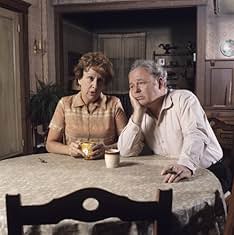
When Norman Lear created “All in the Family,” he gave America something unprecedented: a married couple whose relationship was simultaneously hilarious and heartbreaking, infuriating and inspiring. Carroll O’Connor and Jean Stapleton portrayed Archie and Edith Bunker with such remarkable chemistry that their fictional marriage became more real than many actual relationships viewers knew.
Archie Bunker was everything television protagonists weren’t supposed to be—bigoted, stubborn, politically incorrect, and unapologetically crude. His famous quips, like “God can do anything! He can turn your jawbone into an ass,” demonstrated his blunt approach to life. Yet beneath all that bluster was a working-class man trying to navigate a changing America he didn’t understand, and Edith was his patient, long-suffering anchor.
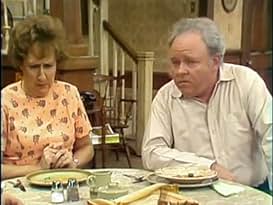
What made this couple extraordinary wasn’t that they agreed on everything—they frequently didn’t. It was how Edith’s gentle persistence gradually revealed Archie’s capacity for growth and tenderness. She saw past his rough exterior to the vulnerable man underneath, and audiences fell in love with both of them because of it. Their relationship tackled serious societal issues—racism, sexism, economic struggles—while never losing sight of the fundamental affection between two people who had spent decades building a life together.
The show’s ability to make audiences simultaneously cringe at Archie’s outdated attitudes and root for his marriage demonstrated genius-level writing and acting. TV Guide eventually ranked “All in the Family” as the fourth greatest television show of all time, and Bravo named Archie Bunker TV’s greatest character. But none of that would have been possible without Jean Stapleton’s Edith, whose warmth and wisdom provided the perfect counterbalance to Archie’s chaos.
The Silver Medal: Bob and Emily Hartley—Sophistication Meets Subtle Humor
Bob Newhart and Suzanne Pleshette created something entirely different yet equally compelling in “The Bob Newhart Show.” Their portrayal of Bob and Emily Hartley introduced viewers to an educated, middle-class Chicago couple whose humor was cerebral rather than confrontational. Where the Bunkers yelled, the Hartleys exchanged dry witticisms. Where Archie and Edith’s conflicts erupted in the living room, Bob and Emily’s usually unfolded in bedroom conversations marked by Emily’s sassy charm and Bob’s deadpan observations.
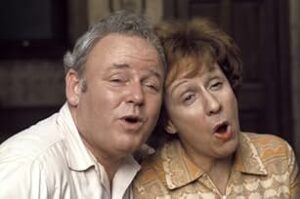
Newhart once reflected on his relationship with Pleshette, saying, “Suzie and I had a great relationship. Those things are hard to find.” That genuine affection translated seamlessly to screen. Bob’s insightful line about communication differences—”Stammering is different than stuttering. Stutterers have trouble with the letters, while stammerers trip over entire parts of a sentence”—perfectly encapsulates the show’s intelligent approach to everyday situations.
What distinguished the Hartleys was their portrayal of a modern, equal partnership. Emily wasn’t waiting at home for Bob to solve all problems; she was a teacher with her own career, opinions, and agency. Their marriage showed affection through small gestures rather than grand romantic declarations, and that quiet intimacy resonated with viewers who recognized their own relationships in Bob and Emily’s bedroom conversations.
The couple’s chemistry was so undeniable that Entertainment Weekly later ranked them among the one hundred best TV romances of all time, noting how the “often cantankerous, deadpan psychologist and sassy-charming teacher” created television magic through understated excellence.
The Bronze Medal: George and Louise Jefferson—Breaking Barriers with Style
Sherman Hemsley and Isabel Sanford brought something revolutionary to television as George and Louise Jefferson in the groundbreaking series “The Jeffersons.” This was one of the first times audiences watched an affluent African American couple navigate success, and the Jeffersons did it with attitude, humor, and undeniable chemistry.
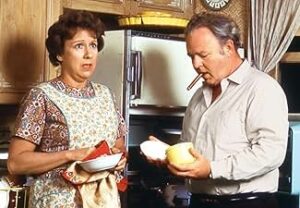
George Jefferson’s personality was larger than life, his confidence bordering on arrogance, as demonstrated by his memorable quip: “Why don’t you take your belt off? I love the sound your belly makes when it hits the floor.” But Louise—affectionately called “Weezy”—kept him grounded, serving as both his conscience and his biggest supporter.
What made this couple particularly significant was how they shattered stereotypes while entertaining millions. They weren’t struggling; they had “moved on up” to a deluxe apartment in the sky. Their success didn’t erase their problems or make their marriage perfect, but it showed audiences that African American families could be portrayed with the same complexity, humor, and dignity as their white counterparts. The Jeffersons’ relationship proved that breaking social barriers and delivering comedy weren’t mutually exclusive—they could accomplish both brilliantly.
Very Honorable Mention: Jessica and Chester Tate—Delightfully Unconventional
“Soap” took a radically different approach to depicting marriage through Jessica and Chester Tate, played by Katherine Helmond and Robert Mandan. This soap opera parody pushed boundaries by presenting relationships with a surreal, satirical edge that sometimes bordered on the absurd. Helmond’s particularly memorable performances elevated the material, showing that even in a deliberately over-the-top show, genuine talent could shine through.
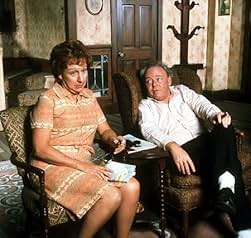
The Tates represented the wealthy elite, and their marriage was filled with secrets, scandals, and situations that would never occur in more traditional sitcoms. Yet beneath the melodrama was a commentary on how even privileged couples struggled with communication, fidelity, and finding genuine connection in their relationship.
Honorable Mention: Howard and Marion Cunningham—The Heart of Happy Days
Tom Bosley and Marion Ross as Howard and Marion Cunningham provided something essential to “Happy Days”—stability. While their children Richie, Joanie, and the Fonz embarked on various adventures and romantic escapades, the Cunninghams represented solid, dependable parental love. They were the idealized version of 1950s family values, filtered through the nostalgia of 1970s viewers who were beginning to question whether those values still held relevance.
The Cunninghams didn’t generate the same buzz as more controversial couples, but their importance cannot be understated. They grounded the show’s wilder elements and provided wisdom without being preachy. Their marriage showed young viewers what a functional, loving partnership looked like—something every generation needs to see modeled on screen.
Why These Couples Still Matter
The 1970s TV couples weren’t just entertainment; they were cultural touchstones that helped audiences navigate rapidly changing social landscapes. Whether through the Bunkers’ working-class struggles, the Hartleys’ sophisticated banter, the Jeffersons’ barrier-breaking success, or the Cunninghams’ nostalgic stability, these marriages reflected different facets of American life.
Archie and Edith Bunker earn the top spot not because their relationship was perfect, but because it was perfectly real. They fought, they laughed, they struggled to understand each other, and through it all, they loved. That’s not just good television—that’s life itself, captured in twenty-two-minute increments that continue to resonate decades later. Their legacy reminds us that the best television doesn’t just entertain; it holds up a mirror and helps us understand ourselves a little better.