When Television Rivals Unite: An Unprecedented Moment
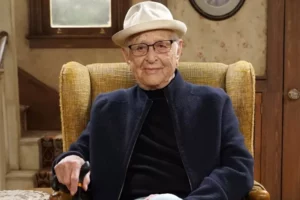
On December 6th, something extraordinary happened in American television history. At exactly 8 PM EST, five major broadcast networks—CBS, ABC, NBC, Fox, and The CW—simultaneously stopped their regular programming to broadcast the same tribute. In an industry defined by fierce competition for ratings and advertising dollars, this united gesture spoke volumes about the man being honored: Norman Lear, the visionary television producer who passed away at the remarkable age of 101.
Lear’s family announced his death on Wednesday, just one day after he passed on Tuesday. The news sent shockwaves through the entertainment industry and beyond, prompting an immediate and heartfelt response from networks, streaming services, and millions of fans who grew up watching his groundbreaking shows.
A Tribute That Spans Every Screen
The simultaneous in memoriam card that aired across all five major networks represented just the beginning of television’s tribute to Lear’s extraordinary legacy. Pluto TV, the free streaming service, announced an ambitious marathon lineup featuring four different Lear-produced series, all beginning at 7 PM EST—one hour before the network tribute.
The streaming platform carefully curated its channels to showcase the breadth and diversity of Lear’s creative genius. Pluto’s Classic TV: Families channel dedicated its evening to “All in the Family,” the revolutionary sitcom that started everything. Classic TV Comedy ran “Maude,” the bold spinoff that tackled controversial issues through the lens of Edith Bunker’s outspoken liberal cousin. The Black Classics channel honored Lear’s commitment to diverse storytelling by running back-to-back marathons of “Sanford & Son” and “The Jeffersons,” two shows that gave African American families primetime prominence during an era when such representation was rare.
The Shows That Defined a Generation
Understanding why Norman Lear deserves such unprecedented recognition requires looking at what he actually accomplished. “All in the Family,” which premiered in 1971, centered on the Bunker household in Queens, New York. Archie Bunker, portrayed brilliantly by Carroll O’Connor, was a working-class bigot whose prejudices and fears reflected those of millions of Americans. His wife Edith, played by Jean Stapleton, appeared submissive but possessed profound wisdom that often revealed the flaws in Archie’s thinking.
The show’s genius lay in its generational conflict. Gloria, the Bunkers’ daughter played by Sally Struthers, and her husband Mike, portrayed by Rob Reiner, represented younger, more liberal America. Archie dismissively called Mike “Meathead,” but their fierce political and social arguments around the dinner table mirrored conversations happening in living rooms across America. The show didn’t preach or provide easy answers; it simply put America’s cultural civil war on display and trusted audiences to think for themselves.

Building a Television Empire That Mattered
What made Lear truly exceptional wasn’t just creating one successful show—it was building an interconnected television universe that addressed social issues from multiple perspectives. “The Jeffersons” began as a spinoff when Sherman Hemsley and Isabel Sanford, who played the Bunkers’ African American neighbors, moved their characters to a luxury apartment building in Manhattan’s Upper East Side. The show’s theme song, “Movin’ On Up,” became an anthem for economic advancement and the African American experience, running for an impressive eleven seasons.
“Maude” featured Bea Arthur as Edith’s cousin, a progressive feminist who wasn’t afraid to take on any subject. The show famously aired a two-part episode about Maude’s decision to have an abortion at age 47, creating national controversy but also opening vital conversations about reproductive rights and women’s autonomy over their own bodies.
“Sanford & Son,” starring the legendary Redd Foxx alongside Desmond Wilson, brought African American working-class life to primetime television with humor, dignity, and authenticity. Set in Watts, California, the show followed father and son business partners running a junkyard, creating comedy from their generational differences while showcasing the struggles and triumphs of Black entrepreneurship.

A Life Lived to the Fullest
Norman Lear’s death at 101 years old punctuates a life of extraordinary longevity and continuous creativity. While many people retire in their sixties or seventies, Lear remained active in television production, social activism, and cultural commentary well into his late nineties. In 2017, he successfully rebooted “One Day at a Time” with a Cuban-American family, proving his storytelling remained relevant to new generations. In 2019, at age 97, he partnered with Jimmy Kimmel to produce live recreations of classic “All in the Family” and “The Jeffersons” episodes, complete with A-list casts, earning Emmy nominations and strong ratings.
His longevity wasn’t just physical—it was creative, intellectual, and cultural. Lear understood that television could be more than entertainment; it could be a mirror forcing America to confront uncomfortable truths about itself while still making people laugh.
Why His Legacy Matters More Than Ever
In today’s fragmented media landscape, where audiences scatter across countless streaming platforms and social media feeds, it’s difficult to imagine any television producer wielding the cultural influence that Norman Lear once commanded. At its peak, “All in the Family” attracted over 50 million viewers per episode—nearly a quarter of the entire American population watching the same show, having the same conversations, laughing at the same jokes, and wrestling with the same difficult questions.
Lear proved that audiences weren’t fragile. They could handle complex moral questions, uncomfortable political debates, and characters who held reprehensible views without explicit condemnation. He trusted viewers to be intelligent, thoughtful, and capable of changing their minds when presented with different perspectives.
The fact that five competing television networks chose to simultaneously honor Norman Lear speaks to his unique position in American cultural history. These corporations, which normally fight viciously for every rating point and advertising dollar, recognized that some contributions transcend competition. Norman Lear didn’t just create successful television shows—he helped shape how America talked to itself about race, gender, politics, class, and family.
A Final Thank You
As millions of viewers tuned in tonight to watch marathon episodes of Lear’s classic shows, they weren’t just indulging in nostalgia. They were reconnecting with a time when television dared to challenge, provoke, and unite audiences around stories that mattered. Norman Lear’s 101 years gave us countless hours of laughter, reflection, and meaningful conversation.
Tonight, as television pauses to honor his memory, we’re reminded that true creativity isn’t about avoiding controversy—it’s about embracing complexity, respecting your audience’s intelligence, and believing that entertainment can change the world, one episode at a time.
Thank you, Norman Lear, for showing us what television could be at its very best.