The Double-Edged Sword of Instant Stardom
Fame arrived overnight for Sally Struthers, but it came with chains she never expected to wear. When All in the Family exploded into American living rooms during its groundbreaking inaugural season, Struthers transformed from an unknown actress into a cultural phenomenon. Yet this meteoric rise concealed a troubling reality that would haunt her for years: Hollywood had decided who she was, and breaking free from that identity would become the fight of her professional life.
The irony wasn’t lost on Struthers herself. Before stepping into Gloria Bunker’s shoes, she had quietly built a respectable foundation in the entertainment industry. Her appearances on The Smothers Brothers Comedy Hour and The Tim Conway Comedy Hour showcased her comedic timing and versatility. She had even secured roles in critically acclaimed films, including a memorable performance in Five Easy Pieces alongside Jack Nicholson, and a small part in the cult classic The Phynx. These weren’t minor achievements by any measure, yet they barely registered with the general public.
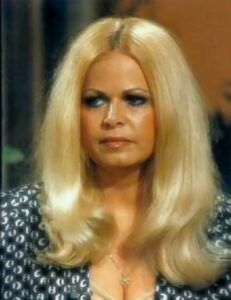
When Success Becomes a Prison
Everything shifted when All in the Family began its relentless rerun cycle. Suddenly, Sally Struthers wasn’t Sally Struthers anymore—she was Gloria, the naive but lovable daughter of the controversial Archie Bunker. Millions of Americans invited her into their homes weekly, but they weren’t interested in the woman behind the character. They wanted Gloria, and only Gloria.
The psychological toll of this phenomenon revealed itself in a candid 1972 interview with The Miami Herald. Struthers, preparing for her role in Sam Peckinpah’s gritty crime thriller The Getaway, made a desperate declaration: “The world’s going to find out that I’m not Gloria Bunker!” The exclamation point in that statement carries the weight of her frustration—a talented actress screaming to be seen as more than a single character.
The Film and Television Divide
What makes Struthers’ predicament particularly fascinating is how differently the two major entertainment mediums perceived her talent. She articulated this schism brilliantly: “Everything I’ve done on TV, I’ve been a silly, sweet, American apple-pie little girl. And every time I’ve done a movie, I’ve been cast as a sort of loose woman, a trampy lady, almost a prostitute type. I guess the two media see me in different ways, and I enjoy it because it gives me a chance to go a full 180 degrees.”
This observation reveals both the opportunity and the curse of her situation. Film directors saw her range and edge; they recognized the dramatic actress lurking beneath the sitcom exterior. Television producers, however, had found their golden goose and weren’t about to let her spread different wings. The partnership with Sam Peckinpah represented everything she craved professionally—a chance to work with a legendary director known for complex, morally ambiguous characters in films like The Wild Bunch and Straw Dogs. Peckinpah didn’t see Gloria Bunker when he looked at Struthers; he saw an actress capable of navigating darker, more challenging territory.
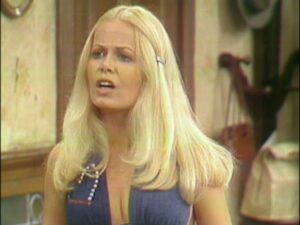
The Cruel Reality of Public Recognition
The daily experience of being trapped in her character’s shadow created genuinely awkward situations. Fans approached her constantly, calling her “Gloria” rather than Sally. While she maintained genuine affection for the character that made her famous, this constant misidentification eroded her sense of professional identity. Each encounter reinforced the public’s refusal to distinguish between actress and role.
Her performance in Five Easy Pieces perfectly illustrates the frustration she faced. Despite earning significant critical acclaim for her brief but impactful screen time—just four or five minutes—audiences quickly forgot her dramatic capabilities once she returned to the weekly routine of All in the Family. Every subsequent film role became, in the public’s perception, her “first attempt” at serious acting. She was perpetually starting from zero, unable to build momentum or recognition for her dramatic work.
The Paradox of Stability and Ambition
Struthers found herself caught in a complex emotional paradox. She genuinely appreciated aspects of her television success, particularly the regularity and stability it provided. “I like the regularity of it, knowing every morning what I’m going to do, where I’m going to be,” she admitted. This contrasted sharply with the isolation and uncertainty of film work, where she often found herself traveling alone, separated from family and familiar routines.
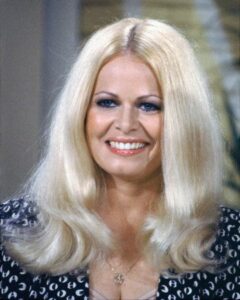
Yet this same stability felt like confinement. The comfortable weekly paycheck came with golden handcuffs that prevented her from exploring the full spectrum of her abilities. Over the course of her time as Gloria Bunker, Struthers would appear in 182 episodes of All in the Family, two episodes of Archie Bunker’s Place, and 21 episodes of her own spin-off series, Gloria. This represents years of her life dedicated to a single persona, making her journey to establish an independent identity that much more challenging.
The Legacy of a Beloved Character
Today, Sally Struthers’ story serves as a cautionary tale about the complexities of typecasting in Hollywood. Her struggle wasn’t about lacking talent or opportunities—it was about an industry and audience that decided who she should be and refused to let her evolve beyond that image. Gloria Bunker remains an indelible part of television history and a significant portion of Struthers’ legacy, but the actress herself represents so much more: resilience, versatility, and the courage to continually fight for recognition as a complete artist rather than a single character frozen in time.