At 76 years old, Sally Struthers has spent more than five decades in the entertainment industry, but there’s one aspect of her fame that continues to baffle and amuse her: millions of fans remain convinced she’s married to her former co-star Rob Reiner. Despite the show ending over four decades ago, the line between Gloria Bunker-Stivic and Sally Struthers has never quite disappeared in the public consciousness.
In a recent interview with Page Six, conducted just weeks after she and Reiner reunited for an Emmys tribute to the late Norman Lear, Struthers opened up about the peculiar phenomenon that has followed her throughout her adult life. The confusion isn’t just a quirky footnote in her career—it’s a testament to the extraordinary cultural impact of All in the Family and the power of television to blur the boundaries between fiction and reality in viewers’ minds.
“Where’s Your Husband?” The Question That Never Stopped
Struthers portrayed Gloria Bunker-Stivic, the daughter of Archie and Edith Bunker, for 184 episodes of All in the Family from 1971 to 1978. On screen, she was married to Michael Stivic, played by Rob Reiner, in one of television’s most memorable couples. Their on-screen chemistry was so convincing that fans simply couldn’t—or wouldn’t—accept that their marriage existed only within the confines of the show.

“When they saw me with my real-life husband, they go, ‘Where’s your husband?'” Struthers revealed, referring to her actual spouse, William C. Rader, a psychiatrist she married in 1977. The actress would patiently explain that she was married to Rader, not Reiner, but fans often struggled to process this information. “People are so funny,” she observed with a mixture of affection and exasperation. “They get an idea in their head, they’re like an old dog with a bone.”
This wasn’t just a brief confusion that faded after the show ended. The misconception persisted for years—decades, even—following the series finale. The depth of this belief became even more apparent when Struthers and Reiner attempted to maintain a normal friendship in the early 2000s.
When Lunch Became Impossible
After The Grove shopping center opened in Los Angeles in 2002, Struthers and Reiner began meeting regularly for lunch at the popular destination. It seemed like a harmless way for old friends and former co-stars to catch up and maintain their connection. However, they quickly discovered that their public appearances together created an immediate sensation among fans who spotted them.
“Within two months, we couldn’t do that anymore,” Struthers explained. The attention from fans became so intense and disruptive that continuing their casual lunch meetings simply wasn’t feasible. Imagine being unable to share a meal with an old friend because people are so convinced you’re married that your mere presence together in public creates a spectacle. This extraordinary situation perfectly illustrates how deeply All in the Family had embedded itself in American culture.
How the Show Changed Everything
The impact of All in the Family on Struthers’ life extended far beyond confusion about her marital status. “It became apparent rather quickly that my life had completely turned upside down,” she told Page Six, reflecting on the show’s success and how it transformed her from an unknown actress into a household name practically overnight.
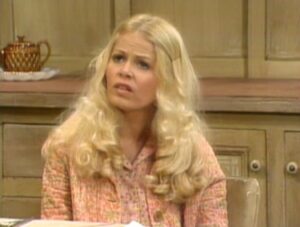
But what made the show so powerful that it could create such lasting confusion? Struthers has a clear perspective on why the Bunkers resonated so deeply with audiences. The show, which starred the late Jean Stapleton and Carroll O’Connor as Edith and Archie Bunker, broke every rule of conventional television at the time.
“The Bunkers came along and they flushed toilets,” Struthers explained, referencing something that seems trivial now but was revolutionary then. “They didn’t have good manners at the table. They reached over one another for food… and they talked about real things.”
This authenticity was groundbreaking. Prior to All in the Family, television families were largely sanitized, idealized versions of American life. The Bunkers were messy, flawed, and real. “They peeled off the veneer,” Struthers continued. “And you saw the less-than-perfect side of human beings. You saw the arguing and the vehemence and the bigotry. You can’t put the genie back in the bottle now. Everything got more honest after that.”
This honesty created characters who felt like real family members to viewers. When you invite someone into your living room every week for years, when you watch them navigate conflicts and celebrations, when their problems mirror your own family dynamics, the line between performance and reality becomes blurred. No wonder fans struggled to accept that Gloria and Michael weren’t really married—they had watched their relationship unfold with an intimacy that made it feel absolutely real.
A Gift That Keeps On Giving
Despite the occasional inconveniences and persistent confusion, Struthers remains deeply grateful for All in the Family and the opportunities it continues to provide. “Over the years the gratitude has grown because it continues to open doors,” she told Page Six, careful to clarify that she wasn’t bragging but genuinely amazed by the show’s lasting impact.

The doors it has opened are significant. “I don’t have to audition for theater. I get offered parts. I get people who call and say, ‘We want Sally to do this for us this year,'” she explained. “And that’s because they know that my name sells tickets and fills the seats. That wouldn’t have happened without the renown of All in the Family. So, I’m grateful every day.”
This gratitude is well-earned. Struthers has remained extraordinarily busy, particularly in theater, proving that she’s far more than just Gloria Bunker. She’s currently slated to star alongside Ted Danson in an upcoming Netflix comedy titled A Classic Spy, demonstrating that her career continues to evolve and flourish.
“You Rest, You Rust”
When asked about her ongoing productivity and continued presence in the entertainment industry at 76, Struthers offered a philosophy that clearly drives her: “That’s what I do. I keep moving, and I think that my favorite adage is, ‘You rest, you rust!'”
This energetic approach to life and career has served her well. Rather than becoming defined solely by her most famous role, Struthers has used it as a foundation for a diverse and continuing career. Yes, people still think she’s married to Rob Reiner. Yes, they sometimes struggle to see her as anyone other than Gloria. But she’s transformed what could have been a limiting typecast into a launching pad for decades of varied work.
The story of Sally Struthers and the marriage that never was serves as a fascinating case study in the power of television to shape public perception. It’s a reminder that truly great performances don’t just entertain—they embed themselves so deeply in viewers’ consciousness that the boundaries between actor and character become permanently blurred. And while that might occasionally make lunch impossible, it’s also a testament to work so powerful that its effects ripple across generations.