When Television Becomes Too Real: The Strange Case of Sally Struthers’ Double Life
At 76 years old, Sally Struthers has experienced something that sounds like a plot from a psychological thriller: millions of people have spent decades refusing to accept her actual reality. In a candid interview with Page Six, the Portland-born actress revealed a phenomenon so bizarre, so persistent, that it fundamentally altered how she could live her life—even decades after All in the Family stopped airing.
The confession came weeks after Struthers reunited with Rob Reiner for an emotional Emmys tribute to Norman Lear, the legendary creator who passed away and left behind a television legacy that clearly proved more powerful than anyone anticipated. What Struthers revealed about the aftermath of that iconic show exposes the strange intersection where fiction becomes reality in the public consciousness, and where actors find themselves trapped in characters they stopped playing generations ago.
The Husband Who Wasn’t Her Husband
Picture this uncomfortable scenario: Sally Struthers walks into a public space with her actual husband, William C. Rader, the psychiatrist she married in real life. Fans approach with excitement, thrilled to see Gloria Bunker in person. But then comes the confusion, followed by the question that Struthers heard thousands of times: “Where’s your husband?”
She would patiently explain that this man beside her was her husband. The response? Disbelief. Denial. Confusion. Fans couldn’t—or wouldn’t—process that Rob Reiner, who portrayed Michael Stivic on the show, wasn’t actually her spouse. The disconnect between television fiction and reality had become so complete that no amount of explanation could penetrate it.
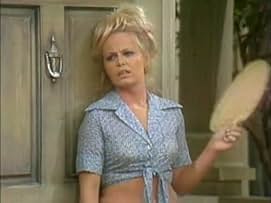
“People are so funny,” Struthers observed with a mixture of amusement and exasperation. “They get an idea in their head, they’re like an old dog with a bone.” This wasn’t a handful of confused viewers—this was a widespread phenomenon that persisted for years, even decades after the final episode aired in 1978.
When Friendship Became Impossible
The situation escalated from merely awkward to genuinely disruptive when Struthers and Reiner decided to meet regularly for lunch. As old friends and former co-stars, they enjoyed catching up at The Grove, the popular Los Angeles shopping center that opened in 2002. These casual meetups seemed innocent enough—two colleagues maintaining a friendship decades after working together.
But within just two months, they had to abandon these public lunches entirely. The attention from fans became overwhelming and intrusive. The sight of “Gloria and Michael” together in public created scenes that made normal social interaction impossible. People weren’t seeing Sally and Rob—they were seeing characters from a television show that had been off the air for over two decades. The performers had long since moved on, but the audience refused to release them.
This reveals something profound and slightly unsettling about television’s impact on collective consciousness. All in the Family didn’t just entertain viewers—it created an alternate reality so convincing that people integrated it into their understanding of the actual world. The Bunkers weren’t fictional; they were more real than the actors who portrayed them.
Life Turned Upside Down Overnight
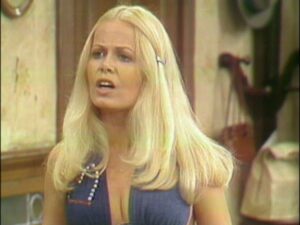
Struthers portrayed Gloria Bunker-Stivic across 184 episodes of All in the Family between 1971 and 1978, later appearing in the spinoffs Gloria and Archie Bunker’s Place. While the work itself was rewarding, the aftermath proved transformative in ways she never anticipated.
“It became apparent rather quickly that my life had completely turned upside down,” she told Page Six. This wasn’t gradual fame or celebrity that built over time—this was instant, overwhelming recognition that fundamentally changed how she could exist in public spaces. Privacy became a luxury. Anonymity became impossible. And most strangely, her actual identity became secondary to a fictional character she inhabited for weekly television episodes.
Why the Bunkers Felt More Real Than Reality
Struthers understands why audiences connected so deeply with the show. She explained the revolutionary nature of what Norman Lear accomplished: “The Bunkers came along and they flushed toilets. They didn’t have good manners at the table. They reached over one another for food… and they talked about real things.”
Prior to All in the Family, television families existed in sanitized perfection. Problems were minor, conflicts resolved neatly within 30 minutes, and controversial topics remained safely off-screen. The Bunkers shattered that illusion completely. They argued vehemently. They exposed bigotry, challenged assumptions, and forced audiences to confront uncomfortable truths about American society.
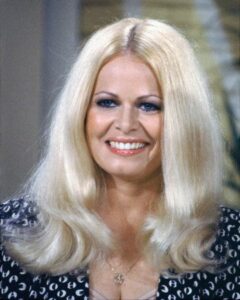
“They peeled off the veneer,” Struthers continued. “And you saw the less-than-perfect side of human beings. You saw the arguing and the vehemence and the bigotry. You can’t put the genie back in the bottle now. Everything got more honest after that.”
This authenticity created characters that felt more genuine than many real people in viewers’ lives. The Bunkers became family—not metaphorically, but literally in the minds of millions. This explains why fans struggled to accept that Sally Struthers wasn’t actually Gloria, wasn’t actually married to Rob Reiner. The show had achieved something remarkable and slightly frightening: it replaced reality with something that felt more real.
The Unexpected Gift That Keeps Giving
Despite the bizarre complications fame brought, Struthers remains deeply grateful for All in the Family and its lasting impact on her career. “Over the years the gratitude has grown because it continues to open doors,” she told Page Six, careful to clarify she wasn’t bragging—just honestly dumbfounded by the ongoing opportunities.
The legacy of Gloria Bunker means Struthers doesn’t audition for theater roles anymore. Producers call her directly. “We want Sally to do this for us this year,” they say, because her name fills seats and sells tickets. This wouldn’t exist without the show’s enduring renown.
At 76, Struthers maintains a philosophy that keeps her vital: “You rest, you rust!” She continues working steadily in theater and is set to star alongside Ted Danson in an upcoming Netflix comedy titled A Classic Spy. The woman who played Gloria Bunker five decades ago refuses to be defined solely by that role, even as it continues opening doors she never expected.
The Paradox of Being Unforgettable
Sally Struthers lives in a strange paradox: grateful for a role that made her famous, yet forever navigating a world where millions refuse to distinguish between actress and character. Her real husband competed with a fictional one. Her actual life became less believable than a television show. And even now, half a century later, Gloria Bunker remains more recognizable than Sally Struthers ever will be.
That’s the power—and the curse—of creating something truly unforgettable.