The phone call that shattered Sally Struthers’ dreams came with devastating bluntness. Network executives delivered their verdict without sugar-coating: “Get rid of that dancer girl. She makes the show look cheap!” Just like that, after only five episodes of “The Tim Conway Comedy Hour,” her big break evaporated. She’d been promised thirteen weeks—a dancer’s dream in 1970—but the suits in New York had decided she was a liability rather than an asset.
“I was distraught!” Struthers recalled in a 2021 interview with Closer Weekly, the pain still evident decades later. “I adored Tim Conway and wondered what would happen to me next.” She had no way of knowing that this humiliating rejection would trigger a chain of fortunate accidents that would transform her from a fired dancer into one of television’s most beloved characters—and that the show that fired her would vanish after one season while the show she was about to join would run nine years, win 22 Emmys, and change television history forever.
The Rejection That Hurt
Understanding why Struthers’ firing stung so deeply requires appreciating how precarious show business careers were—and still are—for young performers. In 1970, Sally Struthers was nobody special, just another talented young woman trying to break into an industry that chewed up and spit out hundreds of hopefuls for every success story. She’d managed to land appearances on “The Smothers Brothers Comedy Hour,” the variety show now best-remembered for featuring legendary musical acts of the era, but those weren’t starring roles—she was a dancer, part of the background, easily replaceable in Hollywood’s calculation.
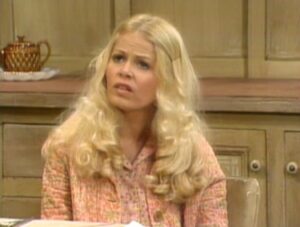
The Tim Conway opportunity had seemed like a genuine step up. Conway was a known entity, a “McHale’s Navy” star who would soon become a recurring player on “The Carol Burnett Show” and eventually a comedy legend. Getting cast on his show meant visibility, stability, and the promise of thirteen weeks of steady work—an eternity in the gig economy of show business. Struthers wasn’t just dancing; she was part of a comedic concept. According to her interview with Newsday, a producer explained to the network executives that her role as the show’s sole dancer was intentionally part of a running gag about the series having no budget.
The network didn’t buy it—or didn’t care. “So I was let go,” Struthers told Closer with the resignation of someone who’s relived this memory countless times. The rejection wasn’t just professional; it was personal. Being told you make something “look cheap” cuts deeper than being told you lack talent. It suggests your very presence diminishes quality, that you’re an aesthetic problem rather than a performer who needs development. For a young actress still finding her footing, those words could have been career-ending.
The Audition Nobody Expected to Matter
In the immediate aftermath of her firing, Struthers did what any working actress does—she kept auditioning, kept hustling, kept hoping something would break her way. One of those auditions came for a sitcom pilot being developed by a writer-producer nobody had heard of: Norman Lear. “I went to read for this man nobody knew, Norman Lear,” Struthers explained, emphasizing how little buzz surrounded the project at that moment. Lear might have been “up and coming” in industry circles, but to most performers, he was just another producer developing another pilot that would probably never see air.

The role was Gloria Bunker, the daughter in a family sitcom that—unbeknownst to Struthers—was designed to blow up every comfortable assumption American audiences had about television families. “He said it was the role of the daughter, and he gave me a yelling scene,” Struthers recalled. This detail is crucial: Lear wasn’t looking for a sweet sitcom daughter who solved problems through gentle wisdom. He needed someone who could scream, argue, challenge her father’s bigotry, and hold her own in a household that more closely resembled a war zone than the tranquil sitcom homes audiences knew.
Then fortune intervened through the least fortunate circumstances: Struthers was sick. “I had laryngitis that day, so my voice was raspy,” she explained. Anyone who’s familiar with Sally Struthers knows her voice is already distinctive—higher-pitched and characterful than typical leading ladies. But laryngitis transformed it into something even more memorable, adding a raspiness that somehow made her yelling scene more powerful, more raw, more authentically emotional than it might have been with her healthy voice.
“I guess it made him remember me,” Struthers said with typical modesty. But Jim Cullins’ book “Those Were the Days: Why All in the Family Still Matters” reveals more about what captured Lear’s attention. It wasn’t just the raspy voice—it was that Struthers had been on Lear’s radar periphery already. Director John Rich had seen her on “The Smothers Brothers Comedy Hour” and told Lear to check her out. When she walked into the audition room, Lear wasn’t seeing a complete unknown—he was seeing someone who’d already demonstrated she could handle variety television’s demands.
The Lightning That Struck Twice
“He narrowed it down to four young ladies, and I was one of the final four,” Struthers recounted. But the real magic happened when she auditioned alongside Rob Reiner, who’d been cast as Mike “Meathead” Stivic, Gloria’s husband and Archie Bunker’s liberal foil. “She auditioned with [co-star Rob Reiner] and it was another bolt of lightning,” Lear said in Cullins’ book, choosing his words carefully. He didn’t say she was talented or funny or right for the role—he used “lightning,” implying something electric, unpredictable, and impossible to manufacture through careful planning.
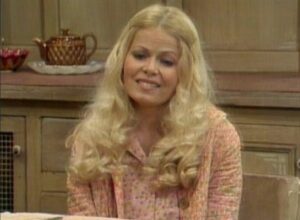
Chemistry between actors can’t be forced or predicted. You can cast two brilliant performers who have zero spark together, or you can put two relative unknowns in a room and watch them create magic that transforms everything around them. Struthers and Reiner had that indefinable something—their energy matched, their timing synchronized, their dynamic as a young married couple felt authentic despite both being actors playing roles.
But Lear understood that lightning had to strike more than twice for “All in the Family” to work. The show’s success depended on all four family members clicking together, creating an ensemble where every relationship felt lived-in and real. “The gods wanted me to come across Rob Reiner and Sally Struthers,” Lear told Entertainment Weekly in 2021, shortly before his death. He’d previously described the casting of Struthers and Reiner, and their chemistry with Carroll O’Connor (Archie) and Jean Stapleton (Edith), as the “magic” that made the show transcend its controversial premise.
The Secret History of Being Third Choice
Here’s where the story gets even more remarkable: Sally Struthers and Rob Reiner weren’t just lucky to be cast—they were lucky to be cast in the third attempt to get “All in the Family” on the air. “Very few people know that Rob Reiner and I were the third set of kids for that show,” Struthers revealed to Newsday. “Talk about luck.”
This context transforms the entire narrative. “All in the Family” wasn’t an instant greenlight that networks fought over. It was a project that had failed twice before, with two previous pilot attempts featuring different actors as Mike and Gloria. Network executives had rejected those versions, unsure whether American audiences would accept a show this controversial, this confrontational, this different from everything else on television.
By the time Struthers auditioned, “All in the Family” was damaged goods in industry terms—a concept that had already proven difficult to execute, with a creator who was demanding creative control networks were reluctant to grant, for a show tackling subjects that advertisers might flee from. The Tim Conway show that had fired Struthers seemed like the safer bet—established star, conventional variety format, nothing that would generate controversy or network notes.
How Failure Became Fortune
Looking back with decades of hindsight, the ironies are almost too perfect. The Tim Conway Comedy Hour, which deemed Struthers too cheap-looking for their production, lasted exactly one season before cancellation. “All in the Family,” which cast her after two failed pilots and massive network skepticism, ran nine seasons, dominated ratings for five consecutive years, and won 22 Emmy Awards. The show that fired her is now a footnote in TV history. The show that hired her changed television forever.
But the most remarkable aspect isn’t just that Struthers lucked into success—it’s that her specific combination of circumstances made her perfect for a role she never could have predicted. Her dancing background on “The Smothers Brothers” gave her performance skills and camera comfort. Her firing from Conway’s show left her available precisely when Lear needed someone new. Her laryngitis made her voice even more distinctive during her audition. Her chemistry with Reiner created authentic young-married energy. Every “failure” aligned perfectly to create success.
Struthers brought something essential to Gloria Bunker that a more traditionally cast sitcom daughter wouldn’t have provided: authenticity born from struggle. She wasn’t a polished ingénue or a carefully manufactured star—she was a working actress who’d been told she made things look cheap, who’d been fired and rejected, who knew what it felt like to be judged and found wanting. That realness translated on screen into a Gloria who felt like an actual person rather than a TV character, someone navigating the genuine conflicts between loving her father and recognizing his bigotry, between respecting her upbringing and embracing new values.
The Magic Nobody Could Plan
Norman Lear’s description of the casting as “lightning” and the work of “gods” reveals something crucial about great television: sometimes it emerges not from careful planning but from fortunate accidents aligning in ways nobody could orchestrate. If Struthers hadn’t been fired, she might not have been available for that audition. If she hadn’t had laryngitis, Lear might not have remembered her raspy yelling. If she and Reiner hadn’t created chemistry, or if that chemistry hadn’t extended to O’Connor and Stapleton, “All in the Family” might have died after a third failed pilot.
Instead, all these elements converged to create television history. Sally Struthers, the dancer girl who supposedly made things look cheap, became Gloria Bunker—the emotional heart of a show that would tackle racism, sexism, homophobia, sexual assault, and every major social issue of the 1970s. Her journey from devastating rejection to unlikely stardom proves that in show business, as in life, sometimes getting fired is the best thing that can happen to you.
The executives who told Tim Conway to “get rid of that dancer girl” probably never thought about Sally Struthers again. But television history remembers—not because of the show they thought she made look cheap, but because of the show she helped make unforgettable.