The Untold Story of Carroll O’Connor’s All in the Family Paycheck
For eight groundbreaking seasons, Carroll O’Connor transformed television comedy by bringing Archie Bunker into American living rooms. The cantankerous, politically incorrect character became a cultural phenomenon that sparked dinner table debates across the nation. But behind the laughter and controversy was a financial battle that revealed the harsh realities of television contracts in the 1970s. What O’Connor earned—and more importantly, what he fought for—would reshape the industry for decades to come.
Breaking Down the Numbers: What Did Archie Bunker Really Earn?
According to The New York Times, Carroll O’Connor commanded approximately thirty thousand dollars per episode during his run on All in the Family. In today’s money, that would translate to roughly one hundred fifty thousand dollars per episode when adjusted for inflation. While this might sound like a fortune, O’Connor himself argued it represented only a fraction of what the show was generating for CBS and the producers.
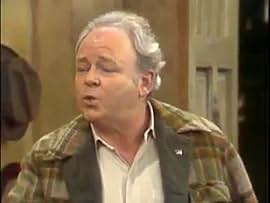
The financial landscape of television in the mid-1970s was vastly different from today’s streaming-dominated world. Networks operated with enormous profit margins, and hit shows like All in the Family were absolute goldmines. The series consistently ranked as the number one show in America, drawing tens of millions of viewers each week. O’Connor understood the mathematics of his value, and he wasn’t afraid to voice his opinions about the inequality he perceived.
By the time Archie Bunker’s Place premiered in 1979, O’Connor’s negotiations had proven successful. His per-episode salary had skyrocketed to two hundred thousand dollars, making him one of the highest-paid actors on television at the time. This represented nearly a seven-fold increase from his original compensation, proving that his hardline stance on contract negotiations had paid off handsomely.
The Actor’s Perspective: O’Connor’s Brutally Honest Take on Contract Negotiations
What made Carroll O’Connor truly revolutionary wasn’t just his acting talent—it was his willingness to speak publicly about the entertainment industry’s unfair practices. During a candid interview with The New York Times in 1975, O’Connor pulled back the curtain on how television contracts actually worked, and his revelations were damning.
“Everybody knows it’s an unfair arrangement; that’s why there are these negotiations every year,” O’Connor stated bluntly. He explained that contracts were binding for actors but not for producers, creating a fundamentally unbalanced power dynamic. Actors were locked into agreements that could span multiple years, while networks and production companies retained flexibility to make changes as they saw fit.
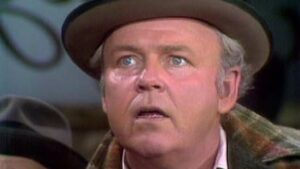
O’Connor’s philosophy was refreshingly straightforward. He believed that any actor could perform the same calculations as CBS president Bob Wood. “An actor can figure out how much a show is grossing, and if he can’t, his agent or his business manager can,” he explained. This wasn’t about greed—it was about fair compensation based on the value an actor brought to a production.
He used a perfect analogy to illustrate his point: “It’s just like selling Ford cars. If a salesman sells one million dollars worth of Ford cars, he expects a big profit.” O’Connor believed that actors were essentially salesmen for television shows, and if their performance was responsible for generating millions in advertising revenue, they deserved a proportionate share of those profits.
From Theatre Dreams to Television Stardom: O’Connor’s Unexpected Journey
What many fans don’t realize is that Carroll O’Connor never intended to become a television icon. His true passion was always the theatre. In his memoir “I Think I’m Outta Here,” O’Connor revealed that he considered the stage his artistic home just as much as any television set. His dream was to build a distinguished career as a stage actor, performing in serious dramatic productions that would cement his legacy as a true thespian.
That dream came crashing down after a devastating review in The San Francisco Chronicle. O’Connor had poured his heart into a play called “A Certain Labor Day,” but the critic not only hated the production—he fundamentally misunderstood it. The reviewer apparently believed the play was autobiographical, about O’Connor’s own life, when it was actually about something entirely different. The scathing review destroyed ticket sales, and the production quickly folded.
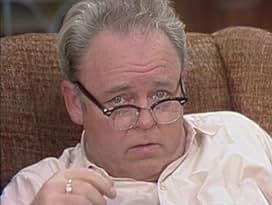
The experience left O’Connor deeply disillusioned. “My interest in theatre died right along with the play,” he later reflected. He felt misguided for believing he could make his mark as a stage actor. It was a heartbreaking moment that inadvertently redirected his career toward television, where he would ultimately achieve immortality.
Before his television breakthrough, O’Connor had accumulated several notable theatre credits. He appeared in the 1958 production of “Ulysses in Nighttown,” followed by the Broadway show “God and Kate Murphy” in 1959. His other stage appearances included “Brothers,” “Home Front,” and “Candide.” These productions showcased his versatility and dramatic range, qualities that would serve him well when he eventually took on the complex character of Archie Bunker.
The Name Behind the Fame: From George Roberts to Carroll O’Connor
Here’s a fascinating detail that even dedicated fans might not know: Carroll O’Connor wasn’t always Carroll O’Connor. During an interview with the Television Academy Foundation, he revealed that he once performed under the stage name George Roberts, borrowed from an old friend who had passed away. This practice of adopting stage names was common in mid-century American theatre, where actors often changed their names to sound more marketable or memorable.
The transition back to his birth name came about in an unexpected way. When O’Connor joined a performing arts company where all the actors had Irish surnames, the company’s director asked him to change his name to fit the group’s aesthetic. In a twist of fate, reverting to his real Irish name—Carroll O’Connor—would become one of the most recognizable monikers in television history.
The Legacy: How O’Connor Changed the Game for Television Actors
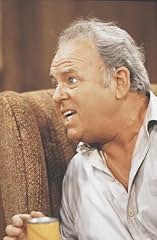
Carroll O’Connor’s outspoken stance on contract negotiations and fair compensation paved the way for future generations of television actors. His willingness to publicly discuss salary disputes and contractual inequities helped normalize conversations about actor compensation that had previously been considered taboo. Today’s television stars who command millions per episode owe a debt to pioneers like O’Connor who fought these battles when the industry was far less accommodating.
His portrayal of Archie Bunker remains one of television’s most complex and influential performances, earning him four Emmy Awards and forever changing how audiences understood character-driven comedy. But perhaps his greatest legacy extends beyond his acting—it’s his role as an advocate for fair treatment of performers in an industry that often valued profits over people. Carroll O’Connor didn’t just entertain millions; he helped reshape the business of entertainment itself.