The Unforgettable Legacy of Archie Bunker’s Wit
Television has given us countless memorable characters over the decades, but few have left as indelible a mark as Archie Bunker from “All in the Family.” Portrayed brilliantly by Carroll O’Connor, Archie wasn’t just a character—he was a cultural phenomenon that challenged viewers while making them laugh until their sides hurt. His unique brand of humor, characterized by spectacular malapropisms, unfiltered observations, and surprisingly profound moments, created a comedy goldmine that continues to resonate with audiences today.
What made Archie Bunker truly special wasn’t just his controversial opinions or his grumpy demeanor—it was his extraordinary ability to massacre the English language while somehow still getting his point across. He was the embodiment of every crotchety neighbor, stubborn relative, and old-school thinker we’ve all encountered. Yet beneath the rough exterior and questionable worldviews lay an accidental philosopher whose twisted logic occasionally stumbled upon genuine truths about life, death, and everything in between.
The Genius Behind the Malapropisms
Archie’s linguistic gymnastics became his signature trademark. When he needed “consecration” but meant “concentration,” or when he mixed up biblical stories to create hilarious hybrid scriptures, audiences couldn’t help but roar with laughter. These weren’t just mistakes—they were carefully crafted moments of comedic brilliance that showcased the character’s confident ignorance. The beauty was that Archie never doubted himself, even when he was completely, utterly wrong.
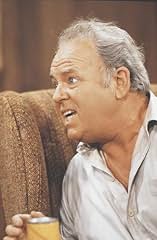
This commitment to his twisted version of reality made every quote more impactful. When Archie declared that “God can do anything! He can turn your jawbone into an ass,” he wasn’t trying to be sacrilegious—he was genuinely attempting to cite scripture while accidentally blending together the story of Lot’s wife with Samson’s jawbone of an ass from the Book of Judges. The result? Comedy gold that worked on multiple levels for both casual viewers and biblical scholars alike.
Philosophical Wisdom in Unexpected Places
Perhaps one of Archie’s most surprisingly profound moments came when he casually stated, “Somebody’s gotta be dead, that’s life.” While crude and abrasive on the surface, this observation carries a strange philosophical weight. It’s essentially Archie’s blue-collar version of the Circle of Life concept—raw, unpolished, but undeniably true. Death is part of existence, and Archie’s blunt acknowledgment of this universal truth, delivered with his characteristic lack of filter, somehow makes it both funny and thought-provoking.
This duality—the ability to be simultaneously hilarious and insightful—defined Archie’s best moments. He wasn’t trying to be deep or meaningful; his observations simply came from an honest, if limited, perspective on how the world worked. When he complained that “everyone I like stays the hell away from me,” he wasn’t just being antisocial—he was perfectly summarizing his entire personality in one brutally honest sentence. It’s self-awareness wrapped in grumpiness, and it’s absolutely brilliant.
Social Commentary Disguised as One-Liners
“All in the Family” was never shy about tackling serious social issues, and Archie’s quotes often served as vehicles for sharp commentary. When he quipped that “entertainment’s a thing of the past, now we got television,” he was delivering what appeared to be a simple joke. However, this line has aged remarkably well, transforming into a prescient criticism of how television evolved. What started as an inside joke among cast and producers became a timeless observation about the state of entertainment media.

This quote has taken on new dimensions with each passing decade. In an era of hundreds of streaming channels and endless content with varying quality, Archie’s observation feels more relevant than ever. It’s the kind of quote that gets funnier and more meaningful as time passes—a testament to the show’s writing quality and ability to tap into fundamental truths about culture and society.
The Art of Being Unlikable Yet Lovable
Archie Bunker walked a tightrope that few characters have successfully navigated—being simultaneously offensive and endearing. His unapologetic bigotry and narrow worldview should have made him completely unlikable, yet audiences couldn’t help but be drawn to his authenticity. He said what he thought without filter or pretense, and while most of his views were questionable at best, his honesty was strangely refreshing.
The show’s genius lay in presenting Archie not as a hero to be emulated, but as a flawed human being whose prejudices were regularly challenged and often proven wrong. His best quotes weren’t celebrated because they were right—they were memorable because they revealed character, sparked discussion, and often inadvertently made points the writers intended through his very wrongness.
Why Archie’s Quotes Still Matter Today
Decades after “All in the Family” ended its groundbreaking run, Archie Bunker’s quotes continue to circulate, get referenced, and make people laugh. They’ve become part of television history and American pop culture lexicon. While many of his views and statements haven’t aged well—and weren’t meant to be endorsed even in their own time—the character’s impact on comedy and social commentary remains undeniable.
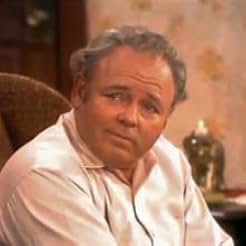
The best Archie Bunker quotes work because they capture something universal: the human tendency to be confident in our ignorance, to mangle language while insisting we’re right, and to occasionally stumble upon wisdom when we least expect it. They remind us that comedy can come from discomfort, that characters don’t need to be likable to be compelling, and that sometimes the best way to challenge prejudice is to put it on full display and let it reveal its own absurdity.
The Timeless Appeal of Twisted Wisdom
What separates Archie’s most memorable quotes from throwaway sitcom lines is their layered nature. On the surface, they’re funny because of his malapropisms, his delivery, and his absolute conviction in his own correctness. Dig deeper, and you’ll find social commentary, character development, and occasionally genuine insight hidden beneath the bluster.
From his antisocial declarations to his butchered biblical references, from his critique of television to his blunt acceptance of mortality, Archie Bunker gave us quotes that worked as comedy, commentary, and character study all at once. They’re artifacts of a different era in television—one that took bigger risks and trusted audiences to understand the difference between presenting controversial views and endorsing them.
As the saying goes, a classic never goes out of style, and Archie Bunker’s greatest quotes prove that truth. They continue to make us laugh, think, and occasionally wince—which is exactly what great television is supposed to do.