MAS*H wasn’t just a television show—it was a revolution disguised as a sitcom. While audiences tuned in expecting laughs from the antics of army surgeons stationed in Korea, what they received was something far more profound. The series masterfully wove comedy with devastating commentary on the futility of war, the fragility of life, and the resilience of the human spirit. Over its eleven-season run, certain episodes transcended entertainment to become cultural touchstones that forced viewers to confront uncomfortable truths about humanity’s darkest impulses and brightest moments.
The genius of MAS*H lay in its ability to make audiences laugh one moment and weep the next, all while delivering messages that resonated far beyond the 1950s Korean War setting. The show used the Mobile Army Surgical Hospital as a microcosm to explore universal themes—mortality, identity, morality, compassion, and the psychological toll of bearing witness to endless suffering. These ten episodes represent the pinnacle of that achievement, each one etching itself into television history by daring to say what others wouldn’t.
“Sometimes You Hear the Bullet” – The Loss of Innocence
This Season 1 episode marked the moment MAS*H transformed from a conventional comedy into something unprecedented. When Hawkeye’s childhood friend arrives at the 4077th as a war correspondent and later dies on his operating table, the show confronted mortality head-on for the first time. The episode’s title references a soldier’s claim that you never hear the bullet that kills you—a grim reality proven tragically true.
The profound message here centers on innocence lost. Hawkeye, who had maintained emotional distance through humor and sarcasm, finally breaks down, forcing viewers to recognize that war doesn’t distinguish between heroes and ordinary people—it simply destroys. When Colonel Henry Blake delivers his iconic line, “There are certain rules about a war, and rule number one is young men die. And rule number two is doctors can’t change rule number one,” the series established its unwavering stance on war’s futility. This episode taught audiences that behind every statistic was a friend, a brother, a son—someone who mattered.
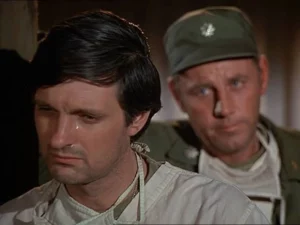
“Abyssinia, Henry” – The Randomness of Death
Perhaps no episode in television history has shocked audiences quite like “Abyssinia, Henry.” The Season 3 finale appeared to be a straightforward farewell episode as Lieutenant Colonel Henry Blake prepared to return home after his tour ended. The cast threw him a party, said their goodbyes, and viewers prepared for a bittersweet but ultimately happy ending. Then came Radar’s devastating announcement in the final scene: Henry’s plane had been shot down over the Sea of Japan with no survivors.
The message transcended the shock value. By killing off a beloved main character so suddenly and unceremoniously, MAS*H made a bold statement about war’s arbitrary cruelty. There were no heroic last words, no dramatic final scene—just the brutal randomness of a life cut short on the verge of safety. This narrative choice reflected the reality that war doesn’t provide closure or meaning; it simply takes, indiscriminately and without warning. The episode forced viewers to confront the uncomfortable truth that good people die senselessly, and sometimes there’s no lesson to be learned except that war is senseless.

“The Interview” – Voices from the Trenches
Shot in black and white and structured as a documentary-style interview conducted by real-life correspondent Clete Roberts, “The Interview” broke every television convention of its time. The Season 4 finale featured cast members speaking directly to the camera about their experiences at the 4077th, creating an unprecedented intimacy between characters and viewers.
The profound message of this episode lies in its authentic portrayal of how people cope with trauma. Each character reveals different coping mechanisms—Hawkeye’s anger and defiance, Margaret’s struggle with prejudice and duty, Father Mulcahy’s crisis of faith, and Radar’s preservation of innocence despite surrounding horror. The episode suggests that there’s no “correct” way to endure war; survival itself is a personal battle fought differently by each individual. By stripping away the laugh track and traditional sitcom structure, the episode acknowledged that war’s impact is deeply personal and that every person carries invisible scars that humor can only temporarily mask.

“Death Takes a Holiday” – The Weight of Playing God
This Christmas episode from Season 9 presents one of television’s most compelling moral dilemmas. When a critically wounded soldier arrives on Christmas Day, Hawkeye and B.J. face an agonizing decision: allow him to die on Christmas, forever marking the holiday with grief for his family, or keep him alive through the night by any means necessary, even if it means prolonging his suffering.
The episode’s message explores the burden of playing god that medical professionals carry in wartime. Their decision to falsify the time of death to spare the soldier’s family from forever associating Christmas with loss raises profound questions about mercy, truth, and moral flexibility in extreme circumstances. The episode doesn’t provide easy answers; instead, it acknowledges that survival in war sometimes requires compromising principles we’d otherwise hold sacred. It’s a meditation on how good people make morally ambiguous choices when confronted with impossible situations, and how sometimes the kindest act is a lie.
“Dreams” – The Unconscious Mind Under Siege
Season 8’s experimental “Dreams” episode peered into the unconscious minds of the 4077th staff as exhaustion and trauma manifested in surreal nightmares. Each character’s dream revealed their deepest fears: Hawkeye losing his hands and therefore his identity as a surgeon, Winchester failing to save his patients despite his technical brilliance, Father Mulcahy unable to offer comfort, and Klinger being abandoned by those he loves.
The profound message centers on psychological warfare that combat inflicts. The episode acknowledged that war wounds extend beyond the physical—that constant exposure to death, suffering, and moral compromise creates internal battles that rage even during sleep. By visualizing these psychological demons, MAS*H validated the reality of invisible trauma decades before PTSD became widely understood. The episode suggested that the real war for those in the 4077th wasn’t against an enemy army but against the gradual erosion of their own humanity and sanity.
“Out of Sight, Out of Mind” – Vulnerability and Interdependence
When Hawkeye is temporarily blinded after an accident, this Season 5 episode forces the typically self-reliant surgeon to confront his complete dependence on others. The episode unfolds largely from Hawkeye’s perspective, with the screen going dark during his blindness, creating visceral empathy in viewers.
The message explores identity, vulnerability, and what defines us. For Hawkeye, whose entire sense of self revolves around his surgical abilities and visual acuity, temporary blindness represents a potential death of identity. The episode asks profound questions: Who are we when stripped of our defining characteristics? How do we cope with vulnerability when we’ve always been the helper, never the helped? Through Hawkeye’s journey from panic to acceptance to determination, the episode demonstrates that true strength lies not in invulnerability but in the courage to be vulnerable and trust others. It’s a meditation on interdependence and the realization that we all need each other, especially during our darkest moments.
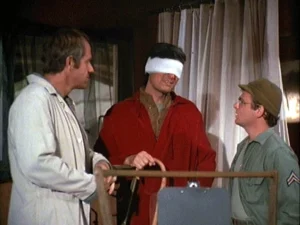
“Goodbye, Farewell and Amen” – The Long Road Home
The series finale remains the most-watched television broadcast in American history, and its impact stemmed from more than nostalgia. The two-and-a-half-hour episode confronted trauma with unflinching honesty as Hawkeye suffered a complete psychological breakdown after repressing a horrifying memory: witnessing a mother suffocate her own baby to prevent its crying from revealing their position to enemy soldiers.
The profound message of this finale revolves around the permanent scars war inflicts and the long, difficult path to healing. Unlike typical television endings that provide neat resolution, MAS*H acknowledged that trauma doesn’t end when the shooting stops. Hawkeye’s recovery under Sidney Freedman’s care illustrates that healing requires confronting our most painful memories rather than burying them. The episode also explored themes of grief, change, and bittersweet endings as the characters departed for uncertain futures. It suggested that while war eventually ends, its psychological aftermath continues indefinitely, requiring ongoing courage to face and process.
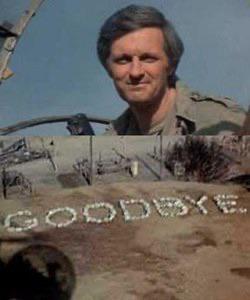
“The Bus” – Survival and Sacrifice in Chaos
When the 4077th staff becomes stranded behind enemy lines with wounded soldiers in Season 4’s “The Bus,” the episode strips away the relative safety of the camp and exposes the characters to war’s immediate danger. As they hide in an abandoned building with limited supplies and enemy forces nearby, the group must make agonizing decisions about rationing morphine, moving the critically wounded, and whether to risk everyone’s lives for the chance to save one person.
The message examines how crisis reveals character and tests the principles we claim to hold. In the safety of the camp, medical staff could maintain idealistic commitments to saving every life. Confronted with their own mortality and limited resources, they faced the brutal calculus of wartime triage. The episode doesn’t judge these impossible choices but instead illuminates how war forces good people into situations where every option carries unbearable consequences. It’s a powerful reminder that moral clarity is a luxury afforded by safety, and true character emerges when survival itself is uncertain.
“Welcome to Korea” – The Casualties of Progress
The Season 4 premiere dealt with the aftermath of Henry Blake’s death and the arrival of his replacement, Colonel Sherman Potter, but it also tackled a deeper theme: the dehumanizing machinery of military bureaucracy. As new characters replaced familiar faces, the episode confronted viewers with an uncomfortable truth—the individual doesn’t matter to the institution. The war machine continues regardless of who falls.
The profound message explores institutional indifference and the struggle to maintain humanity within dehumanizing systems. While the 4077th mourned Henry, replacement personnel arrived with disturbing efficiency, as if individual lives were merely interchangeable parts in a vast machine. Yet the episode also celebrated the human impulse to resist this dehumanization, as the remaining characters determined to honor Henry’s memory by continuing to see each patient as a person, not a number. It’s a meditation on how we preserve our humanity in systems designed to reduce us to functions rather than recognize us as individuals.
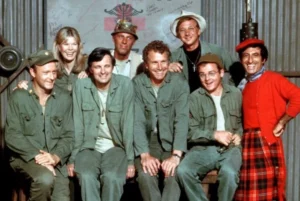
“Point of View” – Through the Eyes of the Wounded
This innovative Season 7 episode filmed entirely from the perspective of a wounded soldier who cannot speak, creating an intimate and disorienting experience for viewers. We see the 4077th staff through a patient’s eyes, hearing their conversations, witnessing their exhaustion, and experiencing their care.
The message revolutionizes perspective on both war and healthcare. By forcing viewers into the position of complete vulnerability—wounded, speechless, dependent on strangers for survival—the episode cultivated profound empathy. It reminded audiences that every patient in that surgical tent was a person with thoughts, fears, and a life waiting beyond the battlefield. The episode also honored the medical professionals who treat countless wounded soldiers, often never knowing their names or their fates. It’s a powerful reminder that war creates two types of trauma: those who endure physical wounds and those who bear witness to endless suffering while trying desperately to heal it.
Conclusion: The Enduring Legacy of Television’s Conscience
These ten episodes represent MASH at its most courageous and profound. In an era when television was expected to provide escapism and easy answers, MASH dared to confront viewers with uncomfortable truths about war, humanity, morality, and trauma. The show’s genius lay not in providing answers but in asking questions that still resonate today: How do good people maintain their humanity in dehumanizing situations? What is the psychological cost of bearing witness to endless suffering? When survival demands moral compromise, how do we live with our choices?
The profound messages embedded in these episodes transcended their Korean War setting to speak to universal human experiences. They acknowledged that war doesn’t create heroes and villains but rather places ordinary people in extraordinary circumstances where courage and cowardice, compassion and cruelty, hope and despair exist simultaneously within each person. They validated trauma before it was culturally acceptable to discuss, honored vulnerability in an era that prized stoicism, and insisted that laughter and tears were not opposites but rather two faces of the same survival mechanism.

Decades after MASH concluded, these episodes remain relevant because they understood that war is not an abstraction but a deeply personal catastrophe that reverberates through generations. They insisted that behind every statistic was a story, behind every wounded soldier was a family, and behind every medical professional was a person struggling with their own demons while trying to save others from theirs. In doing so, MASH didn’t just entertain—it bore witness, it educated, and it demanded that viewers confront uncomfortable truths about the human capacity for both destruction and resilience.
These ten episodes didn’t just deliver profound messages; they changed what television could be and what audiences could expect from the medium. They proved that popular entertainment could challenge, disturb, and enlighten while still captivating millions of viewers. That legacy—the insistence that entertainment can also be art, that comedy can coexist with tragedy, and that television has a responsibility to speak truth even when it’s uncomfortable—remains MAS*H’s most profound message of all.