When MAS*H fans discuss memorable relationships, they typically focus on Hawkeye and BJ’s friendship, Margaret and Hawkeye’s complex dynamic, or Potter’s fatherly bond with the camp. Yet one of the series’ most compelling and underappreciated relationships quietly developed between two seemingly incompatible characters: Major Margaret “Hot Lips” Houlihan, the rigid career officer, and Corporal Maxwell Q. Klinger, the cross-dressing company clerk desperate for discharge. Their journey from mutual incomprehension to genuine respect and affection represents one of the show’s most satisfying character arcs, and these five moments capture the evolution of their remarkable bond.
What makes the Margaret-Klinger dynamic so fascinating is precisely how unlikely it seemed at the start. Margaret embodied everything military—discipline, hierarchy, regulation, order. Klinger represented the opposite—a man literally wearing women’s clothing to mock military standards and escape service. They should have remained eternal adversaries, yet MAS*H’s brilliant writing allowed both characters to grow beyond their initial definitions, and their relationship grew right along with them. These moments showcase not just their individual development but how they helped each other become better versions of themselves.
When Margaret Finally Saw Past the Dresses
Early in the series, Margaret viewed Klinger’s Section 8 schemes with contempt bordering on disgust. To her military mind, his behavior represented everything wrong with modern soldiers—disrespect for uniform, mockery of authority, deliberate flouting of regulations. She demanded he be disciplined, complained about him constantly, and treated his presence as an affront to proper military order. Klinger, for his part, saw her as just another authority figure standing between him and Toledo.
The turning point came gradually as Margaret began recognizing Klinger’s actual competence beneath the theatrical costumes. When Radar departed and Klinger took over as company clerk, he proved surprisingly effective at the job. He knew supply channels, understood bureaucracy, kept records meticulously, and managed the endless paperwork that kept the 4077th functioning. Margaret, who valued competence above almost everything, couldn’t ignore this reality. One pivotal scene showed her defending Klinger’s work to a visiting inspector while he stood there in full makeup and pearls—she’d learned to separate his performance from his actual abilities.
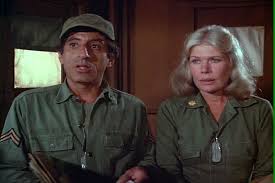
This moment represented Margaret’s growth as much as acknowledgment of Klinger. The early-series “Hot Lips” would never have defended someone who violated regulations so flagrantly. The evolved Margaret understood that effectiveness mattered more than appearance, and that people contained more complexity than their surface presentation suggested. Her recognition of Klinger’s value marked a fundamental shift in how she approached everyone around her.
The Aid Station Crisis That Changed Everything
In the episode “Aid Station,” Hawkeye, Margaret, and Klinger found themselves trapped at a front-line medical station during heavy shelling. This terrifying situation stripped away all pretense and revealed who these people truly were under extreme pressure. Margaret’s leadership shone through as she helped coordinate patient care while explosions rocked the building. Klinger’s genuine courage emerged as he assisted with medical procedures despite his fear, never once complaining or trying to escape.
The most powerful moment came during a lull in the shelling when the three sat exhausted, covered in blood and dirt, processing what they’d just survived. Margaret looked at Klinger—still wearing remnants of his outfit beneath a surgical gown—and something shifted in her expression. She saw him not as the company clown but as a fellow soldier who’d just helped save lives under fire. Klinger saw her not as the uptight martinet but as someone equally scared yet equally committed to doing what had to be done.
This shared trauma created a bond that transcended rank and personality differences. They’d survived something terrible together, and that experience connected them in ways ordinary camp life never could. When they returned to the 4077th, their interactions carried a new subtext—mutual respect born from facing death together. Margaret stopped dismissing Klinger’s schemes quite so readily, and Klinger showed Margaret a deference that went beyond her rank to acknowledge her as a fellow survivor.
Margaret’s Confession About Friendship
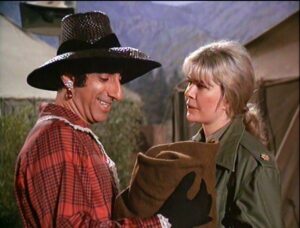
One of the most touching moments between Margaret and Klinger came in the episode “The Birthday Girls” when Margaret confided something deeply personal. As an Army brat who’d moved constantly throughout childhood, she’d learned not to form close attachments because every friendship ended with another transfer, another goodbye, another loss. This revelation explained so much about her rigid adherence to military protocol—rules and hierarchy provided stability that human connections never could.
She shared this with Klinger almost accidentally, a moment of vulnerability she rarely allowed herself. Klinger listened without judgment or jokes, recognizing the pain beneath her words. His response was characteristically kind—he pointed out that she’d been at the 4077th longer than almost anyone and had formed connections whether she admitted it or not. The camp had become her family, and she didn’t have to be alone anymore.
This scene beautifully reversed their typical dynamic. Usually Klinger was the emotionally open one, desperately homesick and vocal about missing his family in Toledo. Margaret maintained professional distance and emotional control. Here, she was the vulnerable one, and Klinger provided the emotional support. The scene demonstrated how far both had come—Margaret trusted Klinger enough to reveal her fears, and Klinger had matured enough to offer genuine comfort rather than his usual wisecracking deflection.
When Klinger Called Margaret Out
Not all their memorable moments were gentle. One particularly powerful scene occurred when Margaret, stressed and overwhelmed, took her frustration out on the enlisted personnel including Klinger. She’d been dealing with command pressures, personal disappointments, and the general exhaustion of war, and she handled it by becoming demanding and critical of everyone around her.

Klinger finally confronted her directly, calling her out for being ungrateful and taking everyone for granted. It was a shocking moment—enlisted men didn’t challenge majors this directly, and Klinger risked serious consequences for his insubordination. Yet his frustration was justified, and more importantly, Margaret knew it. After her initial anger faded, she recognized he was right.
What made this moment significant was Margaret’s response. Instead of pulling rank and destroying Klinger for his disrespect, she actually apologized. She acknowledged that he’d been right to confront her, admitted she’d been unfair, and thanked him for being honest when no one else would. This humility from a character who’d once been defined by rigid hierarchy demonstrated remarkable growth. It also showed she valued her relationship with Klinger enough to be vulnerable, to admit mistakes, and to treat him as someone whose opinion mattered.
The Finale’s Quiet Goodbye
The MAS*H finale “Goodbye, Farewell and Amen” provided emotional closure for every relationship, and Margaret and Klinger’s farewell carried particular weight. While other goodbyes were more dramatic—Hawkeye and BJ’s desperate final moments, Potter’s emotional speeches—Margaret and Klinger’s parting was quieter but no less meaningful.
When Margaret prepared to leave, she sought out Klinger specifically for a private goodbye. They shared a moment that acknowledged everything they’d been through together—the early antagonism, the gradual understanding, the respect that developed, the friendship that grew. No grand speeches were needed; their shared look conveyed it all. Margaret had learned to see past surfaces to the good person underneath. Klinger had learned that authority figures could be human, vulnerable, and worthy of genuine affection.
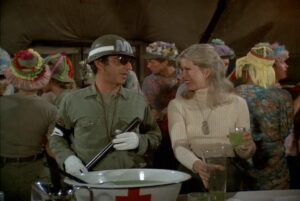
Their embrace lasted longer than protocol dictated, and when they pulled apart, both had tears in their eyes. Klinger made some joke to lighten the moment—characteristic to the end—but Margaret didn’t scold him for it. Instead, she smiled, squeezed his hand one final time, and walked away. It was a perfect ending for two people who’d started as antagonists and finished as friends who genuinely cared for each other.
The Power of Unexpected Connections
The Margaret-Klinger relationship stands as one of MAS*H’s finest achievements in character development. These two people had every reason to remain distant—different ranks, different personalities, different approaches to military service, different goals. Yet the show’s writers understood that real people are complex, that circumstances change perspectives, and that genuine connections can form in the most unlikely places.
Their relationship evolved so naturally that viewers might not even notice it happening until suddenly these two were sharing personal confidences and defending each other to outsiders. This subtlety made it more powerful than relationships built on obvious compatibility. Margaret and Klinger worked as friends precisely because they were so different—they challenged each other, broadened each other’s perspectives, and helped each other grow beyond their limiting initial definitions.
Both Loretta Swit and Jamie Farr brought tremendous depth to these moments, understanding that the small interactions mattered as much as the dramatic confrontations. Their real-life friendship off-camera added authenticity to the on-screen relationship, creating chemistry that made every scene between them feel genuine and earned.
These five moments represent just highlights of a relationship that developed across eleven seasons, but they capture the essence of what made Margaret and Klinger’s connection so special. They proved that respect can grow from initial contempt, that friendship can bloom in unexpected places, and that people who seem to have nothing in common might actually need each other more than anyone realizes.