Television shows come and go, but few achieve true immortality. MAS*H stands as one of those rare exceptions—a series that not only dominated its era but continues to captivate audiences decades after its final episode aired. When the series finale “Goodbye, Farewell and Amen” broadcast on February 28, 1983, approximately 125 million viewers tuned in, making it the most-watched scripted television episode in American history. That record still stands today, an almost unthinkable achievement in our fragmented media landscape.
Yet the real question isn’t why MASH was popular then, but why it remains compelling now. New generations discovering the show through streaming platforms find themselves just as engaged as viewers who watched it during its original eleven-season run. The series hasn’t become a dusty relic of 1970s television—it continues to feel vital, relevant, and surprisingly contemporary. These ten reasons explain why MASH refuses to fade into obscurity and instead keeps winning new fans with each passing year.
The Perfect Balance Between Comedy and Drama
Most sitcoms stay firmly in their lane, delivering reliable laughs without venturing into heavier territory. MAS*H shattered that limitation by seamlessly blending genuine humor with authentic drama. One moment you’d be laughing at Hawkeye’s pranks or Klinger’s latest Section 8 scheme, and the next you’d be confronting the brutal reality of war’s human cost. This tonal flexibility created something unprecedented—a show that could make you laugh and cry within the same episode, sometimes within the same scene.
What makes this balance so effective is that neither element undermines the other. The comedy doesn’t trivialize the serious moments, and the drama doesn’t make the humor feel inappropriate. Instead, they work together to create a more truthful portrayal of how people actually cope with extreme circumstances. Real people facing terrible situations do crack jokes, find absurdity in tragedy, and use laughter as a survival mechanism. MAS*H understood this fundamental human truth and built its entire identity around it, creating a template that influenced countless shows that followed.
Characters Who Grow and Change
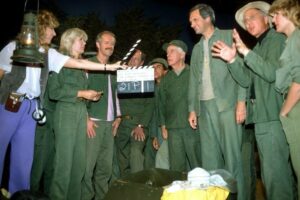
Television characters in the 1970s typically remained static. Each episode reset them to their default settings, ensuring viewers could drop in anywhere without missing character development. MAS*H rejected this approach, allowing its characters to evolve naturally over eleven seasons. Hawkeye Pierce transformed from a wisecracking troublemaker to a deeply traumatized man struggling with the psychological toll of endless surgery and death. Margaret Houlihan evolved from “Hot Lips”—a one-dimensional target for pranks—into a complex, respected officer dealing with her own challenges and growth.
This commitment to character development created something television rarely achieved: characters who felt genuinely alive. Viewers invested in these people because they changed, made mistakes, learned lessons, and carried experiences forward. When Charles Winchester arrived as Frank Burns’ replacement, audiences initially dismissed him as another pompous antagonist. But over time, the show revealed his hidden depths—his secret generosity, his complex relationship with his privileged background, his genuine surgical skill. This patience with character development rewarded loyal viewers while giving the show remarkable depth that holds up to repeated viewing.
The Anti-War Message That Never Preaches
MASH was born from the anti-war sentiment of the Vietnam era, but it never became a heavy-handed political screed. The show trusted its audience to understand the horror and futility of war through careful storytelling rather than explicit sermonizing. By setting the series during the Korean War while it aired during the Vietnam era, MASH created enough distance to comment on war generally rather than any specific conflict. This approach gives the show timeless relevance—its anti-war message applies equally to conflicts in any era.
The brilliance lies in showing rather than telling. We see young soldiers die on operating tables. We watch doctors work beyond exhaustion trying to save lives that politics put at risk. We observe the psychological cost of violence on everyone it touches. The show didn’t need characters to deliver speeches about war’s immorality—the cumulative weight of witnessed suffering made the argument more powerfully than words ever could. This subtlety allows modern viewers to engage with the anti-war themes without feeling lectured, making the message more effective across different political perspectives and time periods.
Humor That Transcends Its Era
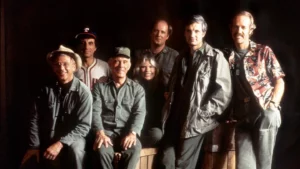
Comedy often ages poorly. Jokes that killed in their original context fall flat years later as cultural references become obscure and sensibilities shift. MAS*H’s humor largely avoids this pitfall by focusing on character-driven comedy and universal human situations rather than topical references or dated humor styles. Hawkeye’s wordplay, Klinger’s theatrical desperation, Winchester’s pompous observations, and Colonel Potter’s folksy wisdom all stem from character rather than contemporary culture.
The physical comedy also remains effective. Watching the camp erupt in pranks, seeing elaborate schemes unfold, or observing the organized chaos of the operating room creates humor that doesn’t depend on understanding 1970s pop culture. The show’s writers understood that comedy rooted in human behavior and relationships would outlast comedy based on temporary trends. This foresight pays dividends for modern audiences, who can laugh at the same moments that entertained viewers forty years ago without needing footnotes to explain the jokes.
Ensemble Cast Chemistry That Still Sparkles
Some television casts work well together. MAS*H’s cast achieved something rarer—they created an ensemble where every combination of characters generated unique energy. Hawkeye and BJ’s friendship felt genuine. Potter and Winchester’s mutual respect despite different backgrounds rang true. Margaret and Hawkeye’s evolving relationship from antagonism to deep friendship developed organically. Even as cast members changed over the years, new actors integrated seamlessly into established dynamics.
This chemistry came from actors who genuinely respected each other and from writers who understood each character deeply enough to write authentic interactions. You can watch any two characters share a scene and find something interesting happening, whether it’s conflict, collaboration, or casual conversation. This consistent quality across all character combinations gives the show remarkable rewatchability—you can focus on different relationships during different viewings and always find new moments to appreciate.

Production Values That Pushed Television Forward
MAS*H didn’t look like other sitcoms of its era. The show shot on location rather than sound stages whenever possible, used single-camera filming instead of the standard three-camera setup, and occasionally experimented with cinematography in ways that felt more like film than television. The attention to visual detail created a more immersive experience that helped sell the reality of the 4077th Mobile Army Surgical Hospital.
The production team’s commitment to authenticity extended beyond visuals. The operating room scenes featured realistic medical procedures. The compound’s layout remained consistent, creating a believable physical space. The show’s willingness to try experimental episodes—like the almost entirely dialogue-free “Point of View” shot from a wounded soldier’s perspective—demonstrated ambition unusual for television at the time. These production choices elevated MAS*H above typical sitcom standards and helped it maintain a premium feel that doesn’t look cheap or dated today.
Tackling Social Issues With Nuance
Throughout its run, MAS*H addressed racism, sexism, mental health, PTSD, addiction, and numerous other social issues with a sophistication rare for its era. The show didn’t present easy answers or simplistic solutions. Instead, it explored these topics through character experiences, showing the complexity and difficulty of real social problems. When the series addressed racism, it showed both overt bigotry and subtle prejudice, along with how people learned and changed their perspectives.
The treatment of mental health particularly stands out. Multiple episodes dealt with psychological breakdown, and the show consistently portrayed seeking help as strength rather than weakness. Dr. Sidney Freedman became a beloved recurring character specifically because he represented mental health care with dignity and effectiveness. This progressive approach to psychiatric treatment in the 1970s and 80s helped normalize therapy and mental health support in ways that remain relevant as modern society continues grappling with these issues.
The Writing That Respects Intelligence
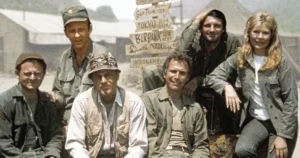
MAS*H never talked down to its audience. The scripts assumed viewers could follow complex storylines, catch subtle references, and appreciate wordplay without having everything explained. This respect for audience intelligence created dense, rewatchable episodes packed with details easy to miss during initial viewing. Characters quoted literature, made historical references, engaged in sophisticated banter, and developed arguments that required attention to follow.
This approach created a show that rewards engagement rather than passive viewing. Paying attention reveals layers of meaning, subtle callbacks to earlier episodes, and character moments that deepen understanding of ongoing storylines. The writing team, led initially by Larry Gelbart and later by others who maintained his standards, consistently delivered scripts that trusted viewers to keep up. This confidence in audience intelligence helped MAS*H appeal to educated viewers who might otherwise have dismissed sitcoms as lowbrow entertainment, expanding television comedy’s potential audience and influence.
Addressing Universal Human Experiences
Beneath the specific setting of a Korean War medical unit, MAS*H explored timeless human experiences everyone recognizes. The desire to go home. The struggle to maintain humanity in inhumane circumstances. The bonds formed through shared hardship. The search for meaning in senseless situations. The small pleasures that sustain us during difficult times. These universal themes make the show accessible to viewers regardless of their personal experience with war or military service.
This universality explains why people who’ve never served in the military still connect deeply with MAS*H. The 4077th becomes a metaphor for any difficult situation people endure together—a demanding job, a challenging family situation, a crisis that tests everyone involved. The show’s exploration of how people maintain their essential selves while adapting to circumstances beyond their control speaks to fundamental human experiences that transcend the specific historical setting.
The Finale That Provided Genuine Closure
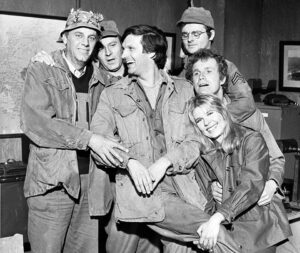
Many beloved television series stumble at the finish line, delivering disappointing conclusions that diminish everything that came before. MAS*H’s two-and-a-half-hour finale “Goodbye, Farewell and Amen” stands as perhaps the greatest series conclusion in television history. It didn’t play it safe or go for easy sentiment. Instead, it delivered a powerful, emotionally devastating conclusion that honored the show’s complex treatment of war’s psychological cost.
The finale addressed trauma, loss, and the difficulty of moving forward after extraordinary experiences. It gave major characters satisfying individual conclusions while acknowledging that the war’s impact would continue long after they left Korea. The episode’s most controversial and powerful moment—Hawkeye’s breakdown and revelation about what happened on a bus—represented the show’s willingness to go dark even at its conclusion. This commitment to authentic emotional truth rather than comfortable resolution demonstrated MAS*H’s integrity and provided closure that felt earned rather than manufactured.
Legacy That Continues Growing
The ultimate proof of MAS*H’s enduring appeal is its continuing influence and relevance. Modern streaming audiences discovering the show find it speaks to contemporary concerns despite being set decades in the past. The questions it raised about war, authority, mental health, friendship, and survival under pressure remain current. The balance it struck between comedy and drama influenced countless shows from “Scrubs” to “The Good Place.” Its willingness to let characters grow and change helped normalize character development in comedy series.
Perhaps most remarkably, MASH maintains its ability to surprise viewers despite being culturally ubiquitous. People familiar with the show’s reputation still find moments that shock them with their darkness or touch them with unexpected emotion. The series refuses to be reduced to simple nostalgic comfort viewing—it challenges, provokes, and moves audiences just as effectively today as during its original run. That vital quality, more than any specific element, explains why MASH continues captivating new generations rather than fading into television history.