Most television dramas rely on traditional antagonists—clearly defined villains whose opposition drives plot conflict and provides clear moral positioning for heroes. MASH distinguished itself by employing a far more sophisticated approach to antagonism. Rather than creating stock villains, the show’s writers developed complex characters who functioned as antagonists not through malice but through conflicting values, institutional loyalty, psychological trauma, or genuine disagreement about how to navigate impossible circumstances. The four most brilliant antagonists in MASH exemplify this sophisticated approach, each representing different types of opposition that forced the show’s heroes to question their assumptions and confront uncomfortable moral complexities.
The First Antagonist: Colonel Flagg—The System Personified
Perhaps MAS*H’s most memorable recurring antagonist is Colonel Flagg, the military intelligence officer whose periodic appearances created significant disruption and moral tension. Portrayed with unsettling effectiveness, Flagg embodied the institutional military apparatus in its most rigid, paranoid, and dehumanizing form. He represented the machinery of war that operated according to logic entirely divorced from the humanitarian concerns that motivated the 4077th’s medical staff.
What made Flagg a brilliant antagonist rather than a simple villain was that he genuinely believed in his mission. He wasn’t sadistic or deliberately cruel; he was a true believer in military hierarchy, security protocols, and institutional loyalty. His opposition to the MASH unit’s more flexible approach to regulations stemmed from genuine conviction that discipline and protocol protected national interests. This fundamental disagreement about values created genuine tension because both sides had reasonable arguments.
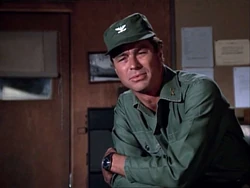
Flagg’s character illustrated a crucial insight: the greatest threats to human decency often come not from deliberately evil people but from people who are simply committed to systems that don’t account for individual humanity. Flagg followed orders, maintained discipline, and fulfilled his institutional responsibilities with diligent intensity. That these actions frequently conflicted with basic human compassion made him a far more effective antagonist than a cartoon villain could ever be.
The Second Antagonist: General Hammond—The Compromised Authority
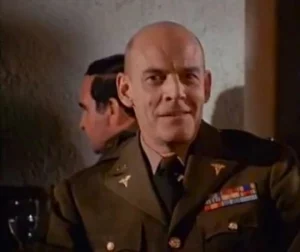
General Hammond, another recurring character, represented a different type of antagonism—the authority figure trapped between institutional demands and personal conscience. Unlike Flagg’s unwavering commitment to protocol, Hammond occasionally demonstrated awareness that the military system he represented contained fundamental injustices. Yet his position required him to enforce regulations and maintain hierarchy even when doing so conflicted with his apparent personal values.
Hammond’s antagonism stemmed from his role as a representative of institutional power rather than from personal malice. He issued orders that the MASH unit found objectionable, maintained discipline when the doctors wanted flexibility, and enforced policies that seemed to prioritize military procedure over human welfare. Yet scenes occasionally revealed his discomfort with these requirements, suggesting that Hammond was himself a victim of the system he represented—trapped by rank and responsibility into enforcing rules he might personally oppose.
This complexity made Hammond a more interesting antagonist than a simple military stereotype. He demonstrated how good people can perpetuate harmful systems, how institutional loyalty can compromise individual morality, and how authority figures often face genuine conflicts between personal conscience and institutional responsibility.
The Third Antagonist: Burns—The Ideological Opponent
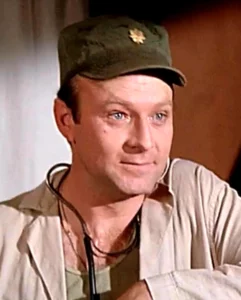
Frank Burns, particularly in earlier seasons, functioned as an internal antagonist—a character whose values and personality directly opposed those of the show’s central characters. Burns represented rigid military conformity, sexual repression, and willingness to sacrifice individual conscience for institutional advancement. His antagonism wasn’t external interference but rather daily conflict with colleagues whose values he fundamentally opposed.
What made Burns effective as an antagonist was that he wasn’t portrayed as simply stupid or evil. He was genuinely committed to military values, maintained serious surgical competence, and believed sincerely that his approach represented proper conduct. His opposition to Hawkeye and B.J.’s irreverent humor, Margaret’s independence, and the unit’s general disregard for strict protocol stemmed from genuine ideological conviction rather than malicious intent.
Burns’ antagonism also illustrated how conflict between people with fundamentally different worldviews creates tension that’s more complex than simple good-versus-evil dynamics. The MASH unit and Burns weren’t fighting over plot objectives; they were fighting over fundamental questions about how to live, what values matter, and how to maintain integrity in an immoral system.
The Fourth Antagonist: War Itself—The Systemic Enemy
Perhaps the most sophisticated antagonist in MAS*H is war itself—the systemic force that creates all the conflicts, moral dilemmas, and human suffering that drive the show’s narrative. War isn’t a character with clear motives or visible presence, yet it functions as the fundamental antagonistic force that opposes everything the show’s characters attempt to accomplish.
This abstract antagonism elevated MAS*H beyond typical television drama. Rather than focusing primarily on interpersonal conflicts or individual villains, the show consistently directed attention toward war’s systemic dehumanization. Individual characters might cooperate, resolve personal conflicts, or achieve momentary harmony, but the underlying antagonistic force of war persisted, creating new casualties, new moral crises, and new impossible choices.
The show’s genius lay in demonstrating that even when characters defeated specific antagonists or resolved particular conflicts, the fundamental antagonism of war remained unresolved and arguably unresolvable. This created a sense of tragic futility that distinguished MAS*H from more conventional dramas where defeating antagonists provided resolution and satisfaction.
The Sophistication of MAS*H’s Antagonistic Approach
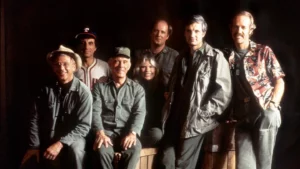
What unified these four antagonists was the show’s refusal to portray opposition as simply evil or wrong. Each antagonist represented legitimate institutional forces, genuine ideological positions, or understandable human responses to impossible circumstances. This sophistication meant that conflict in MAS*H never felt artificially imposed; it emerged naturally from characters’ genuine disagreements about values, methods, and priorities.
The show demonstrated that antagonism doesn’t require malice. People can oppose each other while both acting according to reasonable logic. Institutions can create suffering while maintaining sincere commitment to important values. War can destroy everything while continuing to demand sacrifice from those caught within its logic. These insights elevated MAS*H above entertainment into the realm of genuine social commentary.
The Legacy of MAS*H’s Antagonists
The four brilliant antagonists in MAS*H—Flagg, Hammond, Burns, and war itself—represent television’s more sophisticated approach to conflict. By refusing simple villainy and instead creating antagonists whose opposition stems from legitimate sources, the show created genuine moral and ethical complexity. Viewers weren’t simply invited to root for heroes against villains; they were forced to contemplate how intelligent, dedicated people with genuine values could find themselves in opposition.
This sophistication remains one of MAS*H’s most enduring achievements. Modern viewers encountering these antagonists recognize in them reflections of real institutional conflicts, genuine ideological disagreements, and the tragic reality that opposing war’s logic often requires opposing people who sincerely believe they’re serving important purposes. The show’s antagonists remind us that human conflict rarely involves clear heroes and villains but rather people of varying degrees of wisdom, morality, and institutional commitment struggling to navigate impossible circumstances.