The Mysteries Behind Television’s Most Iconic War Comedy
MAS*H ran for eleven seasons, outlasting the actual Korean War by eight years, and became a cultural phenomenon that shaped television history. Yet despite its massive popularity and countless reruns, there are intriguing questions about the show that even die-hard fans rarely explore. These aren’t trivial trivia questions—they’re fascinating inquiries that reveal the deeper brilliance behind this groundbreaking series and explain why it continues to resonate with audiences decades after its final episode.
Question 1: Why Did MAS*H Last Longer Than the Actual Korean War?
This remains one of the most curious facts about the series. The Korean War lasted three years, from 1950 to 1953, yet MAS*H ran for eleven seasons from 1972 to 1983. How did the creators manage to sustain stories set during a three-year conflict for over a decade without running out of material or breaking the show’s internal timeline?
The answer reveals the show’s true genius. MAS*H was never really about the Korean War specifically—it was about war itself, about humanity under pressure, and about the absurdity of military bureaucracy and violence. The writers deliberately kept the timeline vague, rarely mentioning specific dates or years. This creative choice allowed them to explore universal themes without being constrained by historical accuracy or chronological progression.
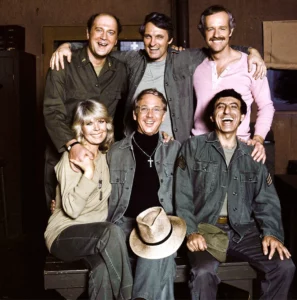
Furthermore, the show evolved beyond its initial premise. Early seasons focused heavily on comedy and hijinks, with Hawkeye and Trapper John’s pranks taking center stage. As the series matured, it delved deeper into character development and dramatic storytelling. Characters came and went—Trapper John replaced by B.J. Hunnicutt, Henry Blake succeeded by Colonel Potter, Frank Burns giving way to Charles Emerson Winchester III. These changes kept the show fresh and allowed for new dynamics and storylines.
The creators also understood that they were creating something larger than a historical drama. They were commenting on the Vietnam War, which was still fresh in American consciousness when the show began. They were exploring timeless questions about morality, friendship, loss, and resilience. The Korean War setting became a canvas for examining human nature itself, making the show’s longevity not just possible but necessary to fully explore these themes.
Question 2: Was MAS*H Really Filmed Without a Laugh Track?
This question touches on one of the most contentious aspects of the show’s production. The answer is both yes and no, and the story behind it reveals a fascinating power struggle between creators and network executives.
Series creator Larry Gelbart adamantly opposed using a laugh track, believing it was disrespectful to the serious subject matter and insulted the audience’s intelligence. He argued that viewers should be trusted to know when something was funny without being prompted. However, CBS executives worried that without a laugh track, audiences wouldn’t recognize the show as a comedy and might be confused by its tonal shifts between humor and drama.
The compromise was complex and evolved over time. The laugh track was used in most episodes, but with significant restrictions. Gelbart successfully fought to eliminate it entirely from operating room scenes, arguing that no one should be laughing while characters performed surgery or dealt with dying patients. This created an interesting dynamic where comedy scenes in the mess tent or Swamp would have laughter, but the moment action shifted to the OR, silence would fall—even if something humorous happened.
In international markets, particularly the United Kingdom, the show aired without any laugh track at all, and many critics argued this version was far superior. When MAS*H was eventually released on home video and streaming platforms, viewers gained the option to watch without the laugh track, and many fans discovered they preferred the show this way. The absence of canned laughter allows the drama to breathe and makes the comedy feel more organic and sophisticated.
This debate highlights how ahead of its time MAS*H truly was. Today, most critically acclaimed comedies eschew laugh tracks entirely, but in the 1970s, this was virtually unheard of. Gelbart’s vision for what television comedy could be helped pave the way for shows like “The Office,” “Arrested Development,” and countless other laugh-track-free comedies.
Question 3: Why Did So Many Characters Leave and How Did It Affect the Show?
Over eleven seasons, MASH experienced significant cast turnover. McLean Stevenson (Henry Blake), Wayne Rogers (Trapper John), Larry Linville (Frank Burns), and Gary Burghoff (Radar) all departed before the series ended. Why did so many actors leave a hit show, and how did these departures shape MASH’s evolution?
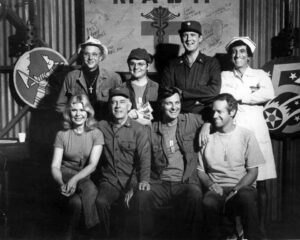
The reasons varied for each actor, but common threads emerged. Wayne Rogers left after three seasons due to creative frustrations, feeling that his character had become secondary to Alan Alda’s Hawkeye. McLean Stevenson departed for similar reasons, hoping to launch his own sitcom (a gamble that unfortunately didn’t pay off). Larry Linville felt he’d taken Frank Burns as far as the character could go and didn’t want to be typecast.
What’s remarkable is how the show not only survived these departures but arguably improved because of them. When Trapper John left, he was replaced by B.J. Hunnicutt, played by Mike Farrell. B.J. was a more grounded, faithful family man, creating different dynamics with Hawkeye and allowing for more mature storytelling. Colonel Potter brought gravitas and warmth that Henry Blake’s character couldn’t provide. Charles Emerson Winchester III was a more sophisticated foil than Frank Burns, challenging Hawkeye and B.J. intellectually rather than just being a comic punching bag.
These replacements demonstrate the writers’ skill at character development and their willingness to evolve rather than simply replicate what worked before. Each new character brought fresh energy while maintaining the show’s core values and themes. The 4077th became a place where people came and went, just like a real military unit, adding authenticity to the storytelling.
Gary Burghoff’s departure as Radar was perhaps the most emotionally significant, as his character had been with the show since the beginning and was a fan favorite. His exit was handled beautifully, with Radar returning to Iowa to care for his family farm, giving the character a satisfying conclusion while acknowledging the loss felt by those left behind.
The Deeper Significance
These three questions reveal why MASH remains relevant and fascinating. The show’s flexibility with time allowed it to transcend its historical setting. The laugh track controversy demonstrated its creators’ commitment to artistic integrity. The cast changes proved that strong writing and clear themes matter more than any individual actor. MASH succeeded because it was willing to take risks, challenge conventions, and trust its audience—lessons that television is still learning today.