While Hawkeye, BJ, and the other doctors often commanded center stage in MASH, the nurses of the 4077th were the show’s quiet backbone—competent, resilient, and complex women navigating a male-dominated military environment during a brutal war. Though the show’s treatment of female characters evolved significantly over its eleven-season run, some of the most powerful and underappreciated moments came from interactions between the nurses themselves. These scenes revealed sisterhood forged in trauma, professional excellence under impossible conditions, and the unique challenges women faced in 1950s military culture. Here are five memorable moments that showcased the nurses’ stories and deserve greater recognition in MASH’s legacy.
Margaret and the Night Shift Nurses: Solidarity in the OR
One particularly powerful episode depicted Major Margaret Houlihan working an exhausting overnight shift alongside a rotation of nurses during a massive casualty influx. What made this sequence remarkable was how it showed the unspoken communication and absolute trust between Margaret and her nursing staff. As surgical cases piled up and supplies dwindled, the cameras captured quiet moments between procedures where the nurses supported each other—a hand on a shoulder after a young patient died, a knowing glance when a doctor barked unreasonable orders, Margaret’s subtle nod of approval when a junior nurse made a critical decision independently.
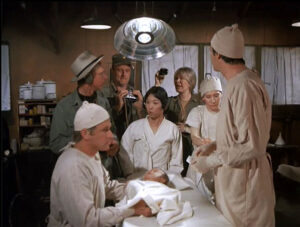
This wasn’t the typical Margaret who clashed with Hawkeye or enforced regulations. This was Margaret the Chief Nurse, respected by her team for her competence and fierce advocacy on their behalf. The scene where she stood up to a visiting colonel who dismissed a nurse’s medical observation, firmly stating “My nurses know what they’re doing, and you’d be wise to listen,” showcased leadership and professional respect that transcended the show’s usual comedy. It revealed that whatever chaos existed between shifts, in the OR these women functioned as a unified, expert team where rank mattered less than skill and mutual trust.
Nurse Kellye’s Stand: Breaking the Invisible Woman Syndrome
For years, Nurse Kellye Yamato appeared in the background of scenes—competent, present, but rarely acknowledged as fully human by the male characters who constantly pursued other nurses. Then came the episode where she finally confronted Hawkeye about his pattern of looking right through her while chasing after every other woman in camp. Her emotional outburst—”I’m not just wallpaper, I’m a person!”—was a stunning moment of truth that called out the show’s own tendency to sideline certain characters.
What made this moment even more powerful was the scene that followed, where other nurses gathered around Kellye in the nurses’ tent, sharing their own experiences of being reduced to decoration or conquest rather than seen as complete human beings. This rare glimpse into the nurses’ private space revealed the emotional labor they constantly performed—being professional in the OR, diplomatic with difficult doctors, and somehow maintaining grace while being objectified. The conversation touched on the specific challenges Kellye faced as an Asian American woman in a predominantly white environment, acknowledging intersectional issues that television rarely addressed in that era. This moment transformed Kellye from background character to fully realized person and challenged viewers to examine their own patterns of who they see and who they overlook.
Margaret’s Divorce: The Nurses as Chosen Family
When Margaret’s marriage to Lieutenant Colonel Donald Penobscot fell apart, the show delivered some of its most nuanced exploration of female friendship and professional women’s lives. The scene where Margaret, usually so controlled and proper, broke down in the nurses’ tent surrounded by her staff was profoundly moving. Rather than gossip or judgment, the nurses created protective space for their chief to be vulnerable. They didn’t try to fix her pain or offer empty platitudes—they simply sat with her in it.
What followed was equally important: watching the nurses subtly cover for Margaret’s distraction during shifts, running interference when she needed space, and later, gently encouraging her to reclaim her identity beyond the failed marriage. The moment when a younger nurse told Margaret, “You taught me I could be a damn good nurse and still be myself. Don’t forget that lesson applies to you too,” illustrated mentorship and mutual support that went beyond professional hierarchy. These women had become family in the truest sense, and this storyline honored the reality that for many women, especially those in demanding careers, female friendship provides essential emotional infrastructure that makes survival possible.
The New Nurse Initiation: Tradition and Trauma
An often-overlooked episode featured a newly arrived nurse’s first mass casualty situation and her subsequent traumatic reaction. While the doctors debated surgical techniques, it was the other nurses who gathered around their shaken colleague afterward, each sharing their own first-time horror stories. This passing down of survival wisdom—how to compartmentalize, when to let yourself cry, which doctors to trust when you’re overwhelmed—represented an informal support network that military structures never acknowledged but which was essential to functioning.
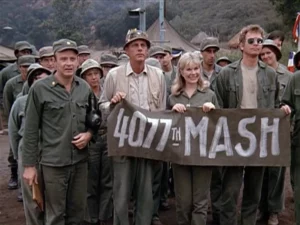
The scene where an older nurse described her coping mechanisms, another shared breathing techniques for when panic sets in, and Margaret offered hard-won advice about maintaining professional composure while still processing grief, was a masterclass in female mentorship. These weren’t grand speeches—they were practical tools exchanged between women who understood that their male colleagues would never fully grasp the additional emotional labor women performed to be taken seriously in this environment. The new nurse’s gradual integration into this sisterhood, marked by small gestures of inclusion and trust, showed how women created community and continuity in a transient, traumatic setting.
The Nurses’ Poker Game: Reclaiming Space and Voice
One episode featured the nurses hosting their own poker game after being excluded from the doctors’ regular game in the Swamp. What began as a comedic setup transformed into something more significant. As the nurses played, their conversation revealed dimensions of their lives rarely explored—their career ambitions beyond military service, their frustrations with being professionally competent yet socially dismissed, their observations about the doctors’ behavior that were far more perceptive than the doctors realized.
The game became a space of honesty and rebellion. They discussed which doctors they respected versus which ones they merely tolerated, shared strategies for navigating military sexism, and revealed their own romantic entanglements and heartbreaks with candor impossible in mixed company. When Hawkeye and BJ eventually crashed the game and were surprised by the nurses’ skill and the large pot of money at stake, the nurses’ amusement at the doctors’ assumptions was telling. These women had their own lives, their own competencies, their own worlds that existed completely independent of male attention or approval. This rare glimpse behind the curtain challenged the show’s usual perspective and reminded viewers that every background character is the protagonist of their own story.
The Legacy of These Moments
While MAS*H often centered male experiences and occasionally stumbled into sexist tropes typical of its era, these five moments between nurses represented the show at its most progressive and perceptive. They acknowledged that women in military medicine faced unique challenges that went beyond the universal horrors of war. They showed female friendship as essential infrastructure rather than frivolous bonding. They revealed professional competence coexisting with emotional vulnerability without suggesting these were contradictory.
These nurse-centered moments also highlighted something the show understood better as it matured: that the most interesting stories often happen in spaces we don’t usually watch, between people we’ve trained ourselves to see as supporting cast. The nurses of the 4077th weren’t just background scenery or romantic interests—they were complex professionals navigating impossible circumstances, and when the show bothered to focus on them, the results were consistently compelling.
For modern viewers discovering or revisiting MAS*H, these moments offer insight into how women carved out dignity, competence, and community in environments designed to minimize them. They remind us that every organization has informal networks of support that make official structures function, and that those networks—especially among marginalized groups—deserve recognition and respect.