In an era of endless streaming options and shiny new content released daily, suggesting you rewatch a show that ended over forty years ago might seem absurd. Yet MAS*H isn’t just holding up—it’s becoming increasingly relevant in ways that make modern television look superficial by comparison. Whether you watched it during its original run or you’ve never seen a single episode, right now is the perfect time to experience or rediscover this masterpiece that somehow predicted the conversations we’re having in 2025.
It Tackles Mental Health With Unprecedented Honesty
Long before mental health became a mainstream conversation topic, MAS*H was depicting PTSD, depression, anxiety, and psychological trauma with a nuance that most contemporary shows still can’t match. The series didn’t treat mental health as a “very special episode” gimmick—it wove psychological reality into the fabric of nearly every story, showing how constant exposure to trauma affects even the strongest people.
Hawkeye Pierce’s gradual psychological deterioration throughout the series, culminating in his breakdown in the finale, represents one of television’s most accurate portrayals of cumulative trauma. The show understood that mental health isn’t about single dramatic moments—it’s about the slow erosion that happens when you’re exposed to horror day after day while expected to function normally. Episodes like “Heal Thyself” where Hawkeye can’t operate due to psychosomatic symptoms, or “Bless You, Hawkeye” where childhood trauma resurfaces under stress, demonstrate psychological sophistication that most 2025 dramas still haven’t achieved.
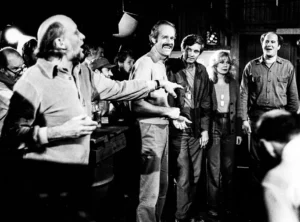
What makes this especially powerful for contemporary viewers is how MAS*H normalized seeking help and acknowledging vulnerability. In an era when mental health awareness is finally gaining traction, watching characters from the 1950s—traditionally the most emotionally repressed period in American culture—openly discuss their psychological struggles and support each other through breakdowns feels both revolutionary and deeply comforting. The show understood decades ago what we’re still learning: mental health is everyone’s concern, and acknowledging weakness is actually strength.
The Humor Is Smarter Than Most Modern Comedy
In today’s comedy landscape dominated by references, cringe humor, and shock value, MAS*H’s sophisticated wit feels refreshingly intelligent. The show trusted its audience to catch literary allusions, understand wordplay, and appreciate humor that emerged from character rather than setup-punchline formulas. Watching it now is like rediscovering what comedy can be when writers respect viewer intelligence.
Hawkeye’s rapid-fire banter isn’t just funny—it’s linguistically brilliant, packed with double meanings, cultural references, and improvised-feeling spontaneity that reveals deep character understanding. The show could make you laugh at a Shakespeare reference in one scene and then gut you emotionally in the next, demonstrating that comedy and drama aren’t opposite—they’re complementary tools for exploring human experience.
What’s particularly striking for modern viewers is how much comedy MASH mines from ideas rather than situations. Contemporary sitcoms often rely on embarrassing scenarios or characters behaving stupidly, but MASH’s humor emerged from intelligent people using wit as a survival mechanism. The jokes serve a purpose beyond laughter—they’re coping mechanisms, acts of rebellion, and assertions of humanity in dehumanizing circumstances. This gives the comedy weight and meaning that makes it satisfying decades later, while humor based purely on contemporary references or shock value ages poorly.
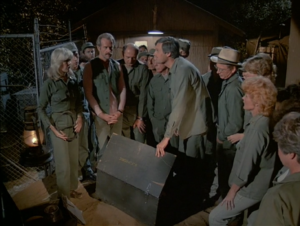
It Understands Authority and Institutional Failure Better Than Any Current Show
If you’re frustrated with bureaucracies that prioritize procedures over people, hierarchies that protect incompetence, and institutions that serve themselves rather than their stated missions, MAS*H will feel painfully current. The show’s critique of military bureaucracy, meaningless regulations, and authoritarian thinking speaks directly to contemporary frustrations with institutions that seem increasingly divorced from reality.
Episodes depicting supply shortages while officers worry about uniform regulations, or critically injured patients waiting while paperwork gets processed, mirror modern experiences with healthcare systems, corporate policies, and government agencies that lose sight of their actual purpose. The show understood that the greatest evils often aren’t committed by villains but by ordinary people following rules without questioning whether those rules make sense.
Frank Burns and Charles Winchester represent different types of institutional failure—Burns is the incompetent person protected by hierarchy, while Winchester is the skilled professional whose elitism makes him part of the problem despite his abilities. Both types exist in every workplace, every organization, and every power structure in 2025. Watching the 4077th navigate these dysfunctions offers both catharsis and insight into how good people survive bad systems without becoming complicit or losing their integrity.
The Show’s Treatment of War Remains Brutally Relevant
MASH ostensibly depicted the Korean War but really commented on Vietnam, and today it speaks to every conflict since. The show’s central message—that war is organized insanity that destroys everyone it touches—hasn’t become less relevant just because the specific wars changed. In 2025, with ongoing global conflicts and continuing debates about military intervention, MASH’s anti-war stance feels as urgent as ever.

What makes the show’s approach powerful is its refusal to romanticize any aspect of war. There are no noble battles or glorious victories, only endless casualties and moral compromises. The doctors save lives not because war gives their work meaning but because people keep arriving broken and bleeding through no fault of their own. The show presents war as a massive failure of human civilization that creates needless suffering, and everyone involved—even those opposing it—becomes complicit simply by being there.
For contemporary viewers, MAS*H offers perspective on how nations sleepwalk into conflicts, how propaganda obscures reality, and how ordinary people get caught in decisions made by leaders safely distant from consequences. The show’s depiction of soldiers just trying to survive until they can go home resonates with anyone who’s watched news coverage of conflicts where the stated reasons seem increasingly disconnected from observable reality.
It Shows Genuine Human Connection in an Increasingly Disconnected World
Perhaps MAS*H’s most valuable lesson for 2025 viewers is its portrayal of real human relationships—messy, complicated, but ultimately sustaining. In an era of social media superficiality and parasocial relationships, watching characters who genuinely know, challenge, and support each other feels almost subversive.
The relationships in MAS*H aren’t perfect or idealized. People fight, misunderstand each other, and sometimes genuinely dislike each other, but they’re bound together by shared circumstances and mutual dependence. Hawkeye and Margaret’s relationship evolution from mutual antagonism to deep respect and affection demonstrates how people can change and grow when they actually engage with each other as complex humans rather than fixed types.
The show also depicts male friendship with emotional depth rarely seen in media even today. Hawkeye and B.J.’s relationship includes vulnerability, emotional support, and genuine intimacy without the homophobic panic that still infects much contemporary portrayal of male friendship. They cry together, express love for each other, and depend on each other emotionally in ways that feel revolutionary compared to the emotional constipation of most male characters in 2025 media.

What makes these relationships resonate now is their authenticity. The characters aren’t performing connection for an audience—they’re actually connecting because they need each other to survive. In a world where much interaction feels performative and transactional, MAS*H reminds us what genuine human connection looks like and why it’s essential for survival, sanity, and meaning.
Why Now Is the Perfect Time
Rewatching MAS*H in 2025 offers more than nostalgia—it provides perspective, insight, and surprising comfort. The show proves that sophisticated storytelling doesn’t require massive budgets or cutting-edge effects; it requires writers who understand human nature, actors who can convey complex emotions, and creators willing to trust their audience.
In a media landscape increasingly dominated by franchises, reboots, and algorithm-optimized content, MAS*H stands as a reminder of what television can achieve when it prioritizes substance over spectacle. The show dealt with serious subjects through intelligent writing, complex characters, and genuine emotional honesty—qualities that never go out of style and feel increasingly rare in contemporary content.
Whether you’re discovering MAS*H for the first time or returning after years away, you’ll find a show that respects your intelligence, engages your emotions, and trusts that you can handle complexity, ambiguity, and uncomfortable truths. That’s not just good television—it’s exactly what we need right now.