MAS*H wasn’t just a comedy about war—it was a masterclass in character development, and nowhere was this more evident than in its portrayal of antagonists. While Hawkeye and the gang battled the absurdity of war with humor and compassion, they faced adversaries who embodied everything wrong with military bureaucracy, ego, and moral compromise. These weren’t cartoon villains twirling mustaches; they were complex, believable characters whose actions forced us to confront uncomfortable truths about authority, ethics, and human weakness.
Major Frank Burns: The Coward Behind the Rank
Frank Burns stands as perhaps the most memorable antagonist in MAS*H history, not because he was powerful, but because he was pathetically real. Burns represented every incompetent authority figure who ever hid behind rules and regulations to mask their inadequacy. His surgical skills were questionable at best, yet his inflated ego and adherence to military protocol made him dangerous in the operating room.
What made Burns a perfect villain was his complete lack of self-awareness. He genuinely believed himself superior to Hawkeye and Trapper John, despite being outmatched in every meaningful way. His affair with Margaret Houlihan added layers of hypocrisy to his character—preaching morality and military discipline while engaging in adultery. Burns wasn’t just incompetent; he was a walking contradiction who valued appearance over substance, rank over competence, and ego over patient care.
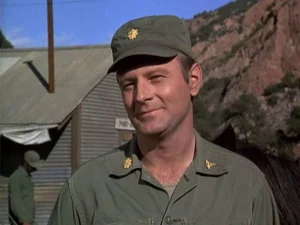
The brilliance of Burns as an antagonist lay in how he revealed the dangers of blind authoritarianism. Every time he pulled rank instead of using reason, every time he chose protocol over common sense, viewers saw the toxic consequences of valuing hierarchy over humanity. His eventual mental breakdown and departure didn’t feel triumphant—it felt tragic, a reminder that war destroys everyone, even those too foolish to realize they’re being destroyed.
Major Charles Emerson Winchester III: The Elite Snob with Hidden Depths
When Charles Winchester replaced Frank Burns, MAS*H gained a far more sophisticated antagonist. Winchester wasn’t incompetent—quite the opposite. He was a brilliant surgeon from Boston’s medical elite, and he knew it. His snobbery, elitism, and condescending attitude made him instantly unlikeable, yet his competence forced both the characters and viewers to grudgingly respect him.
Winchester’s perfection as a villain stemmed from his complexity. Unlike Burns, who was simply incompetent and hypocritical, Winchester challenged our assumptions about what makes someone an antagonist. He saved lives with exceptional skill while simultaneously making everyone around him miserable with his arrogance. His obsession with classical music, fine wine, and proper etiquette in a war zone highlighted the absurdity of clinging to class distinctions when surrounded by death.
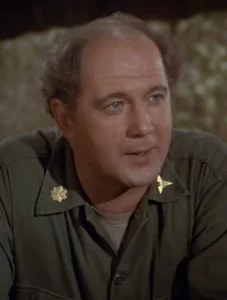
What elevated Winchester beyond typical villainy were moments of unexpected humanity. His treatment of a gifted Korean musical prodigy, his secret charitable acts, and his genuine anguish over losing patients revealed depths that Frank Burns never possessed. Winchester forced viewers to grapple with an uncomfortable question: Can someone be both morally superior and emotionally insufferable? His character proved that antagonists don’t need to be evil—sometimes they just need to be difficult, complicated people whose flaws clash spectacularly with those around them.
Colonel Flagg: Paranoia Personified
Colonel Flagg appeared sporadically throughout MAS*H’s run, but each appearance left an indelible mark. As an intelligence officer obsessed with finding communists and spies, Flagg embodied Cold War paranoia taken to psychotic extremes. He was unpredictable, violent, and utterly convinced that enemies lurked everywhere—including within the 4077th itself.
Flagg’s perfection as a villain lay in his satirical power. He wasn’t just a character; he was a commentary on McCarthyism, government overreach, and the paranoid mindset that sees threats in every shadow. His willingness to torture, intimidate, and violate civil liberties in pursuit of nebulous “security threats” made him genuinely frightening despite his often comedic presentation.
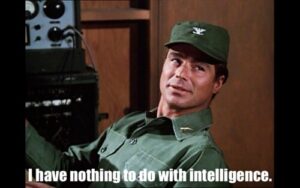
The genius of Flagg was how MAS*H used him to critique the very system the characters served. While the 4077th fought to save lives, Flagg represented the military-intelligence apparatus that viewed everyone as expendable in pursuit of ideological victory. His casual violence and complete lack of empathy stood in stark contrast to the medical staff’s dedication to healing, creating a powerful tension that exposed the contradictions inherent in fighting a war supposedly about freedom and democracy.
Lieutenant Colonel Henry Blake (in his worst moments): The Failure of Passive Leadership
Listing Henry Blake as a villain feels wrong—he was lovable, well-meaning, and genuinely cared about his people. Yet in his weakest moments, Blake’s passive leadership and inability to stand up to authority created antagonistic situations that endangered his unit. His willingness to cave to pressure from higher-ups, his reluctance to confront incompetence, and his occasional prioritization of self-preservation over principle made him, at times, an obstacle rather than a protector.
Blake’s complexity as an occasional antagonist revealed something profound about leadership failures. He wasn’t evil or corrupt—he was simply overwhelmed and conflict-averse. His fishing trips and scotch-drinking sessions were coping mechanisms, but they also represented abdication of responsibility at critical moments. When Burns or Winchester created problems, Blake’s failure to address them decisively allowed toxic situations to fester.
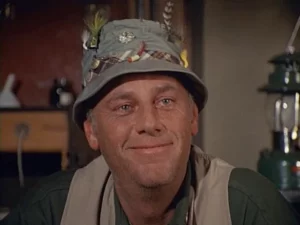
What made Blake’s antagonistic moments perfect was their realism. Most bad leaders aren’t villains—they’re decent people who lack the courage or capacity to lead effectively under pressure. Blake’s ultimate fate added tragic weight to these failures, suggesting that good intentions without strong leadership can have devastating consequences.
The Lasting Impact of MAS*H’s Antagonists
These four characters demonstrate why MAS*H remains relevant decades after its finale. The show understood that the best antagonists aren’t simple—they’re reflections of real human flaws amplified by extraordinary circumstances. Burns showed us dangerous incompetence protected by hierarchy. Winchester revealed how brilliance without compassion creates isolation. Flagg embodied institutional paranoia and moral compromise. Blake demonstrated how leadership failures enable dysfunction.
None of these villains were evil for evil’s sake. They were products of their environment, their egos, their fears, and their limitations. They forced the protagonists—and viewers—to confront uncomfortable questions about authority, competence, morality, and responsibility. They made us laugh, cringe, and think, often simultaneously.
The perfect villain doesn’t just oppose the hero—they reveal something true about the world and human nature. MAS*H’s antagonists did exactly that, which is why they remain unforgettable long after the laughter fades.