Every actor has a story about the role that changed their life, but few can say their biggest break came directly from their most humiliating professional failure. Sally Struthers, beloved for her iconic portrayal of Gloria Bunker on the groundbreaking sitcom “All in the Family,” has one of Hollywood’s most remarkable tales of triumph emerging from the ashes of rejection. Her journey from being dismissed as cheap-looking talent to becoming an Emmy-winning television legend proves that sometimes the universe has better plans than we could ever imagine for ourselves.
Before she became America’s favorite sitcom daughter, known for her distinctive voice and brilliant comedic timing, Struthers was simply trying to make it in show business like thousands of other young performers flooding Hollywood. Her entry point into television came through “The Smothers Brothers Comedy Hour,” a variety show that would later be remembered for showcasing some of the greatest musical acts of the 1970s. Struthers worked as a dancer on the program, a role that might not have been glamorous but was enough to put her on the radar of Norman Lear, an up-and-coming writer-producer who was about to revolutionize American television forever.
The Crushing Blow That Changed Everything
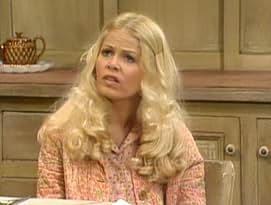
In a revealing 2021 interview with Closer Weekly, Struthers opened up about the devastating moment that nearly derailed her career but ultimately set her on the path to stardom. She had transitioned from “The Smothers Brothers” to “The Tim Conway Comedy Hour,” expecting to appear in all thirteen episodes of the series. Everything seemed to be going according to plan until the fifth show aired, and television executives made a decision that would crush the young performer’s confidence.
“Get rid of that dancer girl. She makes the show look cheap!” The words from network executives cut deep. Struthers wasn’t just being let go; she was being told that her very presence diminished the quality of the production. In her interview with Newsday, she explained the painful irony of the situation. A producer on the show desperately tried to defend her to “the suits in New York,” explaining that her role as the show’s sole dancer was intentionally comedic, part of a running gag about the series operating on a shoestring budget. The minimalist approach to dance numbers was supposed to be funny, not actually indicative of cheapness.
But the producer’s explanations fell on deaf ears. “So I was let go,” Struthers told Closer Weekly, the pain of that memory still evident decades later. “I was distraught! I adored Tim Conway and wondered what would happen to me next.” At that moment, unemployed and rejected, Struthers couldn’t have known that she’d just dodged a bullet. Conway’s show would last only one season before cancellation, disappearing into television history as a footnote. Meanwhile, the opportunity that was about to present itself would run for nine seasons, win twenty-two Emmy Awards, and establish itself as one of the most important programs in television history.

A Raspy Voice and Perfect Timing
Sometimes destiny has a sense of humor. When Struthers went to audition for Norman Lear, he was far from the household name he would soon become. “I went to read for this man nobody knew, Norman Lear,” Struthers recalled. At the time, Tim Conway was the established star, the known commodity from “McHale’s Navy” who would later become a recurring player on “The Carol Burnett Show.” Lear, by contrast, was an unproven entity with a controversial pilot that multiple networks had already rejected.
“He said it was the role of the daughter, and he gave me a yelling scene,” Struthers explained. What happened next was another stroke of cosmic intervention. Struthers arrived at the audition suffering from laryngitis, her already distinctive voice rendered even more raspy and memorable by illness. Rather than asking to reschedule or apologizing for her condition, she powered through the reading, her scratchy voice adding an unexpected layer of authenticity and memorability to her performance.
“I had laryngitis that day, so my voice was raspy, but I guess it made him remember me,” she said. In an industry where thousands of young actresses were competing for the same roles, that raspy voice became her secret weapon, the detail that made her audition unforgettable. “He narrowed it down to four young ladies, and I was one of the final four.”
The Chemistry That Created Magic
According to Jim Cullins’ comprehensive book “Those Were the Days: Why All in the Family Still Matters,” Struthers’ path to the audition had actually begun during her time on “The Smothers Brothers Comedy Hour.” Director John Rich had caught her performance on that show and specifically told Norman Lear to check her out. It was one more link in the chain of seemingly random events that would ultimately change her life.
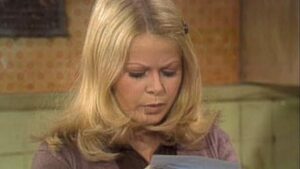
When Struthers auditioned alongside Rob Reiner, who would play her husband Mike “Meathead” Stivic, something extraordinary happened. “She auditioned with [co-star Rob Reiner] and it was another bolt of lightning,” Lear recalled in Cullins’ book. The chemistry between them was immediate, undeniable, and perfect. Years later, Lear would describe the casting of Struthers and Reiner, and their instant rapport with Carroll O’Connor and Jean Stapleton as the Bunker parents, as the “magic” that made “All in the Family” work.
“The gods wanted me to come across Rob Reiner and Sally Struthers,” the legendary producer told Entertainment Weekly in 2021. It was the kind of alignment that can’t be manufactured or forced, the rare confluence of talent, timing, and chemistry that producers dream about but rarely achieve.
Third Time’s the Charm
What makes Struthers’ story even more remarkable is a detail that few casual fans of the show know. “Very few people know that Rob Reiner and I were the third set of kids for that show,” Struthers revealed to Newsday. “Talk about luck.” She’s absolutely right—it was the third pilot that finally got “All in the Family” on the air after two previous attempts had failed to convince network executives that American audiences were ready for such controversial content.
The show that everyone said was too edgy, too political, and too risky became a cultural phenomenon that dominated ratings and conversations for nearly a decade. Struthers won two Emmy Awards for her performance as Gloria, and the show itself collected twenty-two Emmys overall, cementing its place as one of television’s most influential programs.
From Rejection to Television Royalty
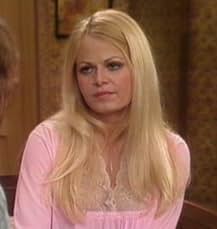
Looking back at her journey, Sally Struthers’ story serves as a powerful reminder that rejection often redirects us toward better opportunities. Being fired from “The Tim Conway Comedy Hour” and being told she made the show “look cheap” could have ended her career or shattered her confidence permanently. Instead, it freed her up to audition for a role that would define her career and make her a household name.
The lesson in Struthers’ experience resonates beyond Hollywood. Sometimes what feels like devastating failure is actually the universe clearing the path for something far better. If those executives hadn’t fired her, she might have been contractually obligated to a show that quickly cancelled, missing her chance to audition for Norman Lear entirely. If she hadn’t had laryngitis that day, her audition might not have been memorable enough to make the final four. If she and Rob Reiner hadn’t been the third set of actors to try out for the roles, the show might never have found its magic.
Sally Struthers didn’t just land a role on “All in the Family”—she became an essential part of television history, proving that sometimes the best response to hearing “you’re fired” is simply “thank you.”