Major Frank Burns remains one of television’s most memorable antagonists—a character so perfectly crafted in his incompetence, insecurity, and moral hypocrisy that he became simultaneously despicable and oddly pitiable. Larry Linville’s brilliant portrayal created a character who generated laughs while also provoking uncomfortable questions about authority, competence, and what happens when mediocre men are given power they haven’t earned. These three questions about Frank Burns illuminate not just his character but MAS*H’s sophisticated approach to comedy, its willingness to explore darkness within humor, and its commentary on systemic failures that allow dangerous incompetence to flourish unchecked in positions of life-and-death responsibility.
Why Was Frank Burns So Incompetent Yet Still a Surgeon?
The most disturbing question about Frank Burns centers on his medical incompetence—how did someone so clearly unsuited for surgery end up as a military surgeon responsible for saving lives? The show never provided explicit backstory, but context clues painted a troubling picture. Frank likely came from a wealthy, connected family whose influence secured his medical school acceptance and subsequent positions despite marginal abilities. His frequent references to his family’s status and connections suggested someone who had been propped up by privilege throughout his life, never forced to truly excel because money and influence smoothed his path.
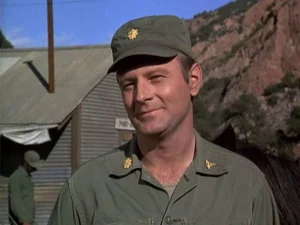
MAS*H used Frank’s incompetence as dark comedy, with Hawkeye and Trapper constantly monitoring his work to catch potentially fatal mistakes. But beneath the humor lay genuinely unsettling implications—Frank represented a systemic failure where connected mediocrity trumped merit, where institutions prioritized credentials over actual competence. The military needed surgeons desperately during wartime and apparently didn’t scrutinize qualifications carefully enough, allowing someone like Frank to slip through. His presence in the operating room wasn’t just comedy fodder but commentary on how institutional failures endanger the vulnerable people those institutions claim to protect.
The show demonstrated Frank’s incompetence through multiple storylines where his surgical errors required other doctors’ interventions, where his diagnostic skills proved dangerously inadequate, and where his medical knowledge had frightening gaps. Yet Frank’s rank and position protected him from consequences that would have ended a less connected person’s career. This protection illustrated how power structures often shield the incompetent while scapegoating the capable, how mediocre men fail upward while talented people without connections struggle for recognition.
What made Frank’s incompetence particularly dark was that patients died because of systemic failures that elevated and protected him. The show occasionally acknowledged this horror—moments when Hawkeye’s fury at Frank transcended comedy to become genuine moral outrage that someone so incompetent wielded power over life and death. Frank Burns wasn’t just a comic villain but a representation of institutional dysfunction with real human costs, making viewers laugh while simultaneously making them uncomfortable about what that laughter obscured.
Was Frank Burns Actually Aware of His Own Inadequacy?
The second fascinating question probes Frank’s self-awareness—did he genuinely believe in his own competence, or was his bluster defensive compensation for secret knowledge of his inadequacy? The evidence suggested complex, shifting psychology. Frank’s constant assertions of superiority and his appeals to rank and authority when challenged suggested deep insecurity. Truly confident people don’t need to constantly remind others of their status and credentials. Frank’s aggressive defensiveness whenever his medical judgment was questioned indicated that on some level, he knew he was out of his depth.
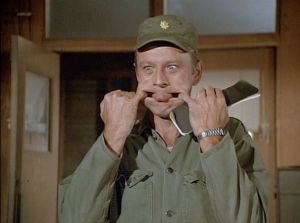
Certain episodes revealed moments of devastating self-awareness when Frank’s defenses cracked to expose terrifying recognition of his own failures. After particularly bad surgical outcomes, viewers glimpsed Frank experiencing genuine distress and shame, suggesting he understood on some level that patients suffered because of his inadequacy. These moments were brief and quickly covered by renewed bluster, but they revealed psychological complexity beneath his cartoonish villainy. Frank lived in perpetual fear of exposure, knowing that without his rank and connections, his incompetence would be undeniable.
This potential self-awareness made Frank more tragic than purely villainous. He was trapped in a position he couldn’t adequately fill, possibly aware of his inadequacy but unable to admit it without destroying his entire self-concept. His relationship with Margaret Houlihan provided the only realm where he felt competent and valued, explaining his desperate clinging to that affair even when it became clearly dysfunctional. With Margaret, Frank could briefly feel like the capable, desirable man he pretended to be everywhere else. When that relationship ended, he lost his only refuge from his own inadequacy, contributing to his eventual psychological breakdown and departure from the 4077th.
The question of Frank’s self-awareness highlighted MAS*H’s sophisticated character work. He could have been merely a one-dimensional buffoon, but Linville and the writers created someone more nuanced—a man caught between delusion and devastating self-knowledge, using bluster and authoritarianism to avoid confronting truths he couldn’t psychologically afford to acknowledge. This complexity made him more effective as comedy while also more unsettling as commentary on how systems protect men from facing their own inadequacy until catastrophic failure forces recognition.
Why Did MAS*H Make Frank Burns So Morally Hypocritical?
The third question examines why the show made Frank not just incompetent but also profoundly hypocritical in his moral and religious pronouncements. Frank constantly invoked God, patriotism, and traditional values while simultaneously conducting an extramarital affair, displaying racism and bigotry, lying repeatedly, and showing selfishness that contradicted every value he claimed to hold. This combination of fervent moral rhetoric and personal hypocrisy made Frank particularly despicable, transforming him from merely incompetent to actively hypocritical.

MAS*H used Frank’s hypocrisy as pointed satire of religious and political hypocrisy more broadly. Frank represented people who weaponize moral rhetoric to claim superiority while living in ways that completely contradict their stated values. His character critiqued how certain people use religion and patriotism as shields for their own failings and weapons against those they dislike, how moral language becomes performance rather than genuine ethical commitment. Frank prayed loudly while treating people cruelly, invoked patriotism while shirking dangerous duties, and lectured others about morality while conducting an affair—exposing how easily righteous rhetoric masks moral bankruptcy.
The show particularly targeted Frank’s selective application of rules and values. He demanded strict adherence to military protocol from others while ignoring regulations himself when convenient. He condemned Hawkeye and Trapper’s drinking and womanizing while pursuing Margaret despite both being married to other people. He invoked Christian values while displaying none of Christ’s compassion, mercy, or humility. This selective morality demonstrated how hypocrites construct ethical frameworks that conveniently excuse their own behavior while condemning others for similar or lesser transgressions.
Frank’s hypocrisy also served dramatic function, making him unsympathetic enough that viewers enjoyed watching Hawkeye and others torment him without feeling guilty. If Frank had been incompetent but sincere, humble, and genuinely trying to improve, tormenting him would have felt cruel. But his pompous hypocrisy and moral superiority made him fair game for mockery and pranks, allowing the show to maintain audience sympathy for protagonists who sometimes treated Frank quite harshly. His character demonstrated that hypocrisy provokes stronger negative reactions than simple failure—we can forgive incompetence but struggle to forgive sanctimonious hypocrisy.
Larry Linville’s performance brilliantly captured Frank’s hypocritical nature, delivering pious pronouncements with such self-satisfied smugness that viewers wanted to see him taken down. Linville played Frank as genuinely believing his own rhetoric despite his behavior, suggesting either spectacular self-delusion or compartmentalized thinking that allowed him to maintain contradictory beliefs without cognitive dissonance. This made Frank both ridiculous and recognizable—most viewers have encountered people who fervently advocate values they don’t actually live by, making Frank’s character resonant beyond mere comedy.
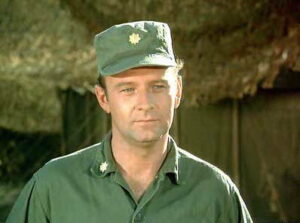
Interestingly, the show eventually allowed Frank a degree of humanity when his psychological breakdown and departure revealed that beneath the bluster and hypocrisy lived a genuinely damaged, frightened person. His final episodes suggested that his worst qualities emerged from deep insecurity, profound inadequacy, and psychological fragility that finally overwhelmed his defenses. This didn’t excuse his behavior but contextualized it, demonstrating MAS*H’s fundamental humanism—even its worst characters were ultimately damaged humans rather than monsters.
Frank Burns endures in cultural memory because he embodied uncomfortable truths about how systems reward connections over competence, how insecurity often manifests as aggressive authoritarianism, and how moral rhetoric frequently masks ethical bankruptcy. These three questions illuminate why this seemingly simple comic antagonist actually represented sophisticated social criticism wrapped in comedy, making viewers laugh while prompting them to recognize uncomfortable patterns in their own world. Frank Burns was funny precisely because he was uncomfortably familiar, a character whose exaggerated flaws reflected real systemic problems that persist long after MAS*H ended.