The Cruel Paradox: How Television Fame Became Sally Struthers’ Biggest Career Obstacle
It seems impossible that an actress could star in one of television’s most groundbreaking and beloved series, win two Emmy Awards for her performance, and then find herself unable to secure work for over a year. Yet that’s precisely the nightmare Sally Struthers faced after departing “All in the Family,” the iconic sitcom that made her a household name throughout the 1970s. Her story reveals an uncomfortable truth about Hollywood: sometimes the very success that elevates you becomes the cage that confines you.
From Promising Newcomer to Television Icon
Before Norman Lear cast her as Gloria Stivic—the daughter of Archie and Edith Bunker and wife to Mike “Meathead” Stivic—Sally Struthers had been steadily building an impressive resume. In the late 1960s and early 1970s, she carved out a name for herself with strong performances in relatively small but memorable film roles, appearing opposite Jack Nicholson in “Five Easy Pieces” (1970) and Steve McQueen in “The Getaway” (1972). These weren’t throwaway parts; they were opportunities to work with some of Hollywood’s most respected actors in critically acclaimed films.

Simultaneously, Struthers was building her television credentials. She provided the voice for Pebbles Flintstone on the Saturday morning cartoon “The Pebbles and Bamm-Bamm Show” from 1971 to 1972, demonstrating her versatility. Before that, she had worked as a performer on “The Smothers Brothers Comedy Hour” in 1970, and it was her time on “The Tim Conway Comedy Hour” that inadvertently led to her career-defining role.
In an interview with Newsday, Struthers recounted the bizarre circumstances of her hiring: “I had just gotten let go from ‘The Tim Conway Comedy Hour’ because the suits in New York said that I made the show look cheap.” The irony was painful—the producer had specifically wanted that aesthetic. “The producer said, ‘That’s the whole point, we’re trying to make it look like the Conway show doesn’t have a budget, has no money, so that’s why there’s only one Tim Conway dancer instead of a line of them like the June Taylor Dancers on ‘The Jackie Gleason Show.’ And there’s only one musician and they can’t afford an instrument for him, so he’s standing at a music stand humming the opening theme song.’ That’s funny! And the Suit said, ‘No, it makes the show look cheap.’ So they let me, the Tim Conway dancer, go.”
That rejection turned out to be the luckiest break of her career. “And if they hadn’t done that, I wouldn’t have been free to read for ‘All in the Family,'” she reflected.
Eight Years at the Center of Television History
From 1971 to 1979, “All in the Family” shattered virtually every convention that had constrained television since its inception. The show fearlessly tackled subjects previously considered taboo—racism, sexism, economic inequality, women’s liberation, abortion, homosexuality—and did so with a bigot, Carroll O’Connor’s Archie Bunker, at its center. Norman Lear instinctively understood that American audiences were ready to be challenged, and ratings proved him spectacularly right.
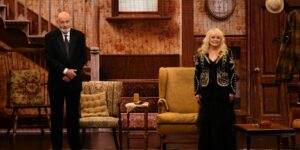
All the characters embarked on remarkable journeys throughout the series’ run, but Gloria’s evolution was particularly striking. When viewers first met her, she was a curly-haired young woman taking tentative baby steps into the world of women’s liberation, often caught between her traditional father and her progressive husband. By the time she and Mike left the show just prior to its final season—when “All in the Family” transformed into “Archie Bunker’s Place”—Gloria had become an independent woman standing up for herself and demanding equality with a confidence that would have seemed impossible in earlier seasons.
This tremendous character development earned Sally Struthers two Emmy Awards for Outstanding Supporting Actress in a Comedy Series, in 1972 and 1979. During the show’s run, she also appeared in several successful television movies, including “The Great Houdini” (1976), “Intimate Stranger” (1977), and “My Husband is Missing” (1978). The future looked limitless. She and Rob Reiner left the series to pursue new projects, confident that their “All in the Family” success would open doors throughout Hollywood.
The Unexpected Freefall
But things began slowing down almost immediately. Struthers reprised Gloria in a two-part episode of “Archie Bunker’s Place,” with the heartbreaking revelation that Mike had left her for one of his students. From there, she starred in the spinoff series “Gloria” opposite the legendary Burgess Meredith, which ran from 1982 to 1983 before being canceled. She continued acting, guest-starring on various shows, providing voices for animated characters, and securing a starring role in the latter part of the television adaptation of “9 to 5” (1986 to 1988).
Yet Struthers recognized that something fundamental had changed. Work—substantial, meaningful work—was becoming increasingly difficult to secure. The phone wasn’t ringing the way it used to. The opportunities that should have flowed from Emmy Awards and eight years on television’s number-one show simply weren’t materializing.
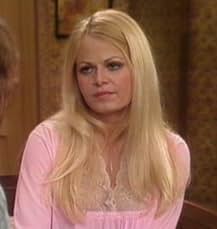
“It Was Work”: The Confession That Revealed Everything
When Sally Struthers accepted the role of Florence Unger in Neil Simon’s gender-swapped version of “The Odd Couple” on Broadway, starring opposite Rita Moreno (later Brenda Vaccarro) as Olive Madison, a television reporter asked why she had been attracted to the part. Her answer was devastating in its simplicity and honesty: “It was work.”
She let that statement hang in the air for a moment before continuing with words that exposed the harsh reality behind Hollywood’s glamorous facade: “I wanted to do ‘The Odd Couple’ because it was the first work that had been offered to me in a year and a half. And I needed and wanted to work so desperately as an artist and as a homeowner with financial responsibilities, that when it was offered to me, I jumped at the chance, even though it was an offer that came with a lot of setbacks for me emotionally.”
Struthers elaborated on those setbacks: “Going on the road was not something I was looking forward to doing; being separated from my family and my friends and my pets and living in New York. If the play was a hit, it wasn’t something that I was really looking forward to, but it was employment and I had to do it.”
Eighteen months without work. An Emmy winner, forced to accept a job she didn’t want, requiring her to leave her family and life behind, simply because it was the only opportunity available. The reporter asked the obvious follow-up question: How could someone who had been on “All in the Family” find it so difficult to secure employment?
“I don’t know,” Sally, now seventy-eight, replied matter-of-factly. “It’s the strangest phenomenon to be at the top of the mountain and the next day to be at the bottom, but somehow you didn’t feel the fall.”
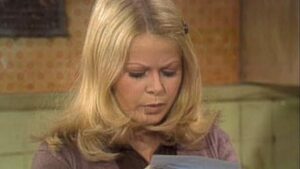
Finding Purpose Beyond Hollywood
What appeared to be a temporary career slump eventually gave way to new opportunities. Struthers went on to appear in fifty-two episodes of “Gilmore Girls” as the beloved character Babette Dell, introducing her to an entirely new generation of television viewers. She continued guest-starring on various shows, demonstrating the resilience that had sustained her through lean times.
Where Sally truly seems to have found her artistic home, however, has been on stage. Over the past twenty years, she has appeared in approximately thirty theatrical productions, including “Mame,” “Irving Berlin’s White Christmas the Musical,” and the stage adaptation of “Grumpy Old Men.” The theatre welcomed her with the consistency that television had denied.
But perhaps where Struthers discovered her most meaningful work has been with ChildFund International (previously the Christian Children’s Fund), advocating on behalf of impoverished children in developing countries. This humanitarian work has given her life a purpose that transcends entertainment, allowing her to make a tangible difference in ways that acting never could.
Sally Struthers’ journey from Emmy-winning television star to unemployed actress desperately accepting any available work serves as a sobering reminder that Hollywood success is fragile and fleeting. Yet her ability to find fulfillment through theatre and humanitarian work demonstrates that sometimes the greatest achievements come not from staying on top of the mountain, but from learning how to rebuild after the fall.