When Knowing How to End Becomes the Biggest Challenge: The All in the Family Dilemma
Ending a beloved television series at the perfect moment is one of the entertainment industry’s most delicate arts. Recent shows like “The Good Place” and “Succession” demonstrated this mastery by concluding after four seasons, departing with emotional resonance rather than overstaying their welcome and coasting on fumes past their creative expiration dates. But with episodic sitcoms that prioritize character over plot, determining the ideal endpoint becomes exponentially more complicated. Sometimes the decision comes down to a single person’s stubbornness—and in the case of “All in the Family,” that person was Carroll O’Connor.
The Perfect Ending That Never Was
By the conclusion of Season 8, all signs pointed toward “All in the Family” wrapping up its unprecedented run. The season delivered yet another batch of critically acclaimed episodes, including devastating all-timers like “Edith’s 50th Birthday,” which showcased the series at its emotional peak. Creator Norman Lear and his creative team felt confident they had taken the Bunker family’s story as far as it could meaningfully go. The season’s final two episodes seemed designed as the perfect farewell.
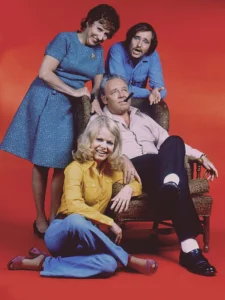
“The Dinner Guest” and “The Stivics Go West” portrayed lifelong New Yorkers Archie and Edith Bunker bidding an emotional goodbye to their daughter Gloria and her husband Mike—the “meathead” who had sparred with Archie for eight seasons—as the young couple prepared to relocate to California. It was thematically perfect, a final reminder to Archie Bunker that the world would continue evolving and moving forward whether he approved or not. His daughter was literally heading west, embracing the future while Archie remained rooted in his Queens home, a symbol of his resistance to change.
The emotional weight of those final moments suggested closure. The Bunkers had experienced growth, confronted their prejudices, survived family conflicts, and ultimately demonstrated that love could exist even amid fundamental disagreements. It felt like the natural conclusion to a groundbreaking series that had changed television forever.
Except that’s not what happened. Carroll O’Connor had other plans.
The Behind-the-Scenes Battle Norman Lear Lost
In a revealing interview with Vox in 2015, the late Norman Lear pulled back the curtain on what was happening behind closed doors as Season 8 concluded. “Well, that came out of a lot of storm,” Lear explained, carefully choosing his words. “We—when I say we, I’m talking about Jean Stapleton, Rob, Sally, and I—wanted to wrap this show up.”
The consensus among the core cast and creative team was unanimous. Everyone except Carroll O’Connor wanted to, in Lear’s words, “put a ribbon around it” and end the series while it still maintained its artistic integrity and cultural relevance. Jean Stapleton, who had brilliantly portrayed Edith for eight seasons, was ready to move on. Rob Reiner and Sally Struthers, who played the younger generation challenging Archie’s worldview, agreed. Even Norman Lear himself, the visionary who created the series, felt the time had come.
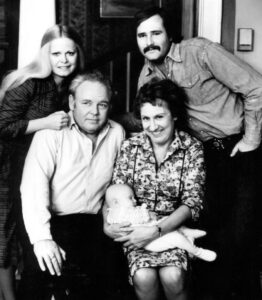
But O’Connor disagreed, and ultimately, his position prevailed. “The extra year came out of all of the discussion about not letting it go, and Carroll winning that round,” Lear acknowledged. This wasn’t a creative decision driven by storytelling needs—it was the result of one actor’s determination to continue, overriding the collective judgment of everyone else involved.
Season 9: A Year Nobody Wanted
When “All in the Family” returned for Season 9, the show’s fundamental dynamics had shifted dramatically. Rob Reiner and Sally Struthers were gone, taking the generational conflict that had fueled so much of the series’ tension with them. Archie and Edith found themselves in full empty-nester mode, suddenly serving as de facto parents to Edith’s young niece Stephanie, played by Danielle Brisebois.
While “All in the Family” had always prioritized character development over complex plotting, Season 9’s central thrust felt noticeably different. The Stephanie storyline played less like an organic continuation of the Bunkers’ journey and more like a convenient excuse to keep the cameras rolling. Even Lear admitted this in his Vox interview, stating plainly that the additional season “came out of all of the discussion about not letting it go, and Carroll winning that round.”
The season wasn’t directionless, exactly, but it lacked the urgency and purpose that had defined the show’s earlier years. The groundbreaking social commentary that made “All in the Family” revolutionary had given way to more conventional sitcom storytelling. The show was running not because it had more to say, but because its star wanted to keep working.
The Battle for “Archie Bunker’s Place”
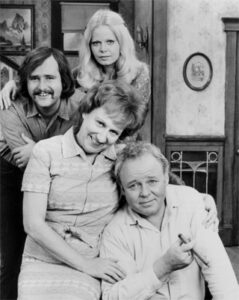
If Season 9 represented Carroll O’Connor’s first victory over the collective will of his colleagues, his push for “Archie Bunker’s Place” was his second—and Norman Lear’s final surrender. As Lear recounted, the commitment had been only to complete that final ninth season of “All in the Family.” Everyone assumed that would be the end. O’Connor, however, had different plans.
“Then came the next round, which was he wanted to do ‘Archie Bunker’s Place,’ and the commitment was just to finish out that last year,” Lear explained. “I didn’t want that to happen and finally gave in when my attorney handed me a list of the people who might be out of work if the show didn’t go on air.”
This revelation exposes the uncomfortable reality behind television production decisions. O’Connor essentially held the livelihoods of dozens of crew members, writers, and supporting actors hostage to his desire to continue playing Archie Bunker. Faced with a list of people who would lose their jobs if he refused, Lear reluctantly capitulated, even though his creative instincts screamed against it.
“That was Carroll, he went all the way with it, and I had no part of it,” Lear stated definitively. The creator of “All in the Family” walked away from his own creation rather than continue something he felt had run its course. “Archie Bunker’s Place” would continue for four more seasons from 1979 to 1983, carrying on without Norman Lear’s involvement and, notably, without Jean Stapleton, who chose not to continue as Edith.
The Moral Complexity of Creative Decisions
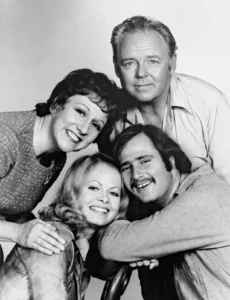
The dilemma Lear faced reveals the inherent tension in television production between artistic integrity and business realities. On one hand, knowing when to end a series at its creative peak preserves its legacy and respects the intelligence of the audience. On the other hand, successful shows provide employment for hundreds of people whose mortgages and families depend on that paycheck continuing.
Carroll O’Connor wasn’t necessarily wrong to advocate for continuation—he was looking out for the crew members, technicians, writers, and actors whose livelihoods depended on the show’s production. But neither was Norman Lear wrong to believe that “All in the Family” had said what it needed to say and should end while it still maintained its dignity and power.
The Ending Archie Deserved?
Looking back with decades of perspective, perhaps the messy, prolonged conclusion to Archie Bunker’s story was thematically appropriate. Archie had always been a character who resisted change, who clung stubbornly to his worldview even when presented with overwhelming evidence that he should evolve. In that sense, a series that refused to end gracefully, that continued past its prime because its lead actor wouldn’t let go, mirrors Archie’s own psychological makeup perfectly.
The best television shows know when to take their final bow. “All in the Family” could have been one of them, ending after eight seasons with a perfect emotional farewell. Instead, it became a cautionary tale about what happens when one person’s attachment to a character overrides everyone else’s creative judgment. The result was more Archie Bunker—but not necessarily better television. Sometimes, knowing how to say goodbye is the most important decision of all.