Frank Burns remains one of the most polarizing characters in television history. Love him or hate him, Major Frank Burns from MAS*H sparked countless debates among fans during the show’s legendary eleven-season run. While most viewers remember him as the bumbling, self-righteous antagonist, there’s far more complexity beneath the surface. Today, we’re diving deep into three fascinating questions that reveal surprising truths about this unforgettable character.
Question 1: Was Frank Burns Actually a Good Surgeon?
This might shock you, but the answer is more nuanced than you’d think. Throughout the series, Frank is consistently portrayed as incompetent compared to Hawkeye Pierce and Trapper John. However, if we look closer at the narrative, Frank graduated from medical school and maintained his position as a surgeon in a Mobile Army Surgical Hospital during wartime. The military wouldn’t keep a truly dangerous surgeon operating on wounded soldiers.
The real issue wasn’t necessarily Frank’s surgical skills, but rather his lack of confidence and poor decision-making under pressure. In several episodes, we see him perform adequately when supervised or when the situation isn’t critical. His greatest failing was his inability to admit when he was out of his depth. Unlike Hawkeye and B.J., who openly collaborated and asked for help, Frank’s insecurity and ego prevented him from seeking assistance when he needed it most.
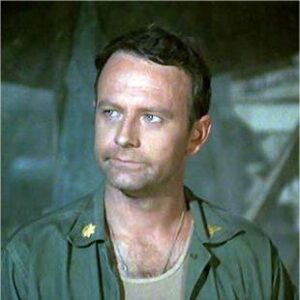
Additionally, Frank’s by-the-book approach to medicine often clashed with the innovative, rule-breaking methods employed by Hawkeye and Trapper. In a conventional hospital setting back in the States, Frank’s methodical approach might have been perfectly acceptable. But in the chaos of a MASH unit, where improvisation could mean the difference between life and death, his rigid adherence to protocol became a liability.
Question 2: Why Did Larry Linville Leave the Show After Five Seasons?
Many fans assume Frank Burns disappeared because the character was unpopular, but that couldn’t be further from the truth. Actor Larry Linville made a deliberate artistic choice to leave MAS*H after season five, and his reasoning reveals the professionalism behind his craft.
Linville felt he had explored every possible dimension of Frank Burns’ character. He was concerned about becoming typecast and worried that continuing to play the same role would limit both his growth as an actor and the character’s development. In interviews, Linville explained that there were only so many ways Frank could be humiliated, cuckolded, or made the butt of jokes before the character became a one-dimensional caricature.
Interestingly, Larry Linville was nothing like Frank Burns in real life. He was well-educated, sophisticated, and well-liked by the entire cast. His portrayal of Frank required immense skill—making a character simultaneously pathetic and detestable while still keeping audiences engaged is no small feat. His departure was amicable, and the show’s creators respected his decision, writing Frank out by having him transferred stateside after suffering a nervous breakdown.
The introduction of Major Charles Emerson Winchester III as Frank’s replacement demonstrated the show’s evolution. While Winchester was also an antagonist, he brought a completely different energy—aristocratic sophistication and genuine surgical competence, creating new dynamics for the
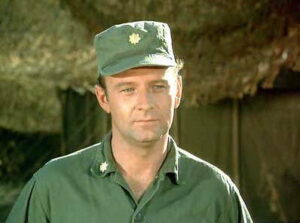 remaining seasons.
Question 3: What Was the Deal with Frank and Margaret’s Affair?
Perhaps the most captivating aspect of Frank Burns’ character was his ongoing affair with Major Margaret “Hot Lips” Houlihan. This relationship raised intriguing questions about morality, loneliness, and the psychological impact of war.
Frank was married to someone back home—his wife Louise is mentioned frequently throughout the series. Yet he carried on an open secret affair with Margaret throughout his tenure at the 4077th. This hypocrisy was particularly jarring given Frank’s constant moral posturing and religious proclamations. He would quote regulations and declare his Christian values one moment, then sneak into Margaret’s tent the next.
What made this affair compelling wasn’t just the hypocrisy—it was the genuine emotional connection between Frank and Margaret. Despite the comedic framing, there were moments when their relationship seemed to provide both characters with genuine comfort in the midst of wartime horror. Margaret clearly cared for Frank on some level, and he appeared devoted to her, even if he wouldn’t leave his wife.
The affair ended when Margaret married Lieutenant Colonel Donald Penobscot, which devastated Frank and contributed to his eventual mental breakdown. This storyline highlighted how much Frank had depended on Margaret for emotional stability. Without her, his already fragile psyche couldn’t withstand the pressures of the MASH unit.
The Frank-Margaret relationship also served as social commentary on the compromises and moral gray areas people inhabit during wartime. These weren’t evil people—they were flawed humans seeking connection and comfort in impossible circumstances.
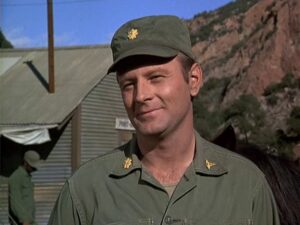
The Legacy of Frank Burns
Frank Burns may have been frustrating, incompetent, and morally questionable, but he was also undeniably human. Larry Linville’s masterful portrayal gave us a character who was both contemptible and pitiable, reminding us that even antagonists have depths worth exploring. These three questions only scratch the surface of what made Frank Burns such a memorable part of television history.