In the chaotic world of the 4077th Mobile Army Surgical Hospital, where dark humor served as a survival mechanism and irreverence was practically a medical prescription, one character stood apart as the moral center: Father Francis Mulcahy, the camp’s gentle chaplain portrayed with warmth and dignity by William Christopher. While the doctors—Hawkeye, Trapper, B.J., and even the aristocratic Winchester—dealt with the horrors of war through sarcasm and mischief, Father Mulcahy represented something purer: genuine faith, unwavering compassion, and a quiet strength that needed no wisecracks to prove its worth.
Yet what made Father Mulcahy such a beloved character wasn’t just his spiritual guidance or moral authority—it was the unexpectedly hilarious moments that emerged when this soft-spoken man of God collided with the camp’s collection of brilliant, irreverent surgeons. These interactions created some of MAS*H’s most memorable comedy, proving that the good Father could hold his own against the sharpest wits in camp. His combination of innocence and surprising worldliness, his occasional lapses in saintly composure, and his willingness to join the doctors’ antics created comedic gold that showcased William Christopher’s impeccable timing and versatile talent.
The Boxing Coach Nobody Expected
Father Mulcahy’s very first appearance in MAS*H’s third episode, “Requiem for a Lightweight,” immediately established that this chaplain was full of surprises. When the camp needs someone to train Trapper John for a boxing match to keep a favorite nurse from being transferred, the last person anyone expects to volunteer is the mild-mannered priest. Yet Mulcahy steps forward with an unexpected announcement: he has extensive boxing knowledge from his youth.
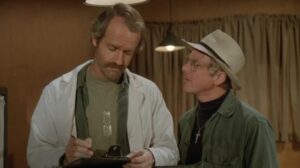
What follows is pure comedy as the gentle chaplain transforms into an intense boxing coach, shouting instructions with surprising ferocity and demonstrating moves that seem completely at odds with his peaceful demeanor. The juxtaposition of Father Mulcahy—this symbol of turning the other cheek—teaching a doctor how to punch someone in the face created immediate humor. Hawkeye and the others watch in bemused amazement as their chaplain reveals this hidden past, peppering his coaching with boxing terminology delivered in his characteristically soft voice that somehow makes the violence sound almost genteel.
The scene works brilliantly because William Christopher plays it completely straight. Mulcahy isn’t uncomfortable with his boxing knowledge—he’s genuinely enthusiastic about helping, applying the same earnest dedication he brings to his spiritual duties. When he demonstrates footwork or explains defensive techniques, there’s no winking irony, just a priest who happens to know his way around a boxing ring. The doctors’ reactions—particularly their amazed expressions as this man of peace proves surprisingly knowledgeable about combat sports—complete the comedy. This early episode established a pattern that would serve the character throughout the series: beneath Father Mulcahy’s gentle exterior lived a full human being with unexpected depths and surprising skills.
The Infamous Drunk Sermon
Perhaps no Father Mulcahy moment is more beloved by fans than his inadvertently drunken sermon in “Alcoholics Unanimous.” When Frank Burns temporarily bans alcohol from camp during one of Colonel Blake’s absences, Margaret enlists Father Mulcahy to deliver a Sunday sermon on the evils of drink. The chaplain agrees, not realizing that Margaret has spiked his communion wine with brandy in a misguided attempt to make him more persuasive.
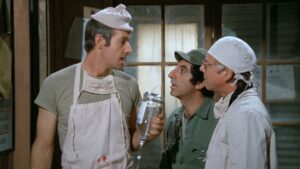
The resulting sermon is MAS*H comedy at its finest. Father Mulcahy begins earnestly enough, quoting scripture about the dangers of strong drink, but as the alcohol takes effect, his delivery becomes increasingly slurred and unsteady. He sways at the pulpit, loses his place in his notes, and delivers increasingly confused biblical references while the congregation—particularly Hawkeye and Trapper—struggle desperately not to laugh. Christopher’s performance walks a perfect line between physical comedy and character integrity. Even drunk, Mulcahy remains fundamentally himself, genuinely trying to fulfill his spiritual duty even as the words refuse to cooperate.
The scene’s brilliance lies in its layered comedy. First, there’s the physical humor of a drunk priest trying to maintain dignity while clearly impaired. Second, there’s the irony of a sermon against drinking being delivered by someone who’s obviously intoxicated. Third, there’s the congregation’s barely contained amusement, with Hawkeye and Trapper making eye contact and nearly breaking into hysterics. Finally, there’s Mulcahy’s own growing confusion about why his tongue won’t work properly and why everyone seems to be finding his heartfelt sermon so entertaining. When he finally staggers away from the pulpit, the doctors rush to support him while simultaneously congratulating him on the most memorable sermon he’s ever delivered—though for entirely wrong reasons.
The Poker Shark Revelation
Throughout MAS*H’s run, the doctors engage in regular poker games to pass time between surgeries and emergencies. Father Mulcahy occasionally participates, generally losing gracefully while the more competitive players—particularly Hawkeye, B.J., and Winchester—battle for supremacy. Then comes an episode that reveals the good Father has been holding back.
In a memorable poker scene, Mulcahy suddenly begins playing with unexpected skill, bluffing expertly and reading his opponents with an insight that suggests far more experience than anyone suspected. When Hawkeye challenges him on his suddenly improved play, Mulcahy innocently explains that he learned poker in seminary—and that priests take their card games very seriously. The revelation that this gentle man of God is actually a card shark hiding behind his clerical collar creates delicious comedy.
What makes the scene work is the doctors’ reactions. Hawkeye’s expression shifts from confident to concerned as he realizes he’s being outplayed by someone he’d written off as an easy mark. B.J. starts laughing at the absurdity of losing money to their chaplain. Winchester, who prides himself on his superior intellect and gaming skills, becomes genuinely flustered at being bested by someone he considered beneath his level. Throughout it all, Father Mulcahy maintains his characteristic humility, apologizing for winning while simultaneously raking in his chips with the efficiency of a Vegas professional. The juxtaposition of his gentle manner with his ruthless card play demonstrates that he’s more complex than his quiet demeanor suggests.
The Promotion Battle
In “Captains Outrageous,” Father Mulcahy finally reaches his breaking point over being repeatedly passed over for promotion to Captain despite years of dedicated service. His frustration boils over in scenes where this typically patient man expresses genuine anger at the bureaucratic incompetence keeping him at First Lieutenant rank. His interactions with the doctors during this episode reveal a side of Mulcahy rarely seen—the human being beneath the clerical collar who wants recognition for his work.
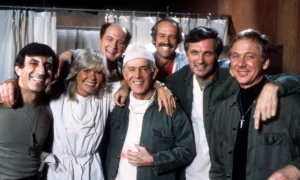
The comedy emerges from watching the doctors’ surprised reactions to Mulcahy’s uncharacteristic anger. Hawkeye and B.J., who spend their time mocking military protocol and rank, suddenly find themselves in the odd position of trying to help their chaplain achieve a promotion they themselves would mock. They become unexpectedly invested in fighting the Army bureaucracy on Mulcahy’s behalf, turning his promotion into a cause célèbre around camp. Winchester, who cares deeply about status and rank, shows surprising solidarity with the chaplain’s quest for proper recognition.
The episode’s funniest moments come from watching these irreverent doctors suddenly caring passionately about military procedure because it’s affecting someone they respect. Colonel Potter’s scenes with Mulcahy—where the commanding officer tries to navigate between comforting his chaplain and navigating Army red tape—add another layer of humor. When Mulcahy finally receives his promotion, his joy is genuine and moving, but the comedy of watching the camp’s moral center temporarily lose his patience with bureaucratic nonsense provided wonderful character depth. It proved that even saints have their limits, and that the doctors genuinely care about their chaplain’s wellbeing.
The Medical Emergency Volunteer
Despite having no medical training, Father Mulcahy regularly offers to help during surgical emergencies, leading to several hilarious moments where his willingness vastly exceeds his capability. In various episodes, he volunteers to assist with procedures, only to reveal his complete lack of understanding about medical terminology, proper technique, or even basic anatomy. These scenes work because Mulcahy’s offers come from genuine desire to help rather than ego or stupidity.
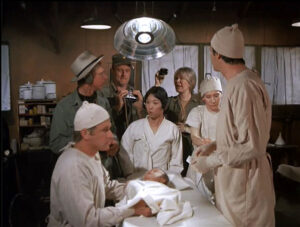
One memorable sequence shows him in the operating room trying to assist while the doctors gently redirect his increasingly misguided attempts to help. When asked to hand over surgical instruments, he has no idea which is which. When told to hold something, he holds it wrong. Throughout these fumbles, his earnest determination to be useful remains endearing rather than annoying. The doctors’ patience with his well-meaning incompetence—in stark contrast to their treatment of Frank Burns’ actual medical incompetence—demonstrates their affection for him.
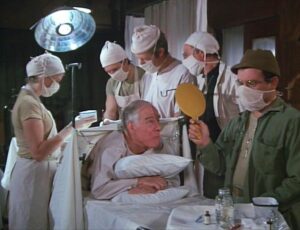
Hawkeye’s interactions during these moments showcase the show’s balance of comedy and heart. Rather than mockery, his gentle corrections of Mulcahy’s errors contain genuine fondness. When the chaplain apologizes for not being more helpful, Hawkeye assures him that his presence itself provides comfort to patients—and that perhaps he should stick to that rather than attempting surgery. These scenes work because they never make Mulcahy the butt of mean-spirited jokes. Instead, they celebrate his desire to help while acknowledging that spiritual support is its own valuable contribution to healing.
The Unexpected Party Animal
While Father Mulcahy generally abstains from the camp’s wilder celebrations, occasional episodes reveal that when he does participate, he surprises everyone with unexpected enthusiasm. Whether reluctantly joining drinking parties or being coaxed into recreational activities, these moments showcase Christopher’s gift for physical comedy and character revelation.
One standout scene shows Mulcahy at a camp party, initially sitting quietly on the periphery before gradually being drawn into the festivities. As the evening progresses and he has a drink or two, his normally reserved demeanor gives way to surprising animation. He tells stories from his seminary days that reveal a more colorful past than anyone suspected. He joins in singing with genuine gusto. He even attempts dancing, with hilariously awkward results that endear him further to both the camp and the audience.
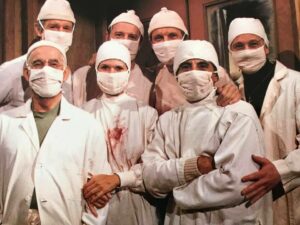
The doctors’ delight at seeing their chaplain let loose provides the perfect comedic response. Hawkeye encourages him with calls of “That’s it, Father!” B.J. ensures someone’s watching out for him as the evening progresses. Even Winchester, typically dismissive of common revelry, seems charmed by Mulcahy’s earnest attempts to participate in camp life. These scenes work because they never mock Mulcahy for being awkward or naive—instead, they celebrate his willingness to be fully human and occasionally break from his spiritual duties to simply be one of the guys.
Why These Moments Matter
These six hilarious moments between Father Mulcahy and the doctors represent something essential about MAS*H’s success: the show understood that goodness doesn’t require perfection, and that moral authority doesn’t preclude humor. William Christopher’s portrayal gave us a chaplain who could deliver profound spiritual comfort in one scene and comedic brilliance in the next, without either undermining the other.
The doctors’ interactions with Mulcahy—respectful but never reverential, affectionate without being patronizing—demonstrated genuine friendship across different worldviews. These weren’t just funny scenes; they were evidence of how people with vastly different approaches to life’s big questions could work together, laugh together, and support each other through impossible circumstances. Father Mulcahy held his own in a camp full of brilliant wisecracking surgeons not by matching their cynicism, but by being authentically himself while occasionally surprising them with hidden depths.