Behind every great television show lies a series of fortunate accidents, surprising choices, and unexpected discoveries that transform a simple concept into cultural phenomenon. MASH, the legendary series that ran for eleven seasons and redefined what television could be, owes much of its success to casting decisions that were anything but ordinary. From actors who served in the actual Korean War to performers hired for a single day who became series regulars, the story of how MASH assembled its iconic ensemble is filled with remarkable twists that rival any episode plot.
What makes these casting stories so compelling is how they reveal the delicate alchemy required to create television magic. The right actor in the wrong role, a last-minute replacement, or a one-day guest appearance that becomes permanent—each of these decisions shaped MAS*H into the groundbreaking series we remember today. These aren’t just interesting trivia; they’re evidence of how television’s greatest shows often emerge from unexpected places, guided by instinct, luck, and the occasional happy accident.
Gary Burghoff: The Only Link Between Film and Television
When MAS*H transitioned from Robert Altman’s 1970 film to a television series in 1972, producers faced a crucial question: should they bring back any actors from the movie? The answer, surprisingly, was yes—but only one. Gary Burghoff, who played Corporal Radar O’Reilly in the film, became the sole cast member to reprise his role for the television series, creating a unique bridge between two very different versions of the same story.
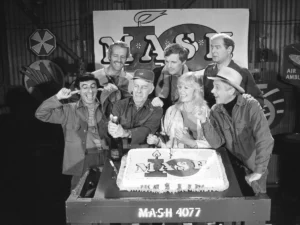
What many fans don’t realize is that Burghoff didn’t expect to get the film role in the first place. When he auditioned for Altman’s movie, Radar was a relatively minor character with limited screen time. Burghoff brought such a distinctive quality to the role—a combination of boyish innocence, psychic intuition, and unexpected competence—that he made the character unforgettable despite minimal dialogue. His performance was so memorable that when the television series began development, producers specifically asked him to return, recognizing that his unique interpretation couldn’t be replicated by another actor.
This decision proved transformative. Burghoff’s Radar became the emotional heart of MAS*H, the innocent observer whose reactions helped audiences navigate the show’s tonal shifts from comedy to drama. His ability to anticipate Colonel Blake’s needs, his famous teddy bear, his grape Nehi obsession—these weren’t written in the original character description. They emerged from Burghoff’s instinctive understanding of who Radar was. The fact that he was nearly thirty years old playing an eighteen-year-old farm boy from Iowa speaks to his remarkable talent for embodying childlike vulnerability while maintaining the character’s essential dignity.
Jamie Farr’s One-Day Job That Lasted Eleven Seasons
Perhaps no casting story better illustrates MASH’s willingness to recognize unexpected brilliance than Jamie Farr’s journey from day player to series regular. In October 1972, Farr was hired for a single day’s work on the fourth episode of MASH’s first season. He was brought in to play Corporal Maxwell Klinger, a Toledo native so desperate to get out of the Army that he wore women’s clothing hoping to earn a Section 8 psychiatric discharge. The role was meant to be a one-time appearance, a brief comedic bit in a single episode titled “Chief Surgeon Who?”
What happened next transformed television history. Farr’s performance was so hilarious, his comic timing so impeccable, and his commitment to the absurd premise so complete that producers immediately recognized they’d stumbled onto something special. The audience response confirmed it—viewers loved Klinger. The character who was supposed to appear once began showing up again and again, each time bringing fresh creativity to his Section 8 schemes. By the beginning of Season 4, Klinger had become so integral to the show that Farr was added to the opening credits as a series regular.

What makes this story even more remarkable is Farr’s personal connection to the material. Like several of his castmates, Farr actually served in the U.S. Army and spent time in Korea—after the war, but in the same locations where the conflict had raged. During his military service, he appeared in Army training films, giving him firsthand experience with military life that informed his portrayal of Klinger. Farr even wore his own Army boots in many episodes, a personal touch that connected his real military experience with his fictional character’s desperate attempts to escape the service.
Alan Alda and Jamie Farr: The Veterans Who Brought Authenticity
One of MAS*H’s most fascinating casting elements wasn’t just who was chosen, but what they brought with them. Both Alan Alda (Hawkeye Pierce) and Jamie Farr (Klinger) were actual military veterans who had served in Korea, though after the war ended. This wasn’t a casting requirement or even something producers specifically sought out, but it became an invaluable asset that added layers of authenticity to the show’s portrayal of military life.
Alda joined the U.S. Army Reserve and spent six months as a gunnery officer touring Korea. This experience gave him intimate knowledge of military hierarchy, the rhythm of Army life, and the particular brand of dark humor that soldiers use to cope with impossible situations. When Alda auditioned for Hawkeye Pierce, he brought not just his considerable acting talent but also this firsthand understanding of how real soldiers talk, think, and survive. His ability to balance Hawkeye’s irreverent comedy with genuine respect for the military’s better values came partly from his own service experience.
This authentic military background proved crucial as Alda became increasingly involved in MASH’s creative direction, eventually writing and directing numerous episodes. His insistence on realistic medical procedures, accurate military protocol when it mattered, and genuine respect for the sacrifices of those who served helped keep MASH grounded even during its most comedic moments. The show could swing wildly between farce and tragedy because Alda and Farr understood from personal experience that real military life contains both extremes, often simultaneously.
Larry Linville’s Seven-Line Audition That Created Frank Burns
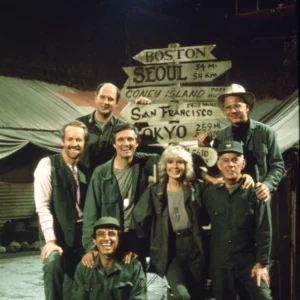
When Larry Linville auditioned for the role of Major Frank Burns, he faced an unusual challenge: the character barely existed on the page. The pilot script contained only seven lines of dialogue for Frank Burns—not nearly enough material for an actor to demonstrate their range or build a character. Yet somehow, from those seven sparse lines, Linville created one of television’s most memorable antagonists, a perfect blend of pompous incompetence and petty vindictiveness that became essential to MAS*H’s comedic ecosystem.
What Linville understood instinctively was that Frank Burns couldn’t be merely incompetent—that would be too one-dimensional. Instead, he crafted a character who was simultaneously pathetic and dangerous, ridiculous and threatening. Frank genuinely believed in his own superiority despite overwhelming evidence to the contrary. He followed regulations not out of principle but as weapons to wield against those he resented. His affair with Margaret provided glimpses of vulnerability beneath the buffoonery, making him occasionally almost sympathetic before he did something despicable again.
The brilliance of Linville’s performance was that he never winked at the audience. He played Frank Burns completely straight, with absolute conviction in the character’s twisted logic and wounded ego. This commitment made Frank’s humiliations that much more satisfying for viewers and created genuine stakes for the other characters who had to work alongside this incompetent surgeon. Off-screen, Linville was nothing like Frank—he was warm, intelligent, and deeply respected by his castmates. Loretta Swit later recalled how she and Linville would find quiet spots behind tents to rehearse their scenes together, crafting the dysfunctional Frank-and-Margaret dynamic that provided so much of the show’s early comedy.
The Ensemble Chemistry That Almost Wasn’t
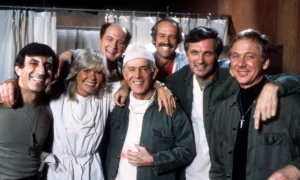
Perhaps the most remarkable aspect of MAS*H’s casting is how effortlessly the ensemble worked together, creating chemistry that felt inevitable rather than manufactured. Yet this seemingly natural fit was anything but guaranteed. The cast came together quickly, with many actors unfamiliar with each other before the pilot. Some were film actors, others came from television, and several had stage backgrounds. They represented different acting styles, different comedic sensibilities, and different approaches to their craft.
What united them was a shared commitment to the material and a willingness to support each other’s performances rather than compete for attention. Alan Alda, who became the show’s lead and eventually its creative guiding force, set a tone of collaboration rather than hierarchy. When Gary Burghoff struggled with anxiety during filming, Alda and Mike Farrell created an informal “check-in circle” before scenes to ensure he felt safe and supported. When Loretta Swit fought to develop Margaret beyond a one-dimensional foil, the entire cast supported her character’s evolution.
This collaborative spirit extended to how the cast approached their work. They rehearsed together, offered suggestions to improve each other’s scenes, and developed the timing and rhythm that made MAS*H’s comedy so precise. David Ogden Stiers, who joined as Charles Winchester after Larry Linville’s departure, later remarked that stepping into such a well-established ensemble was intimidating, but the cast’s generosity made his integration seamless. The cast didn’t just work together—they created an atmosphere where everyone’s contributions were valued, where supporting another actor’s moment was as important as having your own.
Why These Casting Stories Matter
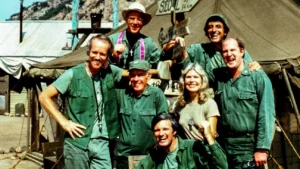
The casting of MAS*H offers lessons that extend far beyond one television show. These stories remind us that great art often emerges from unexpected places—from the day player who becomes essential, from the actor with seven lines who creates an icon, from the veterans whose real-life experience informs fictional characters with depth and authenticity. They demonstrate that casting isn’t just about finding talented actors; it’s about discovering unique individuals whose personal qualities, life experiences, and distinctive interpretations create something no one could have predicted.
MAS*H succeeded not just because it had good actors, but because it had exactly the right actors whose talents, chemistry, and shared commitment transformed scripts into something transcendent. Gary Burghoff’s Radar couldn’t have been played by anyone else. Jamie Farr’s journey from one-day guest to series regular proves that sometimes the best decisions emerge from simply recognizing brilliance when it unexpectedly appears. The military backgrounds of Alda and Farr added authenticity that couldn’t be faked. Larry Linville’s ability to find depth in seven lines of dialogue created a character that still resonates decades later.
These casting stories are more than interesting trivia—they’re proof that MASH’s greatness was built on a foundation of remarkable individuals whose unique talents combined in ways that changed television forever. The show we love emerged not from careful planning alone, but from the magical accidents, intuitive choices, and collaborative spirit that turned a Korean War comedy into something far more profound. Every time we watch MASH, we’re witnessing not just great performances, but the result of casting decisions that captured lightning in a bottle.