When people think of MAS*H, they often remember the poignant moments and powerful anti-war messages that made the series legendary. However, what kept audiences tuning in for eleven seasons wasn’t just the drama—it was the show’s brilliant ability to deliver side-splitting comedy even in the darkest circumstances. The 4077th Mobile Army Surgical Hospital was home to some of television’s most memorable comedic moments, filled with pranks, quick wit, and absurd situations that transformed war into something bearable through laughter.
The genius of MAS*H’s comedy lay in its authenticity. These weren’t forced jokes or manufactured laugh lines—they were organic moments of humanity showing how people cope with impossible situations through humor. From Hawkeye’s relentless pranks to Klinger’s outrageous Section 8 schemes, from Frank Burns’ pompous buffoonery to Winchester’s aristocratic mishaps, the show created a comedic ecosystem where every character contributed to the hilarity. These moments reminded us that even in war, laughter remains one of humanity’s most powerful survival tools.
The Epic April Fools Prank That Fooled Everyone
Few episodes showcase MAS*H’s comedic brilliance better than “April Fools,” where Hawkeye orchestrates an elaborate prank on Colonel Tucker, a visiting dignitary known for his practical jokes. The setup is masterful—Tucker arrives expecting to humiliate the staff, but Hawkeye turns the tables spectacularly. The crowning moment comes when Tucker discovers his jeep has been completely disassembled and reassembled inside his tent, piece by perfect piece. His bewildered expression when he walks in to find a full jeep sitting where his bed should be remains one of television’s greatest sight gags.
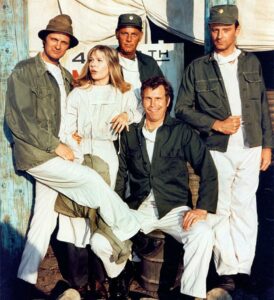
What makes this scene unforgettable isn’t just the physical comedy—it’s Klinger’s participation. Just as Tucker arrives, Klinger mysteriously appears in full dress uniform, acting completely professional and competent, with no trace of his usual antics. The sudden transformation from his typical dress-wearing, Section-8-seeking behavior to model soldier perfection adds another layer of hilarity. The episode proves that MAS*H’s comedy worked best when everyone was in on the joke, creating moments of collective mischief that united the entire camp.
Hawkeye and Trapper’s Hilarious Eavesdropping Adventure
In one of the early seasons’ most quoted moments, Hawkeye and Trapper discover they can listen in on Frank and Margaret’s phone conversations through some creative wiretapping. The scene escalates beautifully as they listen to Frank’s increasingly ridiculous declarations of affection, culminating in the famous moment when both men simultaneously yell “Three!” after counting along with Frank’s breathing patterns during an intimate moment. The timing is perfect, the delivery impeccable, and the fourth-wall break of their shared reaction creates comedy gold.
This scene exemplifies MAS*H’s ability to find humor in the mundane realities of camp life. Frank and Margaret’s affair was always ripe for comedy, but rather than simply mocking them directly, the writers found creative ways to expose their absurdity through the eyes of amused observers. Hawkeye and Trapper’s boyish delight in their eavesdropping scheme reminds us that sometimes the funniest moments come not from elaborate pranks but from simply witnessing human foolishness from a safe distance.
Klinger’s Most Outrageous Section 8 Attempts
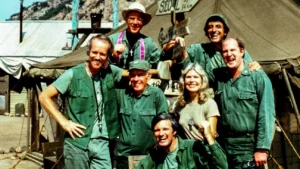
Corporal Maxwell Klinger’s desperate attempts to earn a psychiatric discharge provided MAS*H with some of its most visually absurd comedy. While his cross-dressing became his signature, it was the elaborate creativity of his schemes that elevated these moments beyond simple sight gags. One particularly memorable scene shows Klinger arriving at morning formation wearing a full wedding dress complete with veil and bouquet, explaining with absolute seriousness that he’s “waiting for his ship to come in.” Colonel Potter’s deadpan response—”Son, if that ship comes in, you better be on it”—perfectly captures the show’s ability to blend absurdity with sharp wit.
Another unforgettable Klinger moment occurs when he’s discovered sitting on the roof of the mess tent dressed as Superman, preparing to “fly” back to Toledo. The visual alone is comedy perfection, but what makes it transcendent is everyone’s weary acceptance. By this point in the series, Klinger’s antics have become so routine that the staff barely reacts with surprise anymore—they simply negotiate him down like talking someone off a ledge, but with more exasperation than concern. Jamie Farr’s commitment to these ridiculous scenarios, playing them with complete sincerity, transformed what could have been cheap jokes into genuine character moments.
The Legendary Adam’s Ribs Episode
Sometimes MAS*H’s funniest moments came from the simplest premises. In “Adam’s Ribs,” Hawkeye becomes obsessed with getting real barbecue ribs delivered from his favorite Chicago restaurant all the way to Korea. What starts as a passing complaint about the monotonous food escalates into an all-consuming mission. The comedy builds through multiple scenes of Hawkeye making increasingly desperate phone calls, negotiating with a series of confused operators and restaurant staff who can’t comprehend why someone in a war zone is calling about ribs.
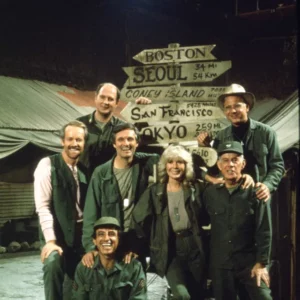
The payoff is magnificent—when the ribs finally arrive, the entire camp gathers for what becomes a celebratory feast. The pure joy on everyone’s faces as they bite into genuine American barbecue after months of military rations transforms this from a simple food comedy into a poignant reminder of what they’re missing. Hawkeye’s triumphant declaration—”These are the best ribs I’ve ever had!”—lands perfectly because we’ve watched his obsession build over the entire episode. This storyline proved that MAS*H didn’t need elaborate pranks or wild situations; sometimes the funniest comedy comes from deeply human desires blown delightfully out of proportion.
Frank Burns’ Spectacular Medical Incompetence
Frank Burns provided MAS*H with a perfect foil—a pompous, incompetent doctor whose inflated ego constantly set him up for humiliating pratfalls. One scene stands out for its perfect physical comedy: Frank confidently begins a surgical procedure only to realize mid-operation that he’s lost his glasses somewhere inside the patient’s chest cavity. His increasingly panicked searching while trying to maintain his authoritative demeanor, all while Hawkeye and Trapper exchange knowing glances, creates comedy through character rather than joke-writing.
Another Frank classic occurs during an inspection when he attempts to demonstrate proper military bearing to the enlisted men. He stands at attention so rigidly that when the inspection drags on, viewers watch him slowly begin to sway, his face turning various shades of red, until he finally faints straight backward like a falling tree. Larry Linville’s commitment to Frank’s buffoonery—never winking at the audience, always playing it straight—made these moments sing. Frank wasn’t just stupid; he was unshakably confident in his own superiority, which made every humiliation that much more satisfying.
Winchester’s High-Society Comeuppances
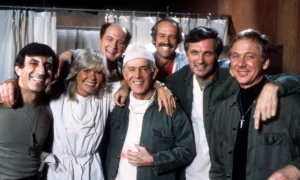
When Charles Emerson Winchester III replaced Frank Burns, MAS*H gained a different kind of comedic antagonist. Winchester’s aristocratic pretensions and cultural snobbery provided fresh comedic territory. One memorable scene shows Winchester attempting to enjoy classical music on his expensive record player while the rest of camp makes increasingly louder noise in response to his complaints. The escalation is perfectly timed—starting with casual conversation, building to singing, then instrument-playing, until the entire camp is creating a cacophonous rebellion against Winchester’s elitism.
Another Winchester highlight involves his famous poker playing, where his confidence in his superiority leads to spectacular defeat. When he realizes he’s been hustled by the entire camp working together, David Ogden Stiers’ facial journey from smug satisfaction to dawning horror to grudging respect showcases physical comedy at its finest. Winchester worked as a comic character because unlike Frank, he was actually competent—his humiliations came from his own arrogance rather than incompetence, making them more sophisticated and ultimately more satisfying.
Radar’s Psychic Administrative Powers
Corporal Radar O’Reilly’s uncanny ability to anticipate needs before they’re spoken provided MAS*H with countless comedic moments. The running gag of Radar entering the room with exactly what someone was about to request, spoken simultaneously with their request, never got old because Gary Burghoff played it with such earnest innocence. One particularly funny sequence shows Radar and Colonel Potter having an entire conversation where Radar finishes every single one of Potter’s sentences, growing increasingly synchronized until they’re speaking in complete unison. Potter’s expression shifts from pleased to bemused to slightly concerned about this psychic connection with his clerk.
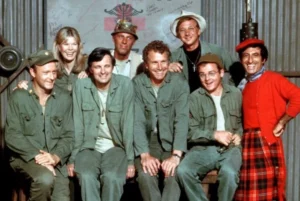
The comedy of Radar’s character came from the contrast between his boyish innocence and his frightening efficiency. Watching this teddy-bear-clutching farm boy from Iowa somehow run the entire administrative machinery of a mobile hospital through pure instinct created absurd situations that felt genuinely earned rather than forced. His legendary efficiency made even the most mundane tasks—like distributing mail or scheduling surgeries—opportunities for comedic brilliance.
The Famous “No Pants” Scene
In “The Moose,” one of the show’s most physically comedic episodes, Hawkeye wakes up after a wild night to discover he has no pants—and no memory of where they went. The subsequent investigation takes him through increasingly embarrassing conversations with various camp members, each revealing another piece of the puzzle about his drunken adventure. The comedy escalates beautifully as each new witness adds more absurd details, building to the revelation that he wagered his pants in a ridiculous bet and lost them to a visiting general’s aide.
What makes this storyline work isn’t just the “man without pants” premise—it’s Hawkeye’s growing mortification as he reconstructs the previous night. Alan Alda’s physical comedy shines as he tries to maintain dignity while literally lacking trousers, creating increasingly elaborate strategies to move around camp without exposing his predicament. The payoff, when his pants are finally returned in a formal ceremony, transforms his embarrassment into camp legend, showing how MAS*H turned individual humiliation into shared comedy.

Colonel Potter’s Colorful Expressions
Harry Morgan’s Colonel Sherman Potter brought a different comedic energy to MAS*H—the gruff but lovable career soldier whose colorful expressions and folksy wisdom provided consistent comedy throughout the later seasons. His famous exclamations—”Horse hockey!” “Buffalo bagels!” “Monkey muffins!”—became beloved catchphrases that somehow worked perfectly coming from this dignified military veteran. One scene showcases Potter at his comedic best: after dealing with an absurdly complicated situation, he removes his glasses, rubs his eyes, and delivers a string of increasingly creative euphemisms that have the entire staff struggling not to laugh.
Potter’s comedy also came from his unexpected reactions. When presented with Klinger’s latest outrageous outfit, rather than the expected outrage, Potter might compliment the color coordination or ask where Klinger shops. This subversion of expectations—the authority figure who sees the absurdity and chooses to engage with it on its own terms rather than fight it—provided a warmer, more paternal comedy that contrasted beautifully with the sharper satirical edges elsewhere in the show.
The Legendary “Dear Dad” Series of Pratfalls
Throughout the series, Hawkeye’s letters home to his father provided opportunities for comedic narration over physical comedy. One standout sequence shows Hawkeye describing his day while we watch a series of increasingly improbable accidents befall him—slipping in mud, getting splashed by a passing jeep, being knocked into a tent pole, each mishap timed perfectly to his dry, understated narration. The contrast between his calm, measured letter-writing voice and the visual chaos creates comedy through juxtaposition.
These sequences demonstrated MASH’s sophisticated understanding of comedic structure. Rather than simply showing funny things happening, the “Dear Dad” framework allowed the show to layer comedy—the events themselves were funny, Hawkeye’s reaction was funny, and his calm retelling to his father added a third level of humor. This multi-layered approach elevated simple physical comedy into something more memorable and distinctly MASH.
Why These Scenes Still Make Us Laugh
These ten scenes represent just a fraction of MASH’s comedic legacy, but they capture what made the show’s humor timeless. The comedy worked because it emerged from character rather than formula, from genuine human absurdity rather than calculated joke-writing. Whether it was elaborate pranks, physical comedy, witty banter, or simple observation of human foolishness, MASH found humor in the truth that laughter keeps us human even in the most inhuman circumstances.
Decades after the final episode aired, these moments continue to make new generations laugh because they’re rooted in universal experiences—the desire for home cooking, the satisfaction of a well-executed prank, the absurdity of bureaucracy, the comedy of pompous people getting their comeuppance. MAS*H proved that comedy and drama aren’t opposites but partners, each making the other more powerful. These hilarious scenes remind us why we fell in love with the 4077th in the first place—because sometimes, laughter truly is the best medicine.