Major Margaret “Hot Lips” Houlihan stands as one of television’s most remarkable character transformations. Portrayed brilliantly by Loretta Swit across eleven unforgettable seasons of MAS*H, Margaret evolved from a one-dimensional strict Army nurse into a complex, deeply human character that captured the hearts of millions. While every member of the 4077th Mobile Army Surgical Hospital had their moments, Margaret’s journey from battleaxe to beloved comrade represents something truly special in television history.
What made Margaret Houlihan so compelling that fans continue to celebrate her character decades after the show’s finale? The answer lies not just in Loretta Swit’s masterful performance, but in the way Margaret’s character development reflected the changing attitudes of an entire generation. Her transformation wasn’t just entertainment—it was revolutionary television that showed audiences a woman could be strong, vulnerable, professional, and deeply flawed all at once.
The Unprecedented Character Growth That Changed Everything
Margaret Houlihan underwent the most dramatic character evolution of any MAS*H cast member, and it’s this transformation that resonates most powerfully with fans. When we first meet Major Houlihan, she’s a rigid, by-the-book Army nurse whose main purpose seems to be creating conflict with Hawkeye and Trapper John. She’s Frank Burns’ lover, uses regulations as weapons, and appears more concerned with military protocol than genuine human connection. The nickname “Hot Lips”—earned after an embarrassing incident when her intimate conversation with Frank was broadcast over the camp’s public address system—seemed to define her as little more than a punchline.

But something remarkable happened as the series progressed. The writers, guided by Loretta Swit’s passionate advocacy for her character, began peeling back Margaret’s layers to reveal the woman beneath the uniform. We discovered that her stern exterior masked deep insecurities about being a woman in a male-dominated military. Her obsession with regulations wasn’t just blind adherence—it was her armor, her way of proving she belonged in a world that constantly questioned her competence.
The turning point came after Frank Burns left the series. Without her problematic relationship to define her, Margaret was free to become her own person. She confronted her failed marriage to Lieutenant Colonel Donald Penobscot, faced her fears about aging and loneliness, and gradually opened herself to genuine friendships with the very people she’d spent years antagonizing. By the show’s later seasons, Margaret had transformed into a caring, competent leader who balanced military professionalism with deep compassion for her colleagues and patients.
This wasn’t just character development—it was a masterclass in how to write a fully realized female character. Margaret went from being a caricature to being the emotional heart of many of the show’s most powerful episodes. Her journey showed audiences that people could change, grow, and transcend the roles others assigned to them.
The Strength Behind the Vulnerability
What truly made Margaret irresistible to fans was the way she embodied both incredible strength and profound vulnerability. In an era when female television characters were often forced to choose between being tough or being emotional, Margaret refused to be boxed in. She was a highly skilled nurse who commanded respect in the operating room, a Major who could out-soldier many of her male counterparts, and yet she wasn’t afraid to show her heart.

Margaret’s strength manifested in countless ways throughout the series. She fought tirelessly for better conditions for her nurses, stood up to sexist superior officers, and proved time and again that she was one of the most competent medical professionals at the 4077th. When the camp faced danger or crisis, Margaret was the rock everyone could depend on. She embodied a particular kind of military professionalism that demanded respect while never sacrificing her humanity.
But it was her willingness to be vulnerable that made her truly unforgettable. Margaret cried when her heart was broken, admitted when she felt lonely or afraid, and wasn’t ashamed to show that beneath her tough exterior lived a woman who desperately wanted to be loved and appreciated for who she really was. Episodes like “The Nurses” showcased her fierce loyalty to her staff, while “Margaret’s Marriage” and later “Divorce” revealed the painful reality of her romantic life. Her vulnerability didn’t make her weak—it made her real.
This balance resonated powerfully with audiences, particularly women who saw themselves in Margaret’s struggles. She represented the challenge of maintaining professional competence while being allowed to have emotions, the difficulty of being taken seriously in a male-dominated field while not sacrificing femininity, and the universal desire to be valued for your whole self rather than reduced to stereotypes. Margaret showed viewers that you could be disciplined and caring, tough and tender, a leader and a friend—all at the same time.
The Relationships That Revealed Her True Character
The third reason fans fell in love with Margaret Houlihan was the way her evolving relationships with other characters revealed her capacity for growth, loyalty, and genuine friendship. These connections transformed her from an antagonist into one of the show’s most essential emotional anchors.

Her relationship with Hawkeye Pierce evolved from hostile opposition to mutual respect and deep friendship. Early episodes featured them constantly at odds—Margaret reporting his antics to Colonel Blake, Hawkeye mocking her relationship with Frank. But as both characters matured, they discovered a shared commitment to excellent patient care and a mutual respect for each other’s skills. The episode “Comrades in Arms” marked a watershed moment when circumstances forced them together, leading to an unexpected intimacy that revealed how much they’d come to care for each other. Though they returned to friendly camaraderie afterward, their relationship was forever changed by the understanding that beneath their surface differences lay a deep connection.
Margaret’s friendship with B.J. Hunnicutt brought out her softer side. B.J. never saw her as “Hot Lips” or as Frank’s conquest—he saw her as a colleague and friend from the start. Their easy rapport and mutual respect modeled a healthy platonic relationship between a man and woman that was refreshingly free of the sexual tension or antagonism that characterized many of her other interactions.
Most significantly, Margaret’s relationship with Colonel Potter represented the father figure she’d always craved. Potter treated her with unwavering respect and fatherly affection, which allowed her to lower her defenses and show her true self. Their scenes together revealed Margaret’s deep need for validation from authority figures—something she’d been seeking her whole life through military achievement.
Even her bond with Charles Winchester evolved from mutual disdain to grudging respect. Both characters were aristocratic and status-conscious, but they learned to appreciate each other’s dedication to medical excellence and cultural refinement. These relationships demonstrated that Margaret was capable of profound personal growth and genuine connection when people treated her with respect rather than reduction.
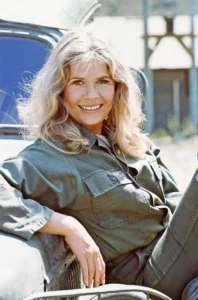
The Legacy of Major Houlihan
Margaret Houlihan remains beloved because she represented something revolutionary for her time and remains relevant today. She showed audiences that a woman could be complex, contradictory, and completely compelling. She could be a stickler for rules and a rule-breaker, a romantic and a realist, proud and insecure, tough and tender. She proved that character growth wasn’t just possible—it was captivating television.
Loretta Swit’s passionate performance brought Margaret to life with such depth and humanity that fans couldn’t help but root for her transformation. From that stern, disapproving Major in early seasons to the warm, caring friend who bid farewell to the 4077th in the series finale, Margaret Houlihan’s journey was nothing short of extraordinary.
She remains a testament to what’s possible when writers, actors, and audiences commit to seeing female characters as full human beings rather than stock types. Margaret Houlihan wasn’t just a great MAS*H character—she was groundbreaking television that paved the way for the complex, fully realized female characters we celebrate today.