While Hawkeye Pierce and B.J. Hunnicutt often receive primary attention, MASH’s brilliance extends far beyond its central cast. The show’s supporting characters represent some of television’s most memorable and impactful roles, each bringing unique depth, humor, and pathos to the narrative. These weren’t merely background players filling scenes; they were fully realized individuals whose stories enriched the entire series and created unforgettable television moments.
The supporting cast members didn’t simply occupy screen time—they elevated every episode they appeared in. Their character arcs demonstrated that meaningful storytelling doesn’t require top billing. Instead, thoughtful writing and committed performances created secondary characters that audiences loved, respected, and genuinely cared about. This article explores seven supporting characters whose presence fundamentally shaped what made MASH exceptional.
1. Father John Patrick “Mulcahy”: The Moral Compass
William Christopher’s portrayal of Father Mulcahy represents something increasingly rare in modern entertainment: a religious character treated with genuine respect and complexity. Mulcahy isn’t a stereotypical priest spouting platitudes; he’s a man struggling to reconcile his faith with the horrors he witnesses daily. His spiritual crisis feels authentic rather than preachy, exploring genuine theological questions about suffering and divine justice.
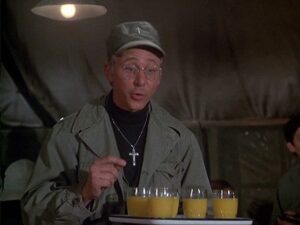
What makes Mulcahy particularly compelling is his growth throughout the series. He begins as somewhat naive about war’s realities but gradually confronts profound moral questions. His relationship with the unit develops from observer to genuine participant in their emotional struggles. Soldiers confess to him not because he’s a priest, but because they recognize his authentic compassion. Christopher’s subtle performances demonstrate that powerful acting doesn’t require theatrical displays; sometimes it’s found in quiet moments of recognition and understanding.
Mulcahy’s scenes exploring his faith crisis resonate with modern audiences questioning institutional religion. His journey represents intellectual honesty—the willingness to admit uncertainty while continuing to serve others. This complexity elevates him beyond simple supporting status into a character whose spiritual journey mirrors many viewers’ own questioning.
2. Maxwell “Max” Klinger: The Subversive Dreamer
Jamie Farr’s portrayal of Klinger represents one of television’s most successful character transformations. Initially introduced as comic relief—a soldier attempting to get discharged through increasingly absurd cross-dressing schemes—Klinger evolved into something far more substantial. What began as pure slapstick humor gradually revealed layers of genuine pathos beneath the comedic exterior.
Klinger’s cross-dressing, while played for laughs, actually represents something deeper: a desperate attempt to maintain individual identity within institutional dehumanization. His outrageous outfits become armor against the soul-crushing monotony of military life. As the series progresses, audiences recognize that Klinger’s humor masks genuine desperation. He’s not simply funny; he’s a man fighting to preserve his humanity through whatever means available.
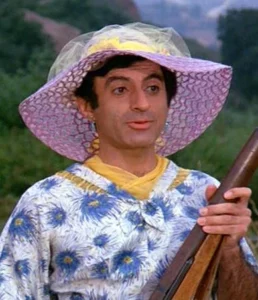
The show’s treatment of Klinger’s character becomes increasingly sympathetic. Viewers see beyond the makeup and dresses to recognize someone genuinely struggling with displacement, identity, and belonging. His friendship with Hawkeye deepens beyond comedy into genuine emotional connection. Modern audiences appreciate how MASH subverts expectations about masculinity, identity, and the multiple ways humans cope with trauma.
3. Charles Emerson Winchester III: The Aristocratic Outsider
David Ogden Stiers transformed Charles Winchester from a simple replacement character into something far more fascinating. Initially presented as B.J.’s replacement, Winchester could have remained a one-dimensional antagonist. Instead, the writing and Stiers’ nuanced performance created a character whose rigid exterior conceals genuine vulnerability and unexpected depth.
Winchester’s class consciousness, initially presented as snobbish pretension, gradually reveals itself as a defense mechanism. His constant references to Boston and family tradition mask insecurity about belonging. Throughout the series, Winchester’s armor cracks, revealing someone fundamentally lonely and seeking acceptance despite his obvious intelligence and capabilities. His classical music sessions become moments where audiences glimpse the sensitive person beneath the pompous exterior.
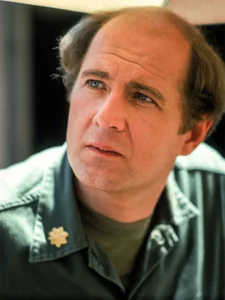
What makes Winchester particularly interesting is that his character arc doesn’t require him to completely abandon his values. He remains somewhat snobbish and class-conscious, but these traits become understandable rather than merely contemptible. His growing friendship with Hawkeye and B.J. represents acceptance despite fundamental differences. Modern audiences recognize Winchester’s journey as authentic character development—people don’t entirely transform, but genuine relationships can soften their rougher edges.
4. Colonel Sherman Potter: Leadership Under Pressure
Harry Morgan’s Colonel Potter represents exemplary leadership under impossible circumstances. Unlike typical military commanders in media, Potter treats his subordinates with genuine respect while maintaining necessary discipline. He’s not a distant authority figure but rather a father figure who understands that military hierarchy doesn’t negate human dignity.
Potter’s vulnerability becomes increasingly apparent as the series progresses. His worries about his family, his occasional emotional breakdowns, and his moral struggles humanize military leadership. He demonstrates that strength doesn’t preclude admitting fear or doubt. His letters home, his conversations with Margaret, and his quiet moments of crisis reveal a man bearing immense responsibility while trying to maintain psychological equilibrium.
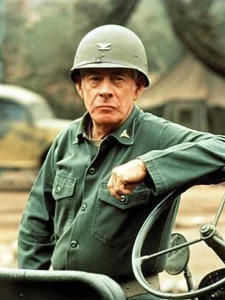
Morgan’s subtle performance shows how truly strong leadership involves balancing authority with compassion. Potter’s respect among unit members stems not from fear but from recognition that he genuinely cares about their welfare. Modern audiences, increasingly skeptical of hierarchical authority, appreciate Potter’s model of leadership that combines firmness with empathy.
5. Major Frank Burns: The Flawed Antagonist
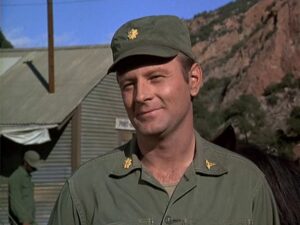
Larry Linville’s Major Frank Burns occupies a unique position as an antagonist who gradually becomes sympathetic. Burns isn’t evil; he’s essentially mediocre and insecure, compensating through rigid adherence to rules and military protocol. His constant conflict with Hawkeye and B.J. stems from different coping mechanisms—Burns needs structure to feel secure, while others use humor.
Burns’ character arc shows genuine complexity. His affair with Margaret reveals someone capable of emotion beyond his surface rigidity. His eventual breakdown and departure from the unit feels genuinely tragic because audiences recognize his fundamental loneliness beneath the irritating behavior. Modern viewers understand Burns as someone struggling with his own inadequacy rather than simply dismissing him as a villain.
6. Margaret “Hot Lips” Houlihan: Breaking Stereotypes
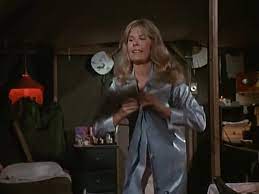
Loretta Swit transformed Margaret from potential one-dimensional stereotype into one of television’s most nuanced female characters. Initially presented primarily through her sexuality and romantic entanglements, Margaret gradually emerges as a highly competent nurse and complex human being worthy of serious dramatic consideration.
Margaret’s journey represents early television’s tentative steps toward meaningful female representation. Her professional capabilities, her internal conflicts between duty and desire, and her gradual recognition that escape from her circumstances isn’t possible create genuine dramatic tension. Swit’s performance honors both the comedic moments and the profound emotional stakes of Margaret’s character arc.
7. General Hammond: The Voice of Reason
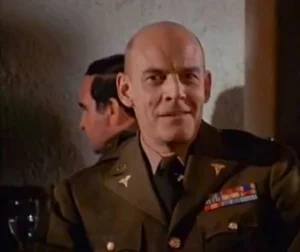
Though appearing less frequently than other supporting characters, G.W. Bailey’s General Hammond provides crucial grounding for the series’ themes. Hammond represents institutional authority attempting to maintain humanity within bureaucratic systems. His relationship with Potter demonstrates how institutional hierarchies can coexist with genuine mutual respect between individuals.
Hammond’s rarer appearances actually enhance his impact. His scenes carry weight precisely because he doesn’t appear constantly. When he arrives, the stakes feel elevated. His character represents the possibility that military leadership can include people genuinely concerned with their subordinates’ welfare.
Why Supporting Characters Matter
MASH’s success fundamentally derives from ensemble excellence rather than relying on a few stars. Each supporting character receives sufficient development to feel genuinely real. This approach to storytelling—where even minor characters possess depth and complexity—represents a significant achievement in television writing. Modern audiences, accustomed to ensemble shows, recognize and appreciate MASH’s pioneering work in creating a balanced ensemble cast where no single character completely dominates.
These supporting characters teach audiences that meaningful storytelling exists in unexpected places. Their presence elevates MASH from simply entertaining into genuinely important television that respects its audience’s intelligence and emotional investment.