In a show dominated by wise-cracking surgeons and bumbling commanders, the nurses of the 4077th often worked in the background—but when they stepped into the spotlight, they delivered some of MASH’s most powerful, heartbreaking, and revolutionary moments. These weren’t just supporting characters providing romantic subplots or comedic foils. They were skilled professionals, complex women navigating a male-dominated military structure, and the emotional anchors that kept the entire unit functioning. Here are five moments that proved the nurses weren’t just part of MASH—they were essential to everything that made it great.
Margaret’s Breakdown After Her Divorce
Major Margaret Houlihan’s journey from “Hot Lips”—the show’s early antagonist and punchline—to a fully dimensional character stands as one of television’s greatest character evolutions. But no moment crystallized this transformation more than her emotional collapse following her divorce from Lieutenant Colonel Donald Penobscott.
In the episode “The Nurses,” Margaret returns from her honeymoon to discover her marriage is already crumbling. When the final blow comes, we see her stripped of all military bearing, sobbing in her tent while the other nurses gather around to comfort her. What makes this scene extraordinary isn’t just Loretta Swit’s raw performance—it’s how the show allowed Margaret to be completely vulnerable without losing our respect.
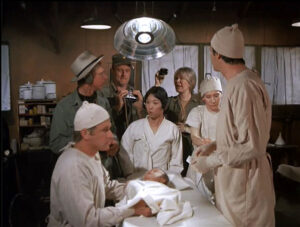
For years, Margaret had maintained rigid control, using military protocol and rank as armor against a world that constantly undermined her authority. Watching that armor crack revealed the lonely, isolated woman underneath—someone who desperately wanted to be seen as more than just a tough commanding officer or a romantic conquest. The nurses’ unconditional support in this moment showed a sisterhood that transcended rank and previous conflicts, proving that women supporting women was the most powerful force in the camp.
Nurse Kellye’s Stand Against Hawkeye
Kellye Nakahara’s character, Nurse Kellye Yamato, appeared in over 150 episodes but rarely had major storylines—which made her confrontation with Hawkeye in “Hey, Look Me Over” even more impactful. After years of Hawkeye pursuing every nurse in camp except her, Kellye finally calls him out for treating her as invisible.
When Hawkeye makes a thoughtless comment about not being attracted to her, Kellye unleashes years of frustration with a speech that still resonates today. She doesn’t just call out his behavior toward her specifically—she challenges the entire dynamic where nurses are valued primarily for their attractiveness rather than their professional competence. This moment shattered the show’s comfortable pattern where Hawkeye’s womanizing was treated as charming rather than problematic.
What elevated this beyond a simple confrontation was how the show validated Kellye’s perspective completely. Hawkeye doesn’t get to explain or justify his behavior with quick wit. He’s forced to sit with his discomfort and recognize his own prejudices and the real hurt they’ve caused. This 1982 episode addressed issues of casual racism, lookism, and workplace harassment years before these conversations became mainstream. It also gave voice to every background character—and every viewer—who’d ever felt invisible or taken for granted in their own workplace.
The Nurses’ Revolt for Better Conditions
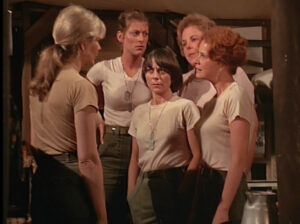
In “The Nurses,” the same episode featuring Margaret’s breakdown, the nursing staff stages a revolt over impossible working conditions. Exhausted from double shifts, inadequate supplies, dangerous shortages, and constant disrespect from both military brass and some doctors, they collectively refuse to accept the status quo any longer—and Margaret, despite her strictly by-the-book nature, makes the revolutionary choice to stand with them.
This storyline was genuinely groundbreaking for 1970s television. Here were women—military women operating within one of the most rigid hierarchical structures in existence—engaging in what amounted to organized labor action. They demanded better treatment not through charm, manipulation, or appealing to male protectors, but through collective solidarity and flat-out refusal to continue accepting substandard conditions. The episode doesn’t mock their concerns or frame them as irrational, hysterical, or overly emotional. Instead, it meticulously shows that their demands are entirely reasonable and that the system’s failure to meet basic standards actively puts lives at risk.
The resolution doesn’t come from male characters swooping in to save the day or negotiate on the nurses’ behalf. Change comes because the nurses themselves force the issue until addressing their concerns becomes unavoidable. It was a masterclass in how women’s empowerment storylines should be written—not as pandering wish-fulfillment or heavy-handed preaching, but as authentic struggles for dignity, respect, and basic safety in the workplace.
Nurse Baker’s Psychological Break
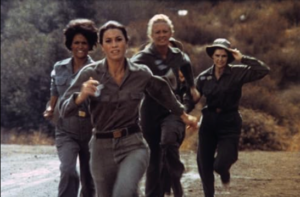
In one of the show’s darkest and most unflinching episodes, a young nurse suffers a complete psychological break after the relentless trauma of working in a war zone. While desperately trying to save a critically wounded soldier during a particularly brutal batch of casualties, her mind simply shuts down, refusing to process any more horror. She becomes catatonic, staring ahead with unseeing eyes.
What made this storyline so devastating and impactful was its brutal honesty about mental health in ways that television rarely attempted. PTSD wasn’t yet widely understood, discussed, or even properly named, especially not in connection with nurses and support staff. The prevailing cultural assumption was that front-line combat soldiers suffered trauma, but those working “behind the lines” in medical facilities were somehow immune or less affected. This episode shattered that comfortable myth with sledgehammer force.
The scene where Hawkeye and BJ try desperately to reach her, speaking gently while she stares ahead completely unreachable, remains one of MAS*H’s most genuinely chilling moments. It forced viewers to recognize that everyone in a war zone carries invisible scars—that the nurses who spent every shift literally piecing wounded people back together were themselves being psychologically torn apart by what they witnessed daily. This wasn’t a Very Special Episode with a tidy resolution where everything returns to normal by the closing credits. It was a stark, uncomfortable reminder that not everyone survives war intact, even if they physically make it home alive.
Margaret and Hawkeye’s Evolution to Mutual Respect
The gradual evolution of Margaret and Hawkeye’s relationship from openly antagonistic to deeply respectful provides one of the show’s most satisfying long-term character arcs. While their early interactions consisted of her reporting his rule-breaking antics and him retaliating by tormenting her, later seasons revealed a profound mutual respect between two consummate medical professionals who recognized excellence in each other.

The two-part episode “Comrades in Arms” stranded them behind enemy lines together, forcing them to rely entirely on each other for survival. What could have devolved into a cheap romantic entanglement played for titillation instead became a thoughtful meditation on respect, profound loneliness, and the emotional walls people construct to survive impossible situations. Their brief intimate moment wasn’t sensationalized—it was two exhausted, isolated people finding temporary comfort in genuine mutual understanding.
More importantly, when they returned to camp, both acknowledged that what happened couldn’t and shouldn’t continue, but without awkwardness, regret, or soap opera drama. They recognized each other as equals—highly skilled medical professionals doing impossible work under unbearable conditions. From that point forward, Hawkeye consistently defended Margaret’s competence and authority when others challenged her, while she learned to look past his constant rule-breaking to appreciate his unwavering dedication to saving lives above all other concerns.
The Lasting Impact
These moments mattered profoundly because they showed women as fully, completely human—capable and flawed, strong and vulnerable, righteously angry and deeply compassionate, professionally excellent and personally struggling. The nurses of MAS*H weren’t set decoration, romantic complications, or prizes to be won. They were the backbone of the 4077th, the people who kept everything running while dealing with the same trauma, bone-deep exhaustion, and moral injury as everyone else around them.
By giving these characters genuine depth, agency, and their own meaningful storylines, MASH created a template for how to write women in ensemble shows that far too few programs have successfully followed. Every medical drama since—from ER to Grey’s Anatomy to The Night Shift—owes a significant debt to how MASH portrayed nursing as highly skilled, emotionally demanding work performed by complex individuals absolutely worthy of their own compelling narratives.