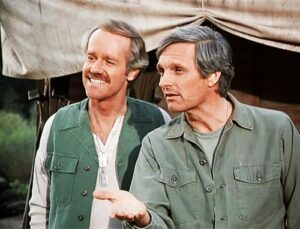
When BJ Hunnicutt arrived at the 4077th in Season 4 to replace Trapper John McIntyre, Hawkeye Pierce was skeptical and grieving. No one could replace his best friend who’d left without saying goodbye. But over six seasons and 152 episodes, Hawkeye and BJ developed one of television’s most authentic and emotionally complex male friendships—a bond built on shared trauma, mutual respect, complementary differences, and unwavering loyalty. Their relationship demonstrated that profound friendship between men could include vulnerability, emotional honesty, and genuine intimacy without diminishing masculinity. These five unforgettable moments between Hawkeye and BJ captured the depth of their connection and why their friendship remains a template for authentic male relationships decades later.
The Moment BJ Almost Cheated and Hawkeye Didn’t Judge
In “War Co-Respondent,” BJ came dangerously close to infidelity with a visiting nurse, stopped only at the last moment by thoughts of his wife Peg. The next morning, hungover and guilt-ridden, BJ confessed everything to Hawkeye—his temptation, his near-betrayal, his shame. Hawkeye’s response defined their friendship. He didn’t offer false reassurance or minimize BJ’s struggle. He didn’t joke to deflect the serious moment. He simply listened, acknowledged BJ’s pain, and offered perspective without judgment.
What made this scene unforgettable was Hawkeye’s emotional intelligence. He recognized that BJ needed to voice his guilt and fear, not receive absolution or condemnation. Hawkeye’s matter-of-fact observation—that BJ had been separated from his wife for over a year in impossible circumstances and that temptation didn’t equal betrayal—offered compassion without excusing. He witnessed BJ’s vulnerability without making him feel pathetic for struggling.

This moment demonstrated sophisticated understanding of friendship between men. Hawkeye could have responded with locker-room bravado, minimizing fidelity’s importance or mocking BJ’s guilt. Instead, he treated BJ’s marriage and moral struggle with complete seriousness, honoring his friend’s values even when they differed from his own. The scene showed that genuine friendship means supporting who your friend is trying to be rather than imposing your own values.
The conversation’s conclusion—BJ deciding to confess to Peg in a letter—showed how Hawkeye’s non-judgmental support empowered BJ to make the difficult ethical choice. True friendship doesn’t just comfort; it helps people become their best selves. Hawkeye’s response to BJ’s crisis exemplified friendship as moral support rather than moral relativism.
When Hawkeye Broke Down and BJ Held Space
Throughout later seasons, Hawkeye’s psychological deterioration became increasingly visible. Various episodes showed him drinking more, joking with harder edges, experiencing nightmares and flashbacks. In several powerful scenes, BJ witnessed Hawkeye’s mental health crises and responded with remarkable emotional maturity. Rather than trying to fix Hawkeye or minimize his pain, BJ simply stayed present.
One particularly memorable moment came after an especially brutal day in the OR when Hawkeye, clearly on the edge of collapse, began spiraling into dark rumination about the futility of their work. BJ didn’t offer platitudes about saving lives or making a difference. He didn’t try to cheer Hawkeye up or distract him. He just sat with his friend in the darkness, physically present and emotionally available, allowing Hawkeye to voice despair without trying to argue him out of it.

This scene was unforgettable because it portrayed male friendship’s capacity for holding emotional space—being present with another person’s pain without needing to solve or fix it. BJ understood that sometimes the most supportive thing you can do is witness someone’s suffering and communicate through presence that they’re not alone. His willingness to sit in uncomfortable silence rather than filling it with false comfort demonstrated profound respect for Hawkeye’s emotional reality.
The scene also showed BJ’s recognition that Hawkeye’s breakdown was accumulating gradually rather than happening suddenly. He couldn’t prevent it, but he could ensure Hawkeye didn’t face it alone. This long-view understanding of mental health—that supporting someone through sustained crisis requires patience and consistency rather than heroic intervention—was remarkably sophisticated for television in the late 1970s and remains relevant today.
The Prank War That Was Really Love Language
Hawkeye and BJ’s elaborate practical jokes on each other created some of MAS*H’s funniest moments, but they also revealed the depth of their friendship. The escalating pranks—from simple tricks to elaborate operations requiring days of planning—demonstrated trust, attention, and affection expressed through their unique language.
One particularly memorable prank sequence involved BJ systematically replacing Hawkeye’s clothes with smaller sizes while Hawkeye stubbornly insisted nothing was wrong even as he struggled into increasingly tight garments. The physical comedy was brilliant, but the emotional subtext made it unforgettable. These pranks required intimate knowledge of each other’s habits, schedules, and psychology. They demanded time and creative energy that could have been spent elsewhere. They were, essentially, elaborate attention gifts.

What made their prank war meaningful was its mutual nature. Neither man dominated or genuinely hurt the other. The jokes stayed within bounds both tacitly understood, never crossing into cruelty or exploitation of real vulnerabilities. This unspoken agreement about acceptable boundaries demonstrated emotional intelligence and respect underlying the chaos.
The pranks also served as emotional release valve. When words failed to express frustration, affection, or simply the need to connect, physical comedy provided alternative communication channel. Their willingness to look ridiculous, to put substantial effort into making each other laugh, showed a comfort and security in their friendship that many men never achieve.
When Hawkeye Saved BJ From Making a Terrible Mistake
In “Preventive Medicine,” BJ faced his own moral crisis when a reckless colonel’s tactics were getting soldiers killed. The episode explored whether deliberately injuring the colonel to remove him from command could be justified. Throughout, Hawkeye and BJ argued passionately about ethics, military authority, and moral responsibility.
The unforgettable moment came not during their arguments but in how they navigated disagreement without destroying their friendship. They held completely opposing views on a life-or-death ethical question, yet they continued engaging with respect and genuine attempt to understand each other’s reasoning. Neither dismissed the other as stupid or evil for disagreeing. They argued with the intensity their convictions demanded while maintaining underlying certainty that their friendship would survive.
This demonstrated friendship’s capacity to withstand profound disagreement. Hawkeye and BJ didn’t agree about everything—they had different values, backgrounds, and philosophies. But they’d built enough trust and accumulated enough shared experience that one disagreement, however serious, couldn’t threaten their bond. They’d learned that friendship means respecting another person’s autonomy to make choices you disagree with while making your own perspective clear.
The episode’s conclusion—with both men somewhat disappointed in the other but their friendship intact—modeled mature conflict resolution. They didn’t pretend to agree. They didn’t decide one was right and the other wrong. They simply accepted that this was an issue they’d never see the same way and moved forward with relationship preserved.
BJ’s Goodbye: “GOODBYE” Written in Stones
The series finale’s most emotionally devastating moment came as Hawkeye’s helicopter lifted off and he looked down to see BJ’s final message: “GOODBYE” spelled out in massive stones on the hillside near the helipad. This silent farewell destroyed viewers because it represented everything about their friendship—the effort, the attention, the understanding of what the other person needed, the determination to give a proper goodbye after Trapper’s failure to do so.
BJ knew that Hawkeye’s wound from Trapper leaving without goodbye had never fully healed. He understood that Hawkeye needed explicit acknowledgment of their friendship’s end, needed to know he mattered enough that BJ would make extraordinary effort for a proper farewell. So BJ spent hours arranging stones heavy enough and large enough to be visible from a helicopter—backbreaking physical labor motivated purely by love for his friend.

The message’s simplicity made it more powerful. Not a long sentimental speech or elaborate declaration, just “GOODBYE”—acknowledgment that their time together was ending, that it had mattered, that BJ was intentionally giving Hawkeye the closure Trapper had denied him. The gesture demonstrated that BJ understood Hawkeye completely, knew his wounds and needs, and prioritized healing them even during the chaos of the 4077th’s final day.
This wordless communication exemplified their entire friendship. They could talk for hours about everything and nothing, but their deepest communication often happened without words—through action, presence, and gestures that showed they truly saw each other. BJ’s stone message was the ultimate expression of knowing someone so well that you understand exactly what they need, even when they haven’t asked for it.
The Legacy of Brotherhood
These five unforgettable moments between Hawkeye and BJ demonstrated that male friendship could be emotionally honest, vulnerable, supportive, and profound without requiring traditional romantic frameworks. They showed that men could love each other deeply, support each other through darkness, disagree about important issues, play together like children, and mourn separation intensely—all while maintaining heterosexual identities and respecting each other’s autonomy.
Their friendship provided a template for healthy male relationships that remains relevant and necessary. In an era still grappling with toxic masculinity and men’s isolation epidemic, Hawkeye and BJ’s bond reminds us that authentic friendship between men requires emotional honesty, willingness to be vulnerable, capacity to witness pain without fixing it, respect for differences, and commitment to showing up consistently even when it’s difficult. Their relationship proved that the deepest friendships aren’t defined by agreement or similarity but by mutual respect, accumulated shared experience, and unwavering commitment to each other’s wellbeing. These five moments captured why their brotherhood remains television’s gold standard for male friendship done right.