When B.J. Hunnicutt arrived at the 4077th in Season Four to replace Trapper John, nobody knew if lightning could strike twice. Could Hawkeye Pierce possibly form another friendship as compelling as what he’d had with his original partner in crime? The answer turned out to be yes—but in a completely different way. The Hawkeye-B.J. friendship became one of MAS*H’s most nuanced relationships, evolving from awkward beginnings into a bond so deep that their eventual separation in the series finale devastated millions of viewers. Unlike the fraternity-style hijinks of the Hawkeye-Trapper years, this friendship explored loyalty, moral boundaries, family pressures, and what it means to maintain your humanity when everything around you is designed to strip it away. Let’s revisit five moments that defined this extraordinary friendship and showed us what true partnership looks like under impossible circumstances.
1. The First Meeting: An Awkward Beginning That Set Everything in Motion
B.J.’s arrival at the 4077th was deliberately uncomfortable, and that discomfort created surprising emotional depth. Hawkeye, still grieving Trapper’s sudden departure, greeted his new tentmate with obvious reluctance and barely concealed resentment. B.J., for his part, arrived expecting adventure and found blood, chaos, and a roommate who clearly wished he was someone else. Their first real conversation—Hawkeye explaining that he wasn’t looking for a new best friend while B.J. tried to establish his own identity rather than being “the new Trapper”—established honesty as their relationship’s foundation.

What made this moment memorable wasn’t the awkwardness itself but how the show committed to it. Most sitcoms would have rushed past the discomfort to get to the jokes. MAS*H let it breathe, acknowledging that genuine friendship can’t be forced and that both men had legitimate reasons for their guardedness. Hawkeye’s emotional vulnerability, admitting he’d been hurt by Trapper leaving without saying goodbye, and B.J.’s quiet determination to be accepted for himself rather than as a replacement created a relationship built on authenticity. This rocky start made their eventual closeness feel earned rather than convenient, setting a pattern where their friendship would be defined by honest communication even when that honesty was painful.
2. “Period of Adjustment”: When B.J. Nearly Left and Hawkeye Fought to Keep Him
Early in their relationship, B.J. reached his breaking point and requested a transfer, feeling he couldn’t handle the constant carnage and psychological toll. This moment became pivotal because Hawkeye, who had been maintaining emotional distance, suddenly realized he didn’t want to lose another friend. His desperate attempt to convince B.J. to stay wasn’t about needing a drinking buddy—it was about recognizing something valuable and being willing to fight for it. Hawkeye’s vulnerability in that scene, admitting that he’d been unfair and that he actually needed B.J. to stay, showed growth and emotional risk.
B.J.’s decision to remain wasn’t about being convinced that war was manageable—he still hated it. Instead, he chose to stay because Hawkeye showed him that their friendship could be the thing that made the unbearable bearable. This episode established the central dynamic of their relationship: two fundamentally decent men helping each other maintain their humanity in dehumanizing circumstances. The moment worked because both actors played it with restraint rather than melodrama, letting small gestures and quiet admissions carry the emotional weight. From this point forward, viewers understood that Hawkeye and B.J. weren’t just colleagues or tentmates—they were lifelines for each other.

3. The Mustache Prank War: When Friendship Became Competitive Art
One of the most extended and hilarious storylines involved Hawkeye’s inexplicable hatred of B.J.’s mustache and the escalating prank war that followed. What started as gentle ribbing evolved into increasingly elaborate practical jokes, each man trying to one-up the other in creativity and audacity. The genius of this arc was how it showcased their friendship through play—the pranks required deep knowledge of each other’s habits, routines, and vulnerabilities. Only true friends could pull off such precisely targeted mischief.
The prank war’s climax, when B.J. finally executed a prank so elaborate and perfectly timed that even Hawkeye had to admit defeat, represented a turning point. It wasn’t about the mustache anymore—if it ever had been. It was about two intelligent, creative men finding ways to engage with each other that didn’t involve the constant trauma of their daily work. Their ability to laugh together, to compete without genuine animosity, and to find joy in absurdity demonstrated the strength of their bond. When Margaret observed that they were like children, she was right—but that childlike playfulness was precisely what kept them sane. This extended moment showed that friendship isn’t just about supporting each other through hard times; it’s also about creating good times that make the hard times survivable.
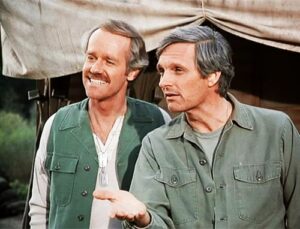
4. “The Fidelity Episode”: When B.J. Almost Betrayed His Values
One of the relationship’s most powerful moments came when B.J., feeling distant from his wife Peg and tempted by a nurse’s attention, nearly committed adultery. Hawkeye, whose own attitudes about casual sex were famously permissive, found himself in the unexpected position of trying to talk B.J. out of making a mistake. This role reversal—Hawkeye as the voice of conscience—demonstrated how deeply he understood and respected B.J.’s values even when they differed from his own. His argument wasn’t moral lecturing; it was personal recognition that B.J. would hate himself afterward and that protecting his friend from that self-hatred mattered more than any code of masculinity or wartime permissiveness.
B.J.’s struggle and ultimate decision not to cheat, combined with his emotional breakdown afterward about how close he’d come, showed remarkable vulnerability. Hawkeye’s response—sitting with him, not judging, acknowledging the difficulty of B.J.’s choice without diminishing it—exemplified mature friendship. This moment proved that real friends don’t just support your choices; they help you stay true to yourself even when you’re tempted to compromise your values. The scene worked because it took seriously the moral dimensions of B.J.’s marriage commitment while acknowledging the genuine difficulty of maintaining that commitment under wartime separation. It showed two men with different value systems finding common ground in mutual respect and care.

5. The Series Finale: “Goodbye” Written in Stones
The series finale gave Hawkeye and B.J. a parting that broke hearts worldwide while perfectly capturing their relationship’s essence. After eleven years together (in our time) and three years in show time, these men had become family. Their goodbye wasn’t theatrical or melodramatic—it was achingly real. B.J.’s decision to leave without saying goodbye mirrored Trapper’s departure, creating a painful echo that threatened to repeat Hawkeye’s earlier abandonment trauma. But B.J. understood what he was doing, and his gift—the word “GOODBYE” spelled out in stones outside the camp—showed he’d planned something more permanent than words.
Hawkeye’s helicopter lifting off and revealing that massive stone message created one of television’s most iconic images. The wordless communication between them—B.J. saluting from the ground, Hawkeye’s tearful reaction from above—conveyed everything words couldn’t. This moment succeeded because it honored what made their friendship special: honest communication, creative expression, and deep understanding that transcended circumstances. B.J. knew Hawkeye needed closure he hadn’t gotten with Trapper. Hawkeye knew that B.J. had fought his own pain to give him that gift. The stone message was permanent in a way verbal goodbyes aren’t—a monument to a friendship that sustained both men through hell.

The Legacy of Their Bond
The Hawkeye-B.J. friendship resonates because it depicted adult male friendship with emotional sophistication rare in any era of television. These weren’t men who expressed love through stoic silence or masculine posturing. They talked about their feelings, supported each other’s vulnerabilities, disagreed without destroying their bond, and openly acknowledged their need for each other. Their relationship modeled what healthy male friendship can look like—emotionally honest, mutually supportive, playful yet profound, and willing to do the hard work of maintaining connection even when it’s easier to retreat into isolation.
MAS*H gave us many great relationships, but Hawkeye and B.J.’s friendship stands out for its growth, complexity, and emotional authenticity. From awkward beginnings to heartbreaking farewell, their journey showed us that the friends who help us survive our worst times become inseparable from our story. These five moments remind us that real friendship requires honesty, effort, play, respect for differences, and the courage to stay present even when presence is painful. That’s not just great television—it’s a masterclass in human connection.