When MAS*H first introduced Corporal Maxwell Q. Klinger in a dress during Season 1, few could have predicted that this seemingly one-note character would evolve into one of television’s most complex, beloved, and groundbreaking figures. Portrayed brilliantly by Jamie Farr across 11 seasons, Klinger transcended his original comedic premise to become the heart and soul of the 4077th Mobile Army Surgical Hospital. Let’s explore the five compelling reasons why Klinger remains an unforgettable character decades after the series finale.
1. The Genius Evolution from Gag to Depth
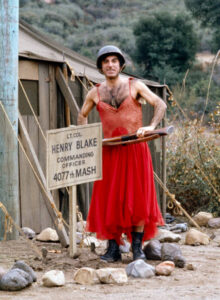
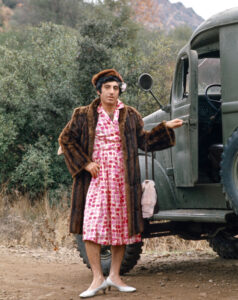
Klinger started as a simple running joke—a soldier wearing women’s clothing in an attempt to earn a Section 8 discharge for insanity. In less skilled hands, this character could have remained a shallow stereotype or offensive caricature. Instead, the writers and Jamie Farr collaborated to create something extraordinary: a character whose outrageous wardrobe became a symbol of desperation, creativity, and ultimately, humanity.
As the series progressed, Klinger’s cross-dressing transformed from mere comedy into a statement about the lengths people will go to escape war’s horrors. The show never mocked Klinger for his choices; instead, it celebrated his ingenuity and determination. What began as physical comedy evolved into social commentary, showing audiences that beneath the sequins and feathers was a man fighting for his freedom in the only way he knew how.
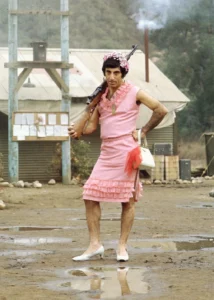
By the later seasons, Klinger appeared less frequently in dresses, yet he never lost his appeal. This evolution proved that the character’s charm never relied solely on his wardrobe—it was always about the man underneath. His transition demonstrated sophisticated character development rarely seen in television comedy, showing viewers that people are far more complex than their most obvious traits.
2. The Perfect Balance of Comedy and Courage
Klinger possessed an almost supernatural ability to make audiences laugh one moment and feel deeply moved the next. His schemes to get discharged ranged from the absurd—claiming to be pregnant, attempting to eat a jeep, hanging from a helicopter—to the genuinely creative. Each failed attempt became a testament to his resilience rather than his foolishness.
However, when the chips were down and the 4077th faced genuine crises, Klinger always stepped up. He worked tirelessly in post-op, assisted with surgeries during mass casualty situations, and showed genuine care for wounded soldiers. His bravery wasn’t the loud, chest-thumping variety—it was the quiet courage of showing up day after day despite desperately wanting to be anywhere else.
This duality made Klinger profoundly relatable. He wasn’t a traditional hero who loved combat or a coward who shirked responsibility. He was an ordinary person trapped in extraordinary circumstances, doing his best while never pretending to be happy about it. That authenticity resonated with veterans and civilians alike, making him perhaps the show’s most realistic character.
3. Cultural Representation Done Right
At a time when Middle Eastern and Arab-American characters were virtually invisible on American television, Klinger proudly represented his Lebanese heritage from Toledo, Ohio. The show didn’t make his ethnicity a punchline or a problem—it was simply part of who he was, woven naturally into his identity.
Klinger spoke Arabic, referenced his family’s traditions, and educated other characters about his culture without ever becoming a stereotype. He demonstrated that immigrants and ethnic minorities were as American as anyone else, serving their country while maintaining connections to their heritage. This representation mattered enormously and still resonates today.
Jamie Farr himself was Lebanese-American from Toledo, bringing authentic experiences to the role. This authenticity elevated Klinger beyond a character and into representation that felt genuine and respectful. For many viewers, Klinger was their first positive exposure to Arab-American culture, proving that representation in media carries real weight and responsibility.
4. The Ultimate Romantic and Loyal Friend
Klinger’s capacity for love and loyalty revealed his true character. His devotion to his wife Laverne back home showed a tender side that contrasted beautifully with his outrageous antics. When that relationship ended, audiences felt genuine heartbreak for him. Later, his romance with Soon-Lee demonstrated his ability to see beyond cultural differences and find genuine connection.
His decision to stay in Korea after the war to help Soon-Lee find her family was perhaps the series’ most surprising character moment. The man who spent years desperately trying to escape Korea chose to remain there for love. This decision perfectly encapsulated Klinger’s growth from self-focused dreamer to selfless partner, providing a beautiful arc that felt earned rather than forced.
Beyond romance, Klinger’s friendships with Hawkeye, B.J., Father Mulcahy, and especially Colonel Potter showed his capacity for genuine connection. He wasn’t just the comic relief sidekick—he was a trusted friend, confidant, and equal. These relationships gave the show emotional anchors that grounded even its most absurd moments.
5. The Working-Class Hero We Needed
Klinger represented the working-class soldiers who comprised the majority of any military force—people who didn’t attend prestigious universities, didn’t come from wealth, and didn’t have connections to avoid service. He was a regular guy from a regular neighborhood who got drafted and made the best of an impossible situation.
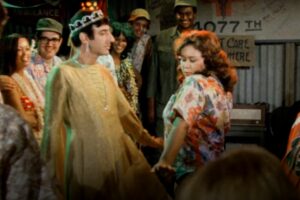
His various business schemes, from selling magazines to running poker games, showed the entrepreneurial spirit of someone who always had to hustle. Unlike some characters who could rely on family money or prestigious careers waiting at home, Klinger had to create his own opportunities. This made him the most relatable character for many viewers who saw themselves or their family members reflected in his struggles.
Klinger never pretended to be something he wasn’t. He wasn’t sophisticated like Hawkeye, educated like B.J., or connected like Charles Winchester. He was authentic, honest about his fears and desires, and unashamed of his working-class roots. In a media landscape often obsessed with wealth and prestige, Klinger reminded audiences that ordinary people are extraordinary.
The Lasting Legacy
Decades after MAS*H ended, Klinger remains beloved because he represented something rare in television: a character allowed to be complex, contradictory, and completely human. He could be cowardly and brave, ridiculous and dignified, selfish and selfless—sometimes within the same episode. Jamie Farr’s nuanced performance ensured that Klinger never became a caricature, instead emerging as one of television’s most fully realized characters.
From the outrageous dresses to the quiet moments of courage, from the desperate schemes to the genuine heroism, Klinger showed audiences that there’s no single way to be brave, no one path to honor, and no simple definition of heroism. He made us laugh, made us think, and ultimately, made us believe in the resilience of the human spirit. That’s why, after all these years, we still love Klinger.