In the chaos of the 4077th Mobile Army Surgical Hospital, where blood, mud, and dark humor mixed in equal measure, the relationships between doctors and nurses formed the emotional core that elevated MAS*H from war comedy to profound human drama. While the show’s razor-sharp wit and satirical edge drew audiences initially, it was these quieter, more vulnerable moments between surgeons and their nursing staff that revealed the series’ true heart. These weren’t romantic subplots designed to boost ratings or superficial conflicts manufactured for weekly drama—they were genuine explorations of how people form bonds in impossible circumstances, how professional hierarchies give way to human connection, and how shared trauma creates intimacy that transcends rank and protocol.
The relationship between doctors and nurses in MASH reflected a delicate balance of professional respect, personal affection, and the unique understanding that comes from working together to save lives under constant pressure. These moments of connection—sometimes tender, sometimes painful, always authentic—showed that the real war wasn’t just against injury and death, but against the isolation and dehumanization that combat threatens to impose on everyone it touches. Here are five unforgettable moments when doctors and nurses connected in ways that revealed MASH’s profound understanding of human vulnerability and strength.
Margaret’s “Lousy Cup of Coffee” Confession
In the Season 5 episode “The Nurses,” MAS*H delivered one of its most devastating character moments when Major Margaret Houlihan finally broke down before her nursing staff. Throughout the series’ early seasons, Margaret had maintained strict professional distance from her nurses, enforcing regulations with iron discipline and rarely showing vulnerability. But when the nurses begin freezing her out socially, organizing gatherings without inviting her and maintaining a barrier of cold formality, Margaret’s carefully constructed armor finally cracks.
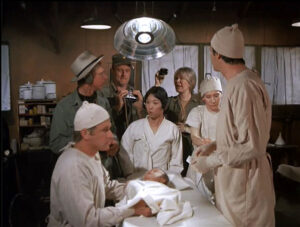
The scene that follows—Margaret’s tearful confrontation with her nurses—represents a turning point not just for the character but for the entire series. “Did you ever once offer me a lousy cup of coffee?” she demands, her voice breaking with accumulated loneliness and frustration. The nurses sit stunned as their commanding officer reveals the isolation she’s endured, explaining that being in charge doesn’t mean she doesn’t need friendship, doesn’t want to be included, doesn’t feel the same fears and loneliness they all experience. Loretta Swit’s performance is heartbreaking, showing Margaret’s desperate need for connection warring with her pride and her fear of appearing weak.
What makes this moment so powerful is how it reframes everything we’ve understood about Margaret’s character. Her strictness wasn’t just about regulations—it was protective armor worn by someone who believed leadership required isolation. Her distance from the nurses wasn’t contempt but fear of rejection, a self-fulfilling prophecy where she pushed people away before they could exclude her. The nurses’ shocked silence acknowledges their own culpability in maintaining this barrier. This scene transformed Margaret from antagonist to fully human, revealing that beneath her “Hot Lips” nickname and tough exterior lived a lonely woman desperately wanting the same camaraderie she saw the doctors and enlisted men sharing freely.
Hawkeye and Margaret in “Comrades in Arms”
The two-part episode “Comrades in Arms” forced Hawkeye and Margaret into intimate proximity when they’re caught behind enemy lines, sheltering together in an abandoned hut while shells explode around them. Facing possible death, stripped of their usual camp dynamics and forced to confront their mortality together, these two longtime adversaries discover unexpected depths in each other. What begins as their typical antagonistic banter gradually transforms into something more vulnerable as fear and isolation break down their defenses.
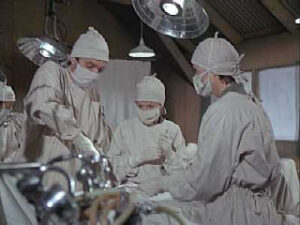
The intimacy that develops between them—culminating in them spending the night together—works dramatically because the show earned it through years of character development. This wasn’t a cheap ratings stunt but an authentic moment between two people who’ve spent years seeing each other daily, sparring verbally, grudgingly respecting each other’s competence, and slowly recognizing the person beneath the professional façade. Trapped in darkness with death potentially imminent, Hawkeye’s usual wit gives way to genuine fear, and Margaret’s tough discipline crumbles into vulnerability. They comfort each other not as doctor and head nurse but simply as two terrified humans needing connection.
The episode’s real emotional power comes not from their night together but from what happens afterward, when they return to camp and must navigate the complicated aftermath. Margaret’s attempts to maintain their newfound closeness clash with Hawkeye’s need to return to normalcy, creating awkwardness and hurt feelings that feel achingly real. The show doesn’t pretend that one moment of vulnerability automatically transforms relationships or erases years of established dynamics. Instead, it shows how intimacy born from extreme circumstances doesn’t easily translate to everyday life, and how people cope differently with having shown sides of themselves they usually keep hidden. The episode ultimately deepens their friendship and mutual respect while acknowledging that some moments exist outside normal boundaries—powerful in their specificity but not necessarily sustainable.
B.J. and the Nurses’ Gentle Understanding
Unlike Hawkeye’s flirtatious relationships with nurses or Margaret’s fraught command dynamics, B.J. Hunnicutt maintained a different kind of connection with the nursing staff—one characterized by mutual respect, gentle affection, and the unspoken acknowledgment that they were all far from home missing the people they loved. Multiple episodes show small, tender moments where B.J. and various nurses connect over photographs from home, letters from spouses, or shared exhaustion after brutal stretches in the operating room.
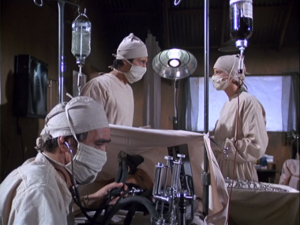
One particularly touching sequence shows B.J. helping a nurse whose boyfriend has stopped writing, offering comfort not through romantic interest but through genuine empathy from someone who understands how fragile these connections to home feel when you’re thousands of miles away in a war zone. He shares stories about Peg and his daughter Erin, not to boast but to remind both the nurse and himself why they’re all enduring this nightmare—to eventually return to the people and lives they love. His advice comes from someone who treasures his marriage and understands the terror of potentially losing that connection.
These moments never received episode-long focus or dramatic storylines, but their quiet consistency throughout the series created a portrait of genuine male-female friendship that felt revolutionary for television of that era. B.J. could be close with nurses without romantic or sexual tension. He could offer emotional support without it being patronizing. The nurses could confide in him without fear of their vulnerability being exploited. These interactions demonstrated MAS*H’s sophisticated understanding that the relationships sustaining people through war aren’t just romantic or familial but include these quieter bonds of mutual understanding and shared experience.
Winchester and the Nurses’ Surprising Mutual Respect
Charles Emerson Winchester III arrived at the 4077th as an aristocratic snob whose condescension seemed likely to create constant conflict with the nursing staff. Yet over time, episodes revealed that Winchester—unlike Frank Burns, whose contempt for nurses was rooted in insecurity—actually respected medical competence regardless of rank. Several episodes show Winchester working with nurses in surgery, acknowledging their skill, teaching them techniques, and treating them as professional colleagues rather than subordinates.
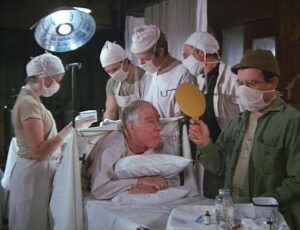
One memorable scene shows Winchester staying late after surgery to teach a nurse a specific suturing technique, patiently explaining the method with the same care he’d show a fellow surgeon. When Hawkeye comments on this unexpected generosity, Winchester replies with characteristic pomposity that excellence recognizes excellence, but beneath his affected manner lies genuine respect for someone dedicated to learning their craft. The nurse’s surprise at his willingness to teach reveals how rare such treatment is, making Winchester’s actions even more meaningful.
Another powerful moment occurs when Winchester defends a nurse against an arrogant visiting surgeon who treats her dismissively. Winchester—who routinely dismisses Hawkeye and B.J.’s antics—takes immediate offense at someone disrespecting a competent medical professional based on rank rather than skill. His defense comes not from gallantry but from his genuine belief that medicine requires excellence at every level, and that nurses who meet his exacting standards deserve the same respect he demands for himself. These moments showed that Winchester’s snobbery was about competence and culture rather than simple prejudice, and that beneath his aristocratic pretensions lived someone who valued skill and dedication wherever he found them.
The Collective Grief in Operating Room Scenes
Beyond specific episodes or storylines, some of MAS*H’s most emotionally devastating moments between doctors and nurses occurred during surgery when they lost a patient despite their best efforts. These scenes—usually brief but powerful—showed the entire medical staff sharing grief and frustration at their inability to save someone. The camera would linger on nurses’ faces as they watched doctors make desperate attempts to restart a heart. Doctors would meet nurses’ eyes across the operating table in shared acknowledgment of defeat. These wordless moments conveyed more about their relationships than pages of dialogue could achieve.
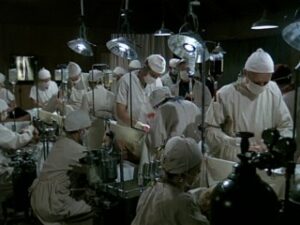
One particularly memorable sequence shows Hawkeye losing a young soldier on the table and simply standing there afterward, hands still raised, while a nurse gently removes his bloody gloves and another squeezes his shoulder in silent comfort. There’s no speech, no dramatic music—just the quiet recognition of shared failure and the small gestures of support from colleagues who understand that sometimes there are no words adequate to the moment. The nurses don’t tell him it’s not his fault or that he did everything he could—they just stay present with him in his grief, offering physical proximity as the only comfort possible.
These operating room moments accumulated across eleven seasons to create a portrait of genuine professional community. Doctors and nurses weren’t separate hierarchies but components of a single organism working toward common purpose. Their relationships weren’t defined by rank but by shared experience—the horror of what they witnessed together, the satisfaction of saves they accomplished as teams, and the grief they carried collectively when their best efforts weren’t enough. This unspoken intimacy, born from working together under impossible pressure, formed the emotional foundation that made MAS*H’s war commentary so effective. We cared about the body counts because we cared about the people counting them.
Why These Moments Still Resonate
These five moments—and countless smaller interactions like them throughout the series—demonstrated MAS*H’s sophisticated understanding of human connection under extreme circumstances. The show recognized that relationships forged in crisis carry unique intensity, that professional boundaries can coexist with genuine affection, and that hierarchy matters less than competence and character when people face death together daily. The doctors and nurses of the 4077th needed each other not just professionally but emotionally, and the show honored that need without romanticizing it or reducing it to simple formulas.
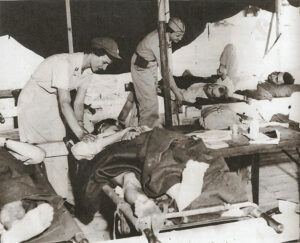
What makes these moments continue to resonate decades after the series ended is their fundamental authenticity. They don’t feel like manufactured television drama but like genuine glimpses into how people actually connect, actually support each other, actually break down and rebuild in the face of shared trauma. Margaret’s desperate need for inclusion, Hawkeye and Margaret’s complicated intimacy, B.J.’s gentle friendship, Winchester’s surprising respect, and the collective grief in the operating room—these moments revealed that MAS*H understood something profound about human resilience and vulnerability.
The show proved that war stories don’t have to choose between action and emotion, that comedy and tragedy aren’t opposites but companions, and that the real heroism of places like the 4077th came not from grand gestures but from small acts of connection, support, and shared humanity in the face of incomprehensible horror. These moments between doctors and nurses showed us what it means to care for each other when everything conspires against caring, to remain human when circumstances threaten to strip humanity away, and to find connection precisely when isolation seems inevitable. That’s why, forty years later, we still remember Margaret asking for that lousy cup of coffee—because we all know what it feels like to need connection and fear we don’t deserve it, to be lonely in a crowded room, to want desperately to belong.