When people think of MAS*H, they often remember the laughter, the clever one-liners, and the absurdity of war. But beneath the humor lies something far more powerful: raw, authentic human connection that transcends the chaos of the Korean War. The relationships between the doctors, nurses, and staff of the 4077th Mobile Army Surgical Hospital gave us some of television’s most profoundly moving moments. These weren’t just scripted scenes; they were windows into the soul of humanity during its darkest hours.
The Silent Goodbye Between Hawkeye and Trapper
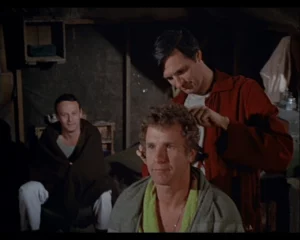
One of the most gut-wrenching moments in MAS*H history came not with grand gestures, but with absence. When Trapper John received his discharge papers and left for home without saying goodbye to Hawkeye, it shattered something fundamental in their friendship. Hawkeye’s realization that his best friend was gone forever, coupled with the raw pain of abandonment, created a scene that defined the cruel reality of war. Friendships forged in blood and crisis can end in silence, and sometimes there are no perfect farewells. Alan Alda’s performance in this moment captured the devastating loneliness that comes when someone who understood your darkest days simply vanishes.
Colonel Blake’s Final Departure
Perhaps no moment in television history has shocked and moved audiences quite like the death of Lieutenant Colonel Henry Blake. After receiving his discharge and saying emotional goodbyes to his makeshift family, the announcement of his plane being shot down over the Sea of Japan came without warning. What made this scene particularly heartbreaking was the cast’s genuine reaction—they weren’t told about the twist until filming the scene. The stunned silence in the operating room, Radar’s trembling voice delivering the news, and the way everyone continued working through their grief perfectly encapsulated the senseless tragedy of war. This wasn’t Hollywood drama; it was brutal, unforgiving reality.
Margaret’s Transformation Through Heartbreak
Major Margaret Houlihan’s journey from “Hot Lips” to a fully realized, vulnerable human being gave us countless emotional moments, but none more powerful than her divorce breakdown. When her marriage to Donald Penobscot crumbled, we saw the walls she’d built around herself completely collapse. The scene where she sits in Hawkeye’s tent, makeup smeared, crying about her failed marriage while he simply listens and offers comfort, revealed the depth of their complex relationship. It showed that beneath their constant bickering was genuine care and respect. This moment transformed Margaret from a caricature into one of television’s most compelling female characters.

Father Mulcahy’s Crisis of Faith
The gentle, often overlooked chaplain Father Mulcahy provided one of the series’ most quietly devastating moments when he questioned his purpose at the 4077th. Feeling useless as everyone around him saved lives while he merely offered prayers, his breakdown revealed the existential crisis that many face during wartime. The scene where he finally breaks down, admitting he feels invisible and ineffective, only to have the camp members tell him how much his presence means to them, reminds us that emotional and spiritual support is just as vital as medical intervention. His tears weren’t weakness; they were the accumulation of witnessing endless suffering while feeling powerless to stop it.

The Final Goodbye Between Hawkeye and BJ
The series finale gave us the ultimate tearjerker: Hawkeye and BJ’s farewell. After eleven seasons of friendship, pranks, surgery, and survival, these two men who had become brothers faced separation. The simple stone message “GOODBYE” spelled out on the helicopter pad, BJ’s refusal to say the word followed by this grand gesture, and Hawkeye’s tearful smile as he spots it from the helicopter created a perfect circle of closure. It acknowledged that some friendships, forged in the fires of shared trauma, never truly end. They simply transform into memories so powerful they sustain us forever.

The Lasting Impact
What makes these moments in MAS*H so enduring is their authenticity. The show never shied away from the emotional cost of war, the complexity of human relationships under extreme stress, or the reality that healing isn’t just physical. These characters loved each other, fought with each other, saved each other, and ultimately changed each other in ways that reflected real human experience.
Decades after the final episode aired, these moments still resonate because they remind us of universal truths: that connection matters, that goodbye hurts, that we’re stronger together, and that even in hell, humans find ways to care for one another. MAS*H didn’t just entertain; it held up a mirror to our shared humanity and asked us to feel deeply, even when it hurt.