Music in MASH was never just background noise—it was an essential storytelling element that enhanced the show’s emotional depth and defined its unique atmosphere. While most viewers remember the haunting theme song playing over choppers carrying wounded soldiers, the show’s musical landscape extended far beyond that iconic melody. From groundbreaking creative decisions to surprising behind-the-scenes stories, MASH’s approach to music revolutionized how television used sound to create mood, emphasize drama, and honor the silence that sometimes speaks louder than any score. These five fascinating facts reveal how carefully crafted musical choices helped transform a sitcom into television’s most emotionally complex series.
A Teenager Wrote the Theme Song in Five Minutes and Became a Millionaire
The most astonishing story behind MAS*H’s music involves its iconic theme song “Suicide is Painless.” When director Robert Altman was creating the original 1970 film, composer Johnny Mandel crafted a beautiful, melancholic melody. But Altman needed lyrics for a scene where the camp stages a fake suicide for a character nicknamed “Painless Pole.” Altman attempted writing lyrics himself but quickly gave up, declaring “I can’t write anything nearly as stupid as what we need.” Instead, he turned to his fourteen-year-old son, Michael Altman, figuring a teenager’s mind might produce the intentionally naive philosophical musings the scene required.
Young Michael took just five minutes to pen the now-famous lyrics exploring suicide, life, death, and the philosophical question of whether anything truly matters. Lines like “That suicide is painless / It brings on many changes / And I can take or leave it if I please” captured exactly the detached, pseudo-profound tone Altman wanted—words that sound deep but reveal war’s absurdity when you examine them closely. Robert Altman loved them, and the song became not just part of the movie but the television series’ opening theme for eleven seasons.

Here’s where the story becomes truly remarkable: While Robert Altman earned approximately seventy thousand dollars for directing the film MASH, his teenage son earned over one million dollars in songwriting royalties from those lyrics he’d written in five minutes. Every time the television show aired—which was thousands of times across eleven seasons, plus decades of syndication worldwide—Michael Altman collected royalties. The composer Johnny Mandel also profited handsomely, but the teenager who’d knocked out lyrics in less time than it takes to watch a sitcom episode became wealthier from MASH than the director who created the entire film. Robert Altman later joked about this ironic twist with good humor, but it remains one of entertainment history’s most surprising financial outcomes. The lesson? Sometimes youthful spontaneity captures truth that experience and overthinking miss, and sometimes five minutes of inspiration can be worth more than months of labor.
The Show Fought to Eliminate Laugh Tracks from Operating Room Scenes
One of MAS*H’s most significant musical decisions was actually about what NOT to include: laugh tracks during operating room scenes. When the show premiered in 1972, network executives insisted on canned laughter, believing audiences needed audio cues telling them when to laugh. Creator Larry Gelbart vehemently opposed laugh tracks entirely, arguing that comedy about war shouldn’t manipulate viewers’ responses. He wanted audiences to decide for themselves what was funny versus what was tragic. The network overruled him for most scenes, but Gelbart fought one critical battle: no laugh tracks in the operating room.
This decision proved revolutionary. Operating room scenes provided MAS*H’s dramatic backbone—these were moments where surgeons frantically worked to save lives while maintaining sanity through dark humor. Adding laugh tracks to scenes where doctors made jokes while performing surgery on teenagers would have been grotesque. The absence of canned laughter transformed these scenes into something television had never quite achieved before: comedy that wasn’t trying to be funny so much as showing how people use humor to survive horror. When Hawkeye cracked jokes while elbow-deep in a soldier’s abdomen, viewers laughed not because a laugh track told them to but because they recognized the desperate coping mechanism.
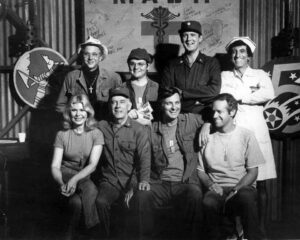
As the series progressed, MASH increasingly abandoned laugh tracks altogether. By later seasons, entire episodes contained no canned laughter whatsoever. Episodes like “The Interview” (Season 4) and “Quo Vadis, Captain Chandler” (Season 4) proved the show didn’t need laugh tracks to work. Season 11 was almost entirely laugh-track-free. This evolution reflected both the show’s growing confidence and its darkening tone as it explored war’s psychological costs more deeply. The DVD releases eventually offered viewers options to watch every episode with or without laugh tracks, and most fans agree the show plays better without artificial laughter. MASH’s fight against laugh tracks influenced television comedy permanently, paving the way for modern dramedies that trust audiences to understand tonal complexity without audio manipulation. The show proved that sometimes the most important musical decision is choosing silence over sound.
The Theme Song’s Lyrics Were Too Dark for Television
While the instrumental version of “Suicide is Painless” became one of television’s most recognizable theme songs, playing over helicopters and wounded soldiers every episode, few viewers knew the full lyrics existed, and for good reason—CBS refused to air them. The television series used only Johnny Mandel’s instrumental version because the lyrics’ explicit exploration of suicide made network executives deeply uncomfortable. Lines like “The sword of time will pierce our skins / It doesn’t hurt when it begins / But as it works its way on in / The pain grows stronger, watch it grin” were deemed far too dark and potentially disturbing for family viewing.
This created fascinating irony: MAS*H’s theme song was literally about suicide being painless, yet most viewers hummed along to the melody without realizing they were essentially whistling a song about death’s appeal. The instrumental version retained the melody’s melancholic beauty while removing the philosophical darkness. This decision actually enhanced the theme’s power—the wordless melody became a blank canvas onto which viewers projected their own emotions. The rising and falling notes suggested both hope and despair, arrival and departure, life and death, all without explicitly stating any of these themes. The music became universal language transcending specific meanings.
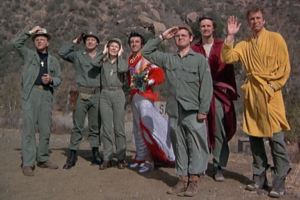
The full lyrical version was used in the original 1970 film during the “Painless Pole” suicide scene, where its pseudo-profound teenager philosophy worked perfectly for the satirical context. But removed from that specific scene and placed at the beginning of every television episode, the lyrics would have fundamentally changed the show’s tone. Instead of opening with hauntingly ambiguous music that could suggest both tragedy and resilience, episodes would have opened with explicit meditation on death’s desirability. The decision to use instrumentals only allowed MAS*H to maintain tonal flexibility—the same theme music could introduce both comedic and tragic episodes without feeling inappropriate to either. This musical choice demonstrated sophisticated understanding of how music shapes viewer expectations and emotional responses.
Music Was Deliberately Sparse to Honor Realistic Atmosphere
Unlike most television shows of its era, MASH made the revolutionary decision to use minimal background music throughout episodes. While other sitcoms and dramas layered scenes with orchestral scores that told viewers how to feel, MASH often featured long stretches with no music whatsoever—just dialogue, ambient sounds, and silence. This choice reflected the show’s commitment to realistic atmosphere over manipulative emotion. Real military field hospitals don’t have orchestral scores playing during surgeries or string quartets accompanying personal conversations. They have helicopter rotors, wounded soldiers screaming, surgical equipment clanging, and the raw sounds of humans trying to survive impossible circumstances.
This sparse musical approach forced viewers to engage more actively with the material rather than passively absorbing emotionally pre-digested scenes. When music did appear, it carried significant weight precisely because it wasn’t constant. The occasional use of period-appropriate songs—big band music, popular ballads, Christmas carols—anchored the show in its Korean War setting while providing counterpoint to modern sensibilities. When characters listened to radio broadcasts or played records in the officers’ club, the music felt organic to the environment rather than imposed by unseen orchestras.
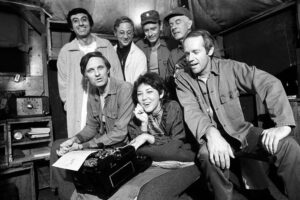
The show’s most dramatically intense episodes often featured virtually no music at all. The series finale “Goodbye, Farewell and Amen” used music extremely sparingly, allowing silence to carry emotional weight. When Hawkeye breaks down describing his repressed trauma, no sweeping strings manipulate viewer emotions—just Alan Alda’s raw performance and painful silence. This musical restraint trusted audiences to feel appropriate emotions without musical manipulation. MAS*H understood that sometimes the most powerful soundtrack is no soundtrack at all, that silence itself is a form of music when used intentionally. This approach influenced how television drama used music, proving that less could be more, that quiet moments could carry more emotional impact than orchestral crescendos.
The Show Featured Surprisingly Diverse Musical Moments
Despite its general musical restraint, MAS*H occasionally featured surprisingly diverse musical moments that revealed characters’ depths and provided relief from war’s relentlessness. These musical interludes weren’t just entertainment—they were windows into who these people were beyond their wartime roles, reminders that soldiers and doctors had identities and passions that transcended military service. Father Mulcahy playing piano, Colonel Potter singing cavalry songs, various characters performing at camp talent shows—these moments humanized people whom war tried to reduce to functions.
One memorable episode featured the camp staging a full production show with various musical performances, giving actors opportunities to display talents beyond their regular character work and showing how military personnel created their own entertainment. Another episode centered around classical music appreciation when Charles Winchester tried to introduce culture to what he considered the 4077th’s uncultivated masses, only to discover hidden depths in characters he’d dismissed as Philistines. These musical episodes explored how art and beauty survive even in ugliest circumstances, how humans cling to creative expression when everything else is stripped away.
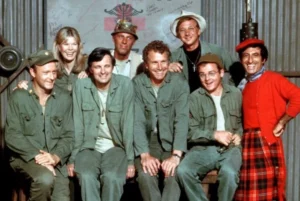
The show also used anachronistic music occasionally for specific effect, breaking its usual period authenticity when contemporary songs could comment on situations in ways period music couldn’t. These rare modern intrusions reminded viewers that MASH, while set during the Korean War, was really commenting on Vietnam and contemporary issues. The musical diversity—from period-appropriate big band to classical music to folk songs to rare contemporary pieces—reflected the show’s sophisticated understanding that music serves many purposes: authenticity, character development, social commentary, emotional release, and simple human joy in circumstances designed to crush joy. MASH proved that even shows committed to realism could embrace musical variety when it served storytelling and character rather than mere entertainment.
These five musical facts reveal how thoughtfully MASH approached every aspect of its sound design. From the teenager who accidentally became a millionaire writing iconic lyrics in five minutes to the revolutionary decision to eliminate laugh tracks, from using instrumental-only themes to embracing sparse scoring and diverse musical moments, MASH treated music as essential storytelling tool rather than mere background decoration. The show understood that what you hear shapes how you feel, that silence can speak louder than sound, and that the absence of music can be as powerful as its presence. This sophisticated musical approach helped transform MAS*H from simple sitcom into television’s most emotionally complex series, proving that how a show sounds matters as much as what it shows.