Television history overflows with memorable characters, but few shows created personalities as enduring as MASH. Over eleven seasons, this Korean War medical drama introduced viewers to people who felt less like fictional creations and more like real individuals we’d known personally. These weren’t cardboard cutouts designed to deliver punchlines or advance plots—they were fully realized human beings with contradictions, growth arcs, vulnerabilities, and depths that revealed themselves slowly over years of storytelling. The brilliance of MASH lay in its patience, allowing characters to evolve naturally rather than forcing dramatic transformations overnight.
What makes certain MAS*H characters truly unforgettable isn’t just that they were well-written or brilliantly acted, though both were certainly true. These characters stayed with audiences because they embodied universal human struggles—the search for purpose in chaos, the balance between duty and compassion, the struggle to maintain humanity in dehumanizing circumstances, and the evolution from rigid self-protection to vulnerable connection. Decades after the show ended, these four characters remain vivid in memory because they taught viewers something essential about survival, growth, and what it means to be human under impossible pressure.
Hawkeye Pierce: The Wounded Healer
Captain Benjamin Franklin “Hawkeye” Pierce, played with devastating brilliance by Alan Alda, served as MAS*H’s moral center and emotional compass throughout all eleven seasons. Hawkeye wasn’t just the show’s protagonist—he was its conscience, the character who refused to let war normalize atrocity or let survival require surrendering humanity. What made Hawkeye unforgettable was his complexity: he was simultaneously the camp prankster and its most emotionally vulnerable member, the rebellious rule-breaker who took medicine more seriously than anyone, the cynic who cared too deeply to protect himself from caring’s cost.
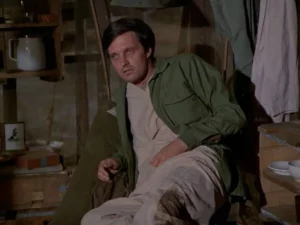
Alda’s performance captured contradictions that shouldn’t coexist but somehow did. Hawkeye used humor as both weapon and shield—deflecting authority’s pomposity while masking his own emotional wounds. His legendary pranks on Frank Burns and elaborate schemes weren’t just comedy—they were survival mechanisms, ways of asserting human agency in circumstances designed to strip it away. Yet beneath the wisecracks and martini-fueled antics lived someone profoundly traumatized by the endless stream of young men he couldn’t save. The show’s genius lay in letting viewers see both simultaneously: the man making everyone laugh while slowly fracturing inside.
Hawkeye’s journey across eleven seasons traced a soul’s gradual erosion under the weight of bearing witness to too much death. Early seasons showed him resilient, bouncing back from each tragedy with another joke. Later seasons revealed cumulative damage—his drinking increased, his pranks carried sharper edges, his cynicism deepened into something darker. The series finale’s revelation of Hawkeye’s complete psychological breakdown brought this arc to devastating conclusion, showing what happens when someone carries others’ trauma for years while denying his own. What made Hawkeye unforgettable was this: he represented every person who’s maintained strength for everyone else while quietly falling apart, everyone who’s used humor to survive pain, everyone who’s discovered that saving others doesn’t save yourself. His character asked whether medicine and compassion could coexist with self-preservation, whether you could witness endless suffering without becoming suffering yourself. The answer MAS*H offered through Hawkeye was complicated and honest—survival requires sacrifice, and sometimes what you sacrifice is pieces of your own humanity that you can’t get back.

Margaret Houlihan: From Hot Lips to Whole Person
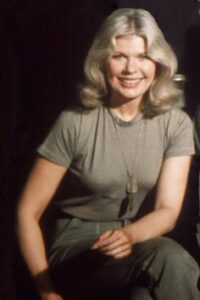
Major Margaret “Hot Lips” Houlihan underwent television’s most remarkable character transformation, evolving from one-dimensional antagonist to the show’s most complex female character. Loretta Swit’s portrayal spanned the full spectrum from rigid military martinet sleeping with Frank Burns to respected nurse and leader discovering her own worth beyond men and military approval. What made Margaret unforgettable wasn’t just the transformation itself but its painful authenticity—this wasn’t Hollywood makeover magic but gradual, difficult evolution born from heartbreak, humiliation, and hard-won self-knowledge.
Early Margaret was easy to dismiss: uptight, rule-obsessed, having an affair with the equally pompous Frank Burns, constantly clashing with Hawkeye and Trapper’s irreverence. She seemed designed as comic foil, the authority figure whose rigid adherence to military protocol made her target for pranks. Yet even early, perceptive viewers noticed hints of depth—her genuine competence as head nurse, her vulnerability when Frank treated her badly, her occasional flashes of empathy quickly suppressed beneath military bearing. The show’s writers recognized Swit’s talent and began giving Margaret material that revealed rather than caricatured.
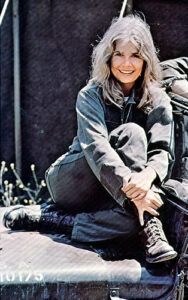
The turning point came with Margaret’s marriage to and divorce from Lieutenant Colonel Donald Penobscott. This storyline could have been soap opera melodrama, but MAS*H used it to crack open Margaret’s protective armor. Divorce forced her to confront how much she’d defined herself through men—first her domineering father, then Frank, then her husband—never developing identity separate from male approval. Post-divorce Margaret began the painful work of discovering who she was beyond “Hot Lips,” beyond army nurse, beyond anybody’s daughter or girlfriend or wife. Swit played this evolution with remarkable subtlety—Margaret didn’t suddenly become different person but slowly revealed person who’d been there all along, buried under layers of defense mechanisms.
What made Margaret truly unforgettable was watching someone learn to be vulnerable without seeing vulnerability as weakness, learn to accept friendship from people who’d once been enemies, learn that being fully human meant acknowledging needs and fears she’d spent lifetime denying. Her growing friendships with Hawkeye and B.J., her maternal protectiveness toward the nurses under her command, her willingness to laugh at herself and admit mistakes—these represented hard-won growth from someone who’d been taught that strength meant never showing weakness. Margaret’s journey resonated because many viewers recognized themselves in her struggle: the tension between professional competence and personal fulfillment, the difficulty of maintaining femininity in male-dominated fields, the challenge of being strong without being harsh. Her character proved that people can change, that walls built for protection can be dismantled, that it’s never too late to become who you might have been if circumstances had been different.
Father Mulcahy: The Quiet Saint
Father John Patrick Francis Mulcahy, portrayed with gentle strength by William Christopher, could have been throwaway character—the camp chaplain providing occasional spiritual guidance while remaining peripheral to main action. Instead, Christopher and MAS*H’s writers created one of television’s most moving portraits of faith, service, and quiet heroism. What made Father Mulcahy unforgettable was his understated presence—he rarely demanded attention, never preached, never forced his faith on others, yet his compassion permeated the camp like oxygen, essential but often unnoticed until absent.
Mulcahy represented faith stripped of religiosity, service without martyrdom, goodness without sanctimony. He boxed to raise money for orphans, braved enemy fire to rescue wounded soldiers, provided comfort to dying atheists and believers alike, and maintained humor and humanity while surrounded by war’s horrors. What made his character remarkable was MAS*H’s refusal to make him punchline or plaster saint. The show acknowledged Mulcahy’s struggles—his feelings of uselessness compared to doctors who saved lives while he offered only prayers, his wrestling with faith when confronted by senseless death, his very human desire for recognition and respect in a camp where chaplains ranked low in practical importance.

Christopher played Mulcahy with such authenticity that he made viewers believe in goodness without naivety. This wasn’t simpleton whose faith remained untested but intelligent man choosing compassion despite full awareness of war’s brutality. Episodes focusing on Mulcahy revealed someone profoundly good not because goodness came easily but because he worked at it constantly, recommitting daily to service and compassion despite temptations toward cynicism or despair. His character suggested that faith worth having isn’t faith untested by reality but faith that survives reality by transforming it through small acts of kindness and stubborn insistence on human dignity.
The series’ treatment of Mulcahy’s hearing loss showed MAS*H’s depth. Rather than quick resolution, the show let Mulcahy struggle with this loss of essential sense, exploring how it affected his ministry and identity. His deafness became metaphor for all the ways war damages people beyond physical wounds. What made Mulcahy unforgettable was embodying the truth that heroism isn’t always dramatic—sometimes it’s simply showing up day after day, offering comfort, maintaining hope, insisting on others’ worth even when feeling worthless yourself. His character reminded viewers that the quietest people are often the strongest, that faith proven in darkness matters more than faith proclaimed in light.
Colonel Potter: The Father Everyone Needed
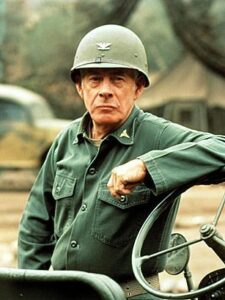
Colonel Sherman T. Potter arrived in Season Four as Henry Blake’s replacement and immediately became the father figure the 4077th desperately needed. Harry Morgan’s portrayal created one of television’s most beloved authority figures—a leader who combined military discipline with paternal warmth, who commanded respect without demanding it, who maintained order while allowing individualism, who led with both head and heart. What made Potter unforgettable was his groundedness—in a camp full of neurotics, cynics, cross-dressers, and barely-controlled chaos, Potter remained steady as bedrock, the gravitational center keeping everything from flying apart.
Potter brought wisdom earned through decades of military service across multiple wars. He’d seen enough suffering to understand its cost, enough death to value life, enough chaos to appreciate order without becoming rigid about it. His folksy expressions and horse metaphors might have seemed corny, but they conveyed hard-won truths wrapped in accessible language. Potter understood that leadership during wartime required balancing competing needs—military efficiency and human welfare, discipline and compassion, maintaining morale while acknowledging tragedy. He never pretended war was anything but hell, yet he insisted on maintaining humanity within hell.
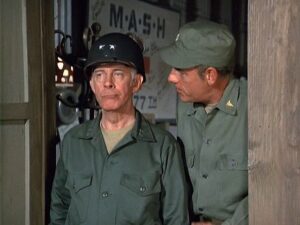
What made Potter particularly unforgettable was his paternal relationship with camp members, especially Radar O’Reilly and Margaret Houlihan. With Radar, Potter became the father the boy desperately missed, providing guidance, protection, and unconditional acceptance. He mentored Radar toward maturity without pushing too hard, understood when to be firm and when to be gentle, and openly grieved when Radar eventually left. With Margaret, Potter offered something she’d never received from her actual father—respect without demands, acceptance without judgment, and permission to be vulnerable without losing his respect. These relationships revealed Potter’s greatest strength: his ability to see people’s potential and help them become it without forcing them to be someone they weren’t.
Morgan played Potter with such authenticity that he felt like everyone’s ideal grandfather—the man who’d lived enough to have perspective, who’d made mistakes and learned from them, who’d maintained humor and humanity despite witnessing horrors. Potter never claimed to have all answers, but his presence communicated that answers existed, that order could emerge from chaos, that leadership meant serving those you led rather than being served by them. What made Potter truly unforgettable was demonstrating that authority and warmth aren’t opposites, that you could be both tough commanding officer and loving father figure, that true strength includes tenderness. His character suggested that the best leaders aren’t those who demand respect but those who earn it by respecting everyone around them, regardless of rank or role.
These four characters—Hawkeye, Margaret, Father Mulcahy, and Colonel Potter—represent MAS*H at its finest: complex, contradictory, fully human, capable of tremendous growth while remaining essentially themselves. They’re unforgettable not because they were perfect but because they were real, not because they provided easy answers but because they embodied difficult questions. Decades after the show ended, these characters remain vivid because they taught us that survival requires both strength and vulnerability, that growth often means shedding protective armor, that goodness requires daily choice, and that the best leaders serve rather than command. They showed us versions of who we might become under pressure—and gave us models worth following.