Margaret “Hot Lips” Houlihan stands as one of television’s most remarkable character transformations. If you fell in love with this complex, fierce, and ultimately vulnerable woman, you’re not alone. Millions of MAS*H fans watched her evolve from a one-dimensional antagonist into one of the show’s most beloved and multi-layered characters. But what exactly makes Major Houlihan so irresistible? Let’s explore the three compelling reasons why she captured our hearts and never let go.
She Represents Every Woman Who Refused to Break
Margaret Houlihan arrived at the 4077th as a woman in an impossible position. In the 1950s Korean War setting, she was a career military nurse navigating a man’s world where she had to be twice as tough to earn half the respect. She faced constant harassment, sexist jokes, and the degrading “Hot Lips” nickname that reduced her to a sexual object. Yet she never quit. She never ran home crying. She stood her ground with a steel spine that put most of the men around her to shame.
This resilience resonates deeply because it reflects the reality so many women face. Margaret showed us that strength doesn’t mean never feeling hurt—it means getting up every single day and doing your job with excellence despite the obstacles. She performed life-saving surgery under impossible conditions, managed chaos with precision, and demanded excellence from her nursing staff even when everyone else was falling apart. Her professional competence was never in question, and she made sure no one forgot it.
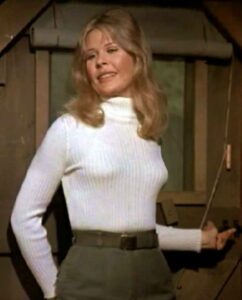
What makes her even more compelling is that the show allowed her to be strong AND vulnerable. She didn’t have to choose between being a capable officer and being a woman with feelings, dreams, and heartbreaks. That complexity made her real in a way that female characters rarely were in 1970s television.
Her Character Growth Was the Show’s Greatest Achievement
When Margaret first appeared in MAS*H, she was easy to dismiss—the by-the-book head nurse who seemed to exist only to clash with Hawkeye and Trapper. She was sleeping with the married Frank Burns, enforcing petty regulations, and generally serving as the antagonist to our beloved heroes. But then something extraordinary happened: the writers decided to let her grow.
Season by season, we watched Margaret shed her one-dimensional caricature and emerge as a fully realized human being. Her disastrous marriage to Donald Penobscot revealed her desperate desire for connection and the painful truth that following the rules wouldn’t guarantee happiness. When that marriage fell apart, we didn’t laugh at her humiliation—we ached for her. The show had taught us to see past the tough exterior to the lonely woman inside.
Her evolving friendship with Hawkeye Pierce became one of the series’ most touching relationships. These two characters who started as adversaries developed a mutual respect and genuine affection that felt earned rather than forced. Their later scenes together crackled with warmth, understanding, and the kind of deep bond that only shared trauma can create. Margaret learned to laugh at herself, to bend the rules when humanity demanded it, and to value compassion over regulations.
This transformation wasn’t just good writing—it was revolutionary. Margaret Houlihan proved that people can change, that first impressions don’t define us forever, and that growth is always possible if we’re willing to examine ourselves honestly. She gave hope to anyone who’s ever felt trapped by their own defense mechanisms.
Loretta Swit Made Her Unforgettable
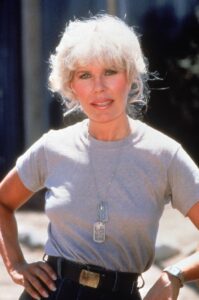
Behind every great character is a great performance, and Loretta Swit’s portrayal of Margaret Houlihan is nothing short of masterful. Swit brought layers of nuance to a role that could have remained a simple stock character. She found the humor in Margaret’s stuffiness, the pain behind her rigid adherence to protocol, and the warmth hiding beneath her military bearing.
Watch Swit’s face during Margaret’s quieter moments—the microexpressions that reveal disappointment, longing, or unexpected joy. Notice how her voice changes from the barking commands of Major Houlihan to the softer tones of Margaret the woman. Swit understood that her character wore her authority like armor, and she showed us both the strength of that armor and the wounds it was protecting.
Swit also fought for her character’s development. She pushed back against storylines that reduced Margaret to a punchline and advocated for the nuanced portrayal that made the character memorable. Her two Emmy wins for the role were well-deserved recognition of her commitment to making Margaret Houlihan a woman worth knowing, not just watching.
In Margaret’s final episodes, particularly in “Goodbye, Farewell and Amen,” Swit delivered some of the series’ most emotionally devastating moments. Her goodbye to the 4077th wasn’t just a character leaving—it was a warrior finally laying down her armor, allowing herself to be vulnerable, and stepping into an uncertain future with hard-won courage.
The Legacy of Margaret Houlihan
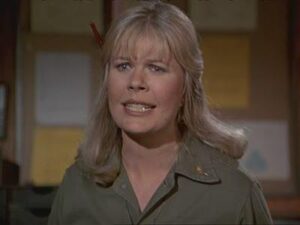
We love Margaret Houlihan because she represents the best of what television can achieve when it allows female characters to be fully human. She was strong, flawed, brave, insecure, professional, emotional, rigid, and evolving—sometimes all in the same episode. She showed us that the women we dismiss as “difficult” often have the most interesting stories to tell.
Margaret Houlihan taught us that everyone deserves a second look, that growth is the most heroic journey, and that strength comes in many forms—including the courage to let your walls come down.