For eleven seasons, MAS*H introduced viewers to unforgettable characters who felt remarkably real—flawed, complex, and deeply human. What audiences didn’t know was that behind these fictional doctors, nurses, and soldiers lay extraordinary real-life stories that were sometimes more dramatic than anything shown on screen. From casting decisions that nearly derailed the series to real-world inspirations that shaped character development, these ten untold stories reveal the hidden layers behind the 4077th’s most memorable personalities.
Hawkeye Pierce Was Based on a Real Surgeon Who Hated the Show
Benjamin Franklin “Hawkeye” Pierce was inspired by Dr. H. Richard Hornberger, who wrote the original MAS*H novel under the pseudonym Richard Hooker. Hornberger served as a surgeon in the 8055th MASH unit during the Korean War, and his experiences formed the basis for the story. However, Hornberger despised the television adaptation, particularly its anti-war stance and liberal politics.
The real Dr. Hornberger was a staunch conservative and hawk who believed strongly in American military intervention. He felt the show betrayed his original intent, which was to celebrate the dark humor and camaraderie of military surgeons rather than critique war itself. In interviews before his death in 1997, Hornberger expressed frustration that his characters had been “hijacked” to promote views opposite to his own. He stopped watching after the first season and refused to accept royalties from the series.
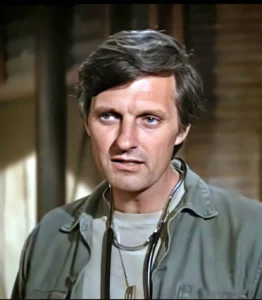
This ironic disconnect reveals something profound about art’s autonomy. The character Hawkeye Pierce evolved far beyond his creator’s intentions, becoming an anti-war icon precisely because Alan Alda and the writers brought their own experiences and perspectives to the role. Alda, who had protested the Vietnam War, channeled his convictions into Hawkeye, creating a character who spoke to a generation’s disillusionment with military conflict. The original inspiration and his fictional counterpart couldn’t have been more different.
Gary Burghoff Was the Only Actor from the Film
When MAS*H transitioned from Robert Altman’s 1970 film to a television series, only one actor reprised his role: Gary Burghoff as Radar O’Reilly. This wasn’t accidental—Burghoff’s portrayal of the innocent, psychic company clerk was so perfect that producers couldn’t imagine anyone else in the role. However, maintaining that character across eleven seasons took a devastating personal toll.
Burghoff struggled with the pressures of television production and reportedly had difficult relationships with some cast members. His personal life deteriorated during the show’s run, contributing to his decision to leave after Season 7 despite the character’s popularity. What most fans don’t know is that Burghoff had a deformed left hand with three partially developed fingers, which he carefully concealed throughout the series. Watch closely, and you’ll notice he always holds clipboards, keeps his hand in his pocket, or positions it away from the camera.
After leaving MAS*H, Burghoff largely withdrew from acting, focusing on wildlife painting and music. He later revealed that playing Radar—maintaining that childlike innocence and vulnerability year after year—became emotionally exhausting. The untold story of Radar is actually about an actor who gave everything to a character until there was nothing left to give.
McLean Stevenson’s Departure Was Television’s Biggest Mistake
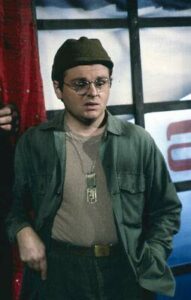
When McLean Stevenson left MAS*H after Season 3 to pursue his own series, he believed he was making a smart career move. Colonel Henry Blake was a supporting character, and Stevenson wanted to be a leading man. What happened next became a cautionary tale in Hollywood about leaving successful shows too early.
Every series Stevenson headlined after MASH failed quickly. “The McLean Stevenson Show,” “In the Beginning,” “Hello, Larry”—none lasted more than a season or two. Meanwhile, MASH continued for eight more years, becoming increasingly successful and critically acclaimed. Stevenson later admitted his departure was the worst professional decision of his life.
What makes this story even more poignant is how the show wrote out his character. Henry Blake’s death—killed when his plane was shot down over the Sea of Japan—shocked audiences and remains one of television’s most devastating moments. The cast wasn’t told about Blake’s death until they were filming the scene where Radar announces it. Their genuine reactions of shock and grief weren’t acting—it was real emotion captured on camera. Stevenson himself reportedly cried when he learned how his character would exit, realizing too late that he’d been part of something special.
Larry Linville Actually Loved Frank Burns
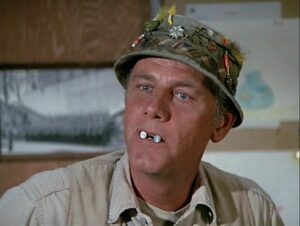
Major Frank Burns was MAS*H’s most despicable character—pompous, incompetent, cowardly, and cruel. Audiences loved to hate him, which was precisely Larry Linville’s intention. What viewers didn’t realize was that Linville was nothing like Frank Burns. He was intelligent, classically trained at the Royal Academy of Dramatic Art, and deliberately chose to leave the show after five seasons to avoid being typecast.
Linville understood Frank Burns better than anyone because he recognized the character’s function in the narrative. Frank represented everything wrong with military hierarchy—the small-minded bureaucrats who valued rules over people and power over competence. Linville played Frank with such conviction that he received hate mail from viewers who couldn’t separate actor from character.
The untold story is that Linville fought constantly with writers to keep Frank Burns from becoming a complete cartoon. He wanted the character to have moments of vulnerability and complexity, believing that pure villains are less interesting than flawed human beings. Some of Frank’s more sympathetic moments—his genuine fear during combat, his loneliness, his desperate need for Margaret’s affection—came from Linville’s insistence that even despicable people have humanity.
After leaving MAS*H, Linville struggled with typecasting but never regretted playing Frank Burns. He recognized that creating a character audiences so thoroughly despised was actually a remarkable achievement.

Jamie Farr Wore His Own Clothes as Klinger
Corporal Maxwell Klinger’s elaborate dresses and desperate attempts to get a psychiatric discharge through cross-dressing became one of MAS*H’s most iconic running gags. What most fans don’t know is that Jamie Farr, who played Klinger, initially brought his own wife’s clothing and mother’s dresses to the set because the wardrobe department had limited options for a male character in women’s attire.
Farr was originally hired for just one episode. The character’s unexpected popularity—and Farr’s brilliant comedic timing—turned Klinger into a series regular. As the show evolved, Klinger’s cross-dressing became less frequent, and the character developed into a multi-dimensional figure whose desperation to return home reflected the feelings of countless real soldiers.
The deeper untold story involves Farr’s Lebanese-American heritage and the pride he took in playing an Arab-American character on national television. During an era when Middle Eastern representation was virtually nonexistent in American media, Klinger’s Toledo, Ohio, roots and frequent references to his Lebanese family were groundbreaking. Farr insisted that Klinger’s ethnicity be portrayed positively, refusing storylines that might perpetuate stereotypes.
William Christopher’s Real-Life Faith Mirrored Father Mulcahy’s
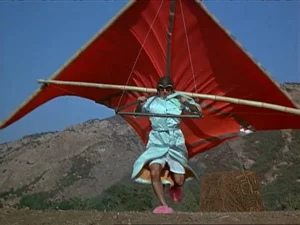
Father Francis Mulcahy, the 4077th’s compassionate chaplain, was played by William Christopher, who brought deep personal faith to the role. Unlike his character, Christopher wasn’t Catholic—he was a practicing Methodist—but his genuine spirituality informed Mulcahy’s most powerful moments. What audiences didn’t know was that Christopher’s life paralleled his character’s struggles with faith and purpose.
Christopher’s son was born with autism, and the actor became a passionate advocate for autism awareness and research long before it became a mainstream cause. His experiences raising a child with developmental challenges gave him profound empathy that enriched Father Mulcahy’s character, particularly in episodes where the chaplain questioned his effectiveness and purpose.
The untold story is that Christopher wrote a book with his wife about raising their autistic son, using his MAS*H platform to bring attention to a condition that was poorly understood in the 1970s and 80s. Father Mulcahy’s quiet dignity, his willingness to listen without judgment, and his struggles with feeling ineffectual all reflected Christopher’s real-life experiences with compassion, faith, and advocating for those who couldn’t speak for themselves.
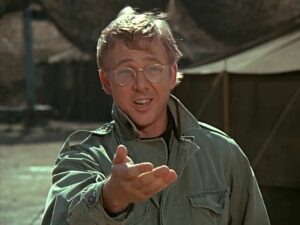
Harry Morgan Almost Played a Different Character
When Colonel Henry Blake was killed off, producers needed a new commanding officer for the 4077th. Harry Morgan was cast as Colonel Sherman Potter, but this wasn’t his first appearance on MAS*H. Morgan had previously guest-starred in Season 3 as Major General Bartford Hamilton Steele, a mentally unstable officer who nearly got people killed.
The decision to bring Morgan back as a completely different character was unprecedented and risky. Would audiences accept the same actor in a new role? The gamble paid off brilliantly because Morgan’s performance as Potter was so different from his previous appearance. Potter became one of the show’s most beloved characters—wise, steady, compassionate, and professional.
The untold story involves Morgan’s own military service. He served in the Army during World War II, and that experience informed his portrayal of Potter. Unlike the bumbling Henry Blake, Potter was competent and commanding while remaining deeply humane. Morgan understood military culture from the inside, and he insisted that Potter be portrayed as a career officer who earned respect through competence and character rather than rank alone.
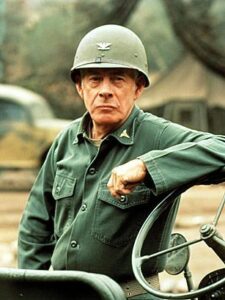
Mike Farrell Nearly Turned Down the Role of BJ Hunnicutt
When Wayne Rogers left MAS*H after Season 3, producers needed to replace Trapper John with another surgeon who could be Hawkeye’s friend and foil. They cast Mike Farrell as BJ Hunnicutt, but Farrell initially hesitated. He worried about joining an established hit series and being compared to his predecessor. He also had concerns about the character potentially being written as “Trapper John 2.0.”
Farrell accepted the role only after producers agreed that BJ would be distinctly different from Trapper. Where Trapper was a womanizer, BJ would be devoted to his wife. Where Trapper matched Hawkeye’s pranks, BJ would sometimes serve as Hawkeye’s conscience. This creative decision proved brilliant, giving the show new dramatic possibilities and allowing Farrell to create a unique character rather than imitating Wayne Rogers.
The untold story is how Farrell’s activism influenced the show’s politics. An outspoken progressive and anti-war activist, Farrell pushed for storylines addressing social justice, PTSD, and war’s psychological costs. His influence helped shift MAS*H toward more serious, introspective storytelling in later seasons. Episodes exploring Hawkeye’s mental breakdown and the moral complexities of war reflected Farrell’s belief that entertainment could educate and challenge audiences.
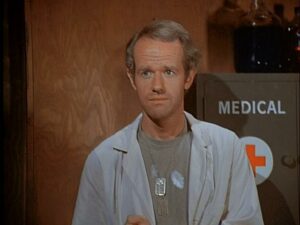
Loretta Swit Fought to Transform Hot Lips
Margaret “Hot Lips” Houlihan began as a one-dimensional character—the uptight head nurse having an affair with Frank Burns. Actress Loretta Swit recognized that Margaret was being wasted as a punchline and fought passionately to give her dignity, complexity, and professional respect. This battle with writers and producers transformed Margaret into one of television’s most significant female characters.
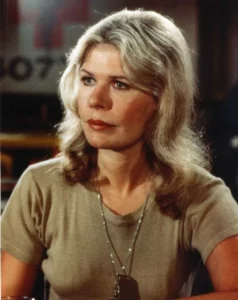
Swit consulted with real military nurses, learning about their struggles with sexism, their professional competence, and the double standards they faced. She pushed for storylines showing Margaret’s skill as a nurse, her growth as a leader, and her journey from being defined by her relationship with Frank to becoming a fully independent woman. The writers initially resisted, but Swit’s persistence paid off.
The untold story is that Swit turned down the role of Christine Cagney in “Cagney & Lacey” to remain with MAS*H because she believed Margaret’s story wasn’t finished. That decision cost her another iconic role, but it allowed her to complete Margaret’s transformation. By the series finale, Margaret had evolved from “Hot Lips” into Major Houlihan—a respected officer whose