Behind MAS*H’s brilliant performances and iconic characters lie remarkable personal stories that shaped the show in unexpected ways. These actors brought more than talent to their roles—they brought real-life experiences, hidden struggles, and private passions that influenced their performances and the series itself. Understanding these untold stories reveals new dimensions to the show’s creation and helps explain why certain performances felt so authentic and emotionally resonant. These aren’t just celebrity trivia but revelations that illuminate the human side of television magic and demonstrate how personal truth enhances fictional storytelling.
Alan Alda’s Personal Connection to Mental Health Informed Hawkeye’s Psychology
Alan Alda’s portrayal of Hawkeye Pierce’s psychological struggles, particularly in later seasons, drew from deeply personal experience. Alda’s mother suffered from severe mental illness throughout his childhood, experiencing paranoid episodes that terrified young Alan and created an unstable home environment. He watched his father struggle to care for his mother while maintaining his own career, observing firsthand the stigma surrounding mental health and the isolation it created. This background profoundly influenced how Alda approached Hawkeye’s eventual psychological breakdown in the series finale.
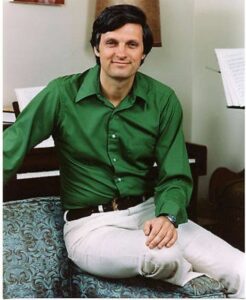
When scripts began exploring Hawkeye’s deteriorating mental state, Alda brought nuanced understanding to the character’s unraveling that came from having witnessed it in someone he loved. He insisted on portraying the breakdown with clinical accuracy and emotional honesty rather than melodrama, ensuring that Hawkeye’s trauma was depicted respectfully and realistically. Alda consulted with psychiatrists extensively during preparation, determined to avoid stigmatizing portrayals of mental illness that dominated television at the time. His performance in the finale, particularly the harrowing scene where Hawkeye finally remembers the truth about the baby on the bus, drew from memories of his mother’s dissociative episodes and the terror of watching someone’s mind betray them.
Beyond his acting, Alda became a passionate advocate for mental health awareness, using his platform to destigmatize psychological issues and promote treatment access. His personal connection to these themes transformed what could have been merely dramatic television into something that felt authentically painful and profoundly important, helping countless viewers recognize their own struggles and seek help.
Jamie Farr Actually Grew Up in Toledo and Wore His Own Clothes
The authenticity viewers sensed in Klinger’s passionate love for Toledo wasn’t acting—Jamie Farr genuinely grew up there in a Lebanese-American community and brought real hometown pride to every reference. Many of the specific Toledo locations Klinger mentioned were places Farr actually frequented, and the emotion in his voice when speaking about home came from genuine homesickness Farr experienced during filming. Even more remarkably, many of the dresses and outfits Klinger wore throughout the series came from Farr’s personal collection or were sourced from his mother and female relatives who enthusiastically supported his career by providing wardrobe contributions.

Farr initially worried that playing a cross-dressing character might damage his career or subject him to ridicule, but he approached the role with complete commitment and dignity. His choice to play Klinger as fundamentally masculine despite the dresses—never camping or playing for stereotypical laughs—created a character who challenged gender norms without becoming a caricature. Farr’s Lebanese heritage also informed Klinger’s ethnic identity, with Farr frequently suggesting Arabic phrases and cultural references that enriched his character’s background. The actor’s genuine connection to both Toledo and Lebanese-American culture gave Klinger an authenticity that made him more than just a comedy device, transforming him into meaningful representation for communities rarely seen on television.
William Christopher Nearly Turned Down Father Mulcahy Due to Personal Faith Crisis
William Christopher’s portrayal of Father Mulcahy carried unexpected complexity because the actor was experiencing his own spiritual struggles during much of the series’ run. Raised in a religious household, Christopher had begun questioning his faith in early adulthood, and accepting the role of a military chaplain required him to explore religious themes he was personally wrestling with. Rather than undermining his performance, this doubt added depth—Christopher brought authentic spiritual uncertainty to Mulcahy’s occasional crises of faith because he understood them intimately.
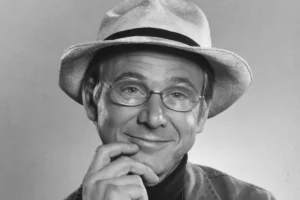
Christopher’s real-life son was born with autism, and the actor became a passionate advocate for individuals with developmental disabilities. This advocacy work influenced how he portrayed Father Mulcahy’s compassion and his character’s consistent championing of marginalized and vulnerable individuals. The gentleness and unconditional acceptance Christopher brought to Mulcahy reflected the father he had become to his son, someone who learned to see beyond conventional measures of success or normalcy to recognize inherent human dignity. Christopher channeled his parenting experiences into creating a character whose faith manifested not through preaching but through radical acceptance and service, making Father Mulcahy one of television’s most authentic and beloved religious figures.
Gary Burghoff Left Because He Couldn’t Handle the Emotional Toll
While officially Gary Burghoff left MAS*H to spend more time with his family, the deeper truth was that playing Radar O’Reilly had become psychologically unbearable. Burghoff was an intensely sensitive person who struggled to separate himself from his character’s emotions. The constant exposure to storylines involving death, trauma, and suffering began affecting his mental health, causing depression and anxiety that persisted even when cameras weren’t rolling. He found himself unable to leave Radar’s pain and innocence at the studio, carrying the character’s accumulated grief home with him.
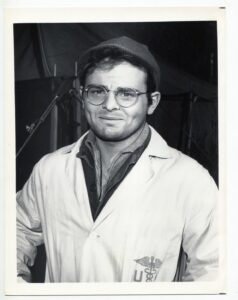
Burghoff was also dealing with a difficult divorce during his final seasons, which compounded his emotional vulnerability. The combination of personal turmoil and the show’s increasingly dark themes became overwhelming. His departure from the series, while sad for fans, was an act of self-preservation from an actor who recognized his limits and chose mental health over career opportunity. Burghoff’s honesty about his struggles, revealed years later in interviews, provided important early visibility for the psychological costs actors pay when portraying traumatic material and helped initiate conversations about mental health support for entertainment industry professionals.
Harry Morgan Was Initially Reluctant and Nearly Rejected the Role
Harry Morgan almost turned down the role of Colonel Potter because he worried about replacing the beloved McLean Stevenson and feared fans would reject him. He had spent decades in Hollywood playing various character roles, and at age sixty, he was comfortable but not particularly ambitious. Taking over as commanding officer of the 4077th seemed like a potential career-ending disaster if audiences refused to accept a new CO after Henry Blake’s shocking death. Network executives had to pursue Morgan persistently, repeatedly assuring him that the character would be written distinctly rather than as a Henry Blake clone.
What ultimately convinced Morgan was meeting with the writers and discovering they wanted to create a completely different commanding officer—career military but humane, older and wiser, someone who could serve as a father figure rather than a peer to the younger doctors. Morgan brought his genuine love of horses to Colonel Potter, with the character’s relationship with Sophie reflecting Morgan’s real-life passion for riding. His military bearing came naturally because Morgan had actually served in the military, giving him authentic understanding of rank, protocol, and military culture that informed his performance.
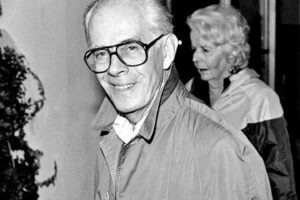
Morgan’s initial reluctance made him particularly determined to succeed, bringing his full considerable talent to every scene. His chemistry with Alan Alda, despite their characters’ ideological differences, created one of television’s great father-son relationships and proved that thoughtful recasting could actually strengthen rather than weaken a beloved series.
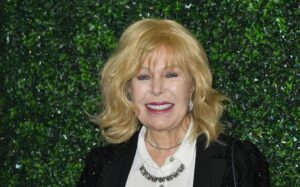
Loretta Swit Fought Constantly for Margaret’s Character Development
Loretta Swit spent years battling writers and producers to transform Margaret Houlihan from one-dimensional “Hot Lips” into a complex, respected character. Early scripts often reduced Margaret to a punchline—the uptight nurse having an affair with the incompetent Frank Burns—and Swit found this portrayal both limiting and insulting to the real nurses who had served with courage and professionalism in Korea and Vietnam. She repeatedly pushed back against scripts she felt demeaned Margaret, sometimes refusing to perform scenes as written and demanding revisions that gave her character dignity and depth.
Swit’s advocacy eventually paid off as writers began exploring Margaret’s complexity, her struggle to be respected as both a woman and a military professional, her failed marriage, and her gradual transformation into one of the show’s most beloved characters. The later-season Margaret—confident, compassionate, and complicated—existed because Swit refused to accept less for her character. Her fight represented broader struggles for actress agency and better female representation in television, demonstrating that performers could shape their roles through persistent advocacy even when facing institutional resistance.
Mike Farrell’s Activism Influenced B.J.’s Character
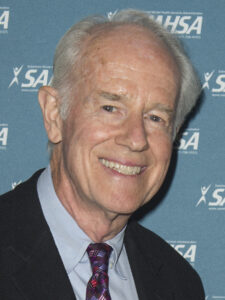
Mike Farrell brought passionate political activism to the set, and his real-life advocacy for human rights, opposition to capital punishment, and work with refugees influenced how B.J. Hunnicutt was written and portrayed. Farrell saw B.J. as an opportunity to present masculinity that wasn’t based on violence or emotional suppression, a man who could be gentle, emotionally expressive, and deeply moral while still being strong. He advocated for storylines that explored B.J.’s ethics and his struggles to maintain his values in morally compromising circumstances.
Farrell’s activism occasionally created tension with cast members who held different political views, but it also pushed the show toward more explicit anti-war messaging. His influence helped ensure that MAS*H didn’t just show war’s horrors abstractly but connected them to larger questions about American military policy and moral responsibility. Farrell’s commitment to using his platform for advocacy demonstrated how actors’ personal values could enhance rather than distract from their professional work.
David Ogden Stiers Initially Resented Being the “Replacement Bad Guy”
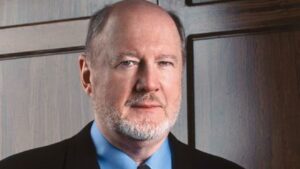
David Ogden Stiers accepted the role of Charles Winchester III reluctantly, worried about being typecast as a villain replacing the departed Frank Burns. He initially approached the character with skepticism, concerned that Charles would be merely another antagonist rather than a fully realized person. The turning point came when Stiers recognized an opportunity to create something more nuanced—a character who was genuinely skilled, culturally sophisticated, and complex in his prejudices rather than simply incompetent and mean-spirited like Burns.
Stiers worked closely with writers to ensure Charles had redeeming qualities and genuine depth. Some of the show’s most moving episodes featured Charles performing secret acts of kindness that contradicted his snobbish exterior, revealing a man whose class prejudice and arrogance masked insecurity and genuine caring. Stiers’ classical music training informed Charles’ passion for music, and his own experience as a perfectionist helped him portray Winchester’s struggle to maintain standards in substandard conditions. What could have been a one-note replacement villain became one of MAS*H’s richest characters because Stiers refused to settle for less.
The Ensemble’s Real Friendships Created On-Screen Chemistry
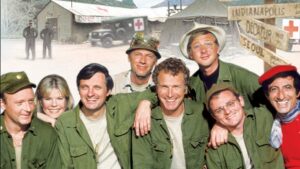
One of MAS*H’s secrets was that the central cast genuinely liked each other, with real friendships developing that translated into authentic on-screen chemistry. Alan Alda and Mike Farrell’s friendship extended far beyond the set, with both families socializing regularly and the actors maintaining close contact decades after the show ended. This genuine affection made Hawkeye and B.J.’s relationship feel authentic because it essentially was—two men who genuinely cared about each other playing characters who did the same.
Similarly, the camaraderie among the entire ensemble created an atmosphere of trust and mutual support that allowed actors to take creative risks. They could play emotional scenes with vulnerability because they knew their scene partners would honor and support their performances. The cast’s comfort with each other enabled the improvisations and natural moments that gave MAS*H its documentary-like realism. Behind-the-scenes footage and cast interviews reveal constant laughter, mutual teasing, and genuine warmth that created a working environment where everyone could do their best work.
Several Cast Members Served in the Military, Bringing Authentic Experience
Multiple MAS*H cast members had actual military experience that informed their performances. Harry Morgan had served in the military, giving him authentic understanding of military culture and hierarchy. Jamie Farr had been drafted and served in Korea, providing him firsthand knowledge of the country and military service that added authenticity to Klinger’s character. Their experiences meant they could correct scripts that portrayed military life inaccurately and add small authentic details that gave the show credibility.
This genuine military experience also gave these actors particular authority when the show criticized military bureaucracy and policy. They weren’t civilians disrespecting service members but veterans questioning the institutions they had served within, a distinction that gave MAS*H’s anti-war message additional credibility. Their firsthand knowledge helped ensure the show criticized war and military mismanagement without disrespecting individual soldiers’ service and sacrifice, achieving a balance that made the show’s message more powerful and persuasive.
These untold stories reveal that MAS*H’s greatness emerged not just from talented performers executing scripts but from deeply personal investments that each actor brought to their roles, transforming television into something more authentic and emotionally true.