MAS*H is often remembered for its iconic male characters—Hawkeye, Trapper, BJ, and the parade of memorable doctors who filled the 4077th. But behind the surgical brilliance and comedic banter existed another crucial dynamic: the relationships between the nurses who kept the unit functioning. These women navigated sexism, professional challenges, romance complications, and war’s endless trauma while supporting each other in ways the show didn’t always highlight. Ten scenes stand out as powerful testaments to the bonds between nurses that revealed sisterhood’s strength in the most challenging circumstances imaginable.
Margaret and the Nurses Confront Sexism Together
In a powerful Season 6 scene, Major Margaret Houlihan gathered her nursing staff after a visiting general made inappropriate comments about their appearance rather than acknowledging their professional competence. The scene where Margaret addresses her nurses, validating their frustration while encouraging them to maintain dignity, showcased leadership that went beyond military rank. Her words—”We’re twice as good, so we have to work twice as hard to get half the recognition”—resonated as truth these women lived daily.
What made this moment unforgettable was the visible solidarity among the nurses. They weren’t just subordinates listening to their commanding officer; they were women recognizing shared struggle and finding strength in collective experience. The scene didn’t provide easy solutions or triumphant victories over sexism. Instead, it honestly portrayed how women supported each other through institutional prejudice, finding power in acknowledgment and mutual support rather than expecting systematic change.

This scene represented MAS*H’s evolution in portraying women’s experiences. Early seasons often positioned Margaret against other nurses, playing up rivalry and jealousy. Later seasons recognized that women in male-dominated environments often formed powerful alliances, supporting rather than undermining each other. This shift reflected broader cultural changes in how women’s relationships were understood and represented.
Nurse Kellye’s Moment of Truth with Margaret
Perhaps no scene better captured evolving dynamics between MAS*H’s nurses than when Nurse Kellye Yamato finally confronted being overlooked and undervalued. In “Hey, Look Me Over,” Kellye angrily challenged Hawkeye’s failure to see her as a woman because she didn’t fit conventional beauty standards. But the more touching moment came afterward, when Margaret found Kellye crying and offered genuine comfort and understanding.
Margaret’s conversation with Kellye revealed how much the head nurse had changed. Early-series Margaret might have dismissed Kellye’s feelings or offered patronizing advice. Instead, she listened with empathy, validating Kellye’s pain while sharing her own experiences of being reduced to appearance rather than valued for competence. The scene showcased authentic female friendship—two women from different backgrounds and ranks finding connection through shared experiences of being underestimated and overlooked.
This moment was particularly powerful because it centered an Asian-American character’s emotional life in ways television rarely attempted. Kellye Nakahara’s performance brought depth to a character who had primarily been background presence, and Margaret’s supportive response demonstrated respect that transcended military hierarchy. Their connection felt genuine because it acknowledged real pain while offering the comfort of being truly seen and understood.
The Night Shift Confession
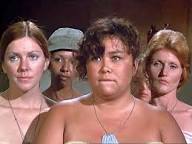
In an understated but deeply moving scene from Season 8, three nurses working the night shift shared stories about their lives before the war. The conversation started lightly—boyfriends, family, dreams of home—but gradually deepened into admissions of fear, loneliness, and doubt. One nurse confessed she’d volunteered for Korea to escape an unhappy engagement. Another admitted she sometimes felt nothing when patients died, then immediately worried she was becoming a monster. The third simply said she couldn’t remember what normal life felt like anymore.
What made this scene unforgettable was its quiet honesty. Without dramatic music or heightened emotion, three women simply acknowledged the psychological cost of constant trauma exposure. They didn’t offer solutions or reassurances—they just listened and understood. This authentic portrayal of how war changes people, particularly the emotional numbing that comes from constant loss, demonstrated sophisticated understanding of trauma’s psychological impact.
The scene also highlighted something often overlooked: nurses worked incredibly long shifts with minimal support. While doctors got dramatic operating room scenes and recognition for their life-saving skills, nurses handled endless unglamorous work—changing dressings, monitoring vitals, offering comfort, cleaning wounds, and holding hands while young men died. This night shift conversation honored their exhaustion, their dedication, and their humanity.
Margaret Defends Her Nurses Against Command
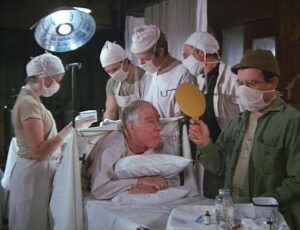
When a visiting colonel criticized the 4077th’s nursing staff for alleged impropriety, Margaret delivered one of the series’ most powerful defenses of her team. Standing before superior officers, she detailed each nurse’s qualifications, their tireless work ethic, and their professional excellence. Her voice remained controlled but her words were fierce: “These women save lives every single day under conditions you couldn’t imagine. If you can’t respect that, the failure is yours, not theirs.”
This scene was memorable because Margaret risked her career to defend her staff. The Margaret of early seasons might have sided with command to protect her own position. This Margaret understood that leadership meant protecting those under her command, even at personal cost. Her defense wasn’t just words—it was action that demonstrated she valued her nurses’ dignity more than her own advancement.
The nurses’ reactions during this scene spoke volumes. They stood silently behind Margaret, drawing strength from her courage while offering their presence as support. The solidarity between Margaret and her staff had been earned through years of shared experience, mutual respect, and Margaret’s evolution from someone who valued rules above people to a leader who understood that people mattered most.
Nurse Bigelow’s Farewell
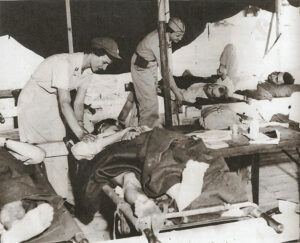
When Nurse Bigelow received orders to return home, her farewell scene with fellow nurses captured the bittersweet reality of military friendship. The women gathered to celebrate her survival and going home while simultaneously grieving the loss of their friend and colleague. Their conversation mixed genuine happiness for Bigelow with barely concealed envy and fear—happiness that she escaped, envy that they remained, fear about who would fill her role and whether they would survive to get their own farewell parties.
This scene’s emotional complexity made it unforgettable. Rather than presenting simple joy at a friend’s good fortune, it honestly portrayed the complicated feelings war creates. The nurses hugged Bigelow while fighting tears, promised to write letters they knew might never come, and tried to memorize each other’s faces knowing memory fades. Their laughter had desperate edges, their jokes about staying in touch felt like prayers, and their final embraces lasted too long because nobody wanted to let go.
The scene concluded with the remaining nurses returning to work immediately after Bigelow’s departure, their grief sublimated into professional duty. This honest portrayal of how war requires people to keep functioning despite loss demonstrated the psychological resilience nurses needed to survive. They couldn’t pause to fully process their feelings—patients needed care, work continued, and grief had to wait.
Margaret’s Divorce Support Group
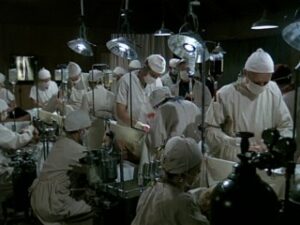
When Margaret’s marriage to Donald Penobscott collapsed, the nurses created an impromptu support system that showcased sisterhood at its finest. In several connected scenes, different nurses offered various types of support—Kellye brought Margaret her favorite meal, another nurse covered her duties during an emotional breakdown, and a group simply sat with her in comfortable silence when words felt inadequate.
These scenes were powerful because they showed diverse forms of emotional support. Not everyone offered advice or tried to fix Margaret’s pain. Some just provided practical help, others offered distraction, and a few simply witnessed her grief without trying to diminish it. This realistic portrayal of how women support each other through crisis demonstrated emotional intelligence and honored different supportive approaches.
The scenes also marked Margaret’s full integration into the nursing community. Early seasons had positioned her as separate—the stern head nurse who inspired more fear than affection. Her vulnerability during the divorce, and her acceptance of support from her staff, revealed how thoroughly she’d changed and how genuine her relationships with the nurses had become.
The Emergency Triage Scene
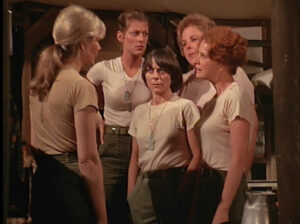
During a mass casualty situation, a scene focused entirely on nurses managing triage without doctor supervision demonstrated their competence and decision-making under pressure. Nurses assessed wounds, prioritized patients, directed resources, and made life-or-death decisions while supporting each other through the chaos. Their communication was efficient—quick observations, immediate decisions, calm voices even as the situation spiraled toward overwhelming.
This scene was unforgettable because it centered nursing competence rather than using nurses as supporting characters in doctor-focused drama. Viewers saw these women’s expertise, their calm under pressure, and their ability to make critical decisions independently. One nurse’s assessment saved a patient doctors had initially given up on. Another recognized a condition that would have been missed in the chaos without her careful observation.
The mutual support between nurses during this emergency demonstrated professional respect and personal connection. They covered each other’s assignments, double-checked each other’s decisions without undermining authority, and offered brief encouraging words during the worst moments. Their teamwork was seamless because it was built on trust earned through countless previous crises survived together.
Birthday Celebration in the Swamp
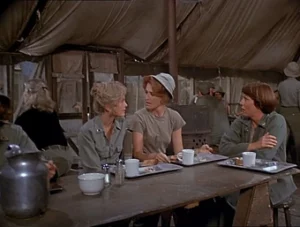
A lighter but deeply touching scene showed nurses organizing a surprise birthday celebration for one of their own in the doctors’ quarters. The makeshift party—with scavenged decorations, carefully hoarded treats, and off-key singing—created brief joy in war’s bleakness. What made the scene memorable wasn’t the party itself but the visible love and effort behind it. These women had pooled rations, traded favors, and coordinated schedules to create one moment of normalcy and celebration for their friend.
The scene captured how small kindnesses became profound gestures in war’s context. A birthday cake made from military rations represented hours of work and sacrifice. Homemade decorations required creativity and scrounging in an environment where nothing was available. The time carved out for celebration meant nurses were working extra shifts before and after to maintain coverage. Every element represented genuine care and effort that transformed the gesture from simple party to powerful demonstration of love.
Margaret Teaching New Nurses
A beautiful recurring element across multiple episodes showed Margaret mentoring new nurses arriving at the 4077th. These scenes revealed her transformation into a leader who tempered professional standards with emotional support. She taught surgical techniques while also preparing the young nurses psychologically for what they would witness. Her advice was practical—”Don’t watch their faces during surgery, focus on the work”—but also compassionate—”It’s okay to cry later, just not where patients can see.”
These mentoring scenes demonstrated how trauma knowledge and coping strategies passed between women. Margaret was teaching survival skills as much as nursing techniques. The new nurses looked to her not just for professional guidance but for proof that they could survive this experience without losing themselves. Margaret’s presence as someone who endured and emerged stronger offered hope that they could do the same.
The Final Episode Farewell
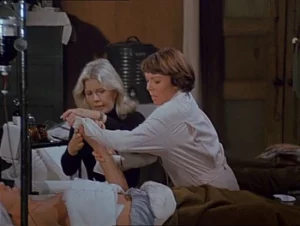
The series finale’s scenes between nurses as the 4077th prepared to disband captured the profound bond between women who survived war together. Margaret’s farewells to her nursing staff were among the finale’s most emotionally powerful moments. The embraces lasted long, the words were few, and the tears flowed freely. These women had seen each other at their worst and best, had held each other through grief and fear, and had become family in ways beyond blood.
What made these farewell scenes unforgettable was their acknowledgment that these relationships, forged in extraordinary circumstances, would be nearly impossible to maintain in civilian life. The women promised to stay in touch but recognized that the bond they shared existed within this specific context. They were saying goodbye not just to each other but to the intensity of connection that only shared trauma creates. The bittersweet quality of these farewells—gratitude for survival mixed with grief for ending—captured war’s complicated legacy.
The Legacy of Sisterhood
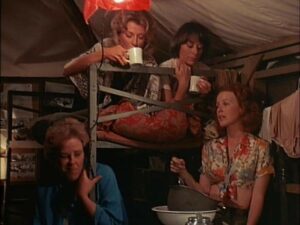
These ten unforgettable scenes between MASH’s nurses accomplished something remarkable: they showed female friendship, professional respect, and mutual support in ways television rarely attempted. The nurses weren’t rivals competing for male attention or one-dimensional supporting characters. They were complex women who supported, challenged, comforted, and empowered each other through the most difficult circumstances imaginable. These scenes remind us that behind MASH’s famous doctors stood extraordinary women whose bonds of sisterhood were as powerful as any friendship the show portrayed.