MAS*H wasn’t primarily a romance, but scattered throughout its eleven seasons were moments of genuine romantic connection that felt all the more powerful for existing within war’s brutal reality. These weren’t Hollywood love stories with orchestral swells and perfect lighting—they were messy, complicated, bittersweet moments between people trying to find connection amid chaos and death. The show understood that romance in wartime carries different weight, that every kiss might be the last, that love and loss exist simultaneously. These ten romantic moments stand out not despite their imperfection but because of it, proving that even in war’s darkest moments, human connection endures.
Margaret and Donald’s Wedding That Wasn’t Perfect
When Major Margaret Houlihan married Lieutenant Colonel Donald Penobscott in Season 5’s “Margaret’s Marriage,” the episode could have been a typical sitcom wedding with complications played for laughs. Instead, it became a surprisingly honest portrayal of a woman realizing marriage might be a mistake even as she walks down the aisle. The romantic power of this episode lies not in the ceremony but in Margaret’s vulnerability—her desperate hope that marriage will provide stability and love she’s been seeking, mixed with visible doubt she tries to suppress.
The most romantically poignant moment comes not during the wedding but in Margaret’s conversation with Hawkeye afterward, when she admits her fears and he offers genuine support without judgment or I-told-you-so superiority. This scene demonstrated that romance isn’t always about passion—sometimes it’s about someone seeing your fear and offering compassion. Margaret’s eventual divorce made this wedding episode even more powerful in retrospect, showing that romantic moments can be meaningful even when relationships don’t last.

BJ’s Anniversary Alone
One of MAS*H’s most heartbreaking romantic moments featured a character separated from his wife. In “Period of Adjustment,” BJ Hunnicutt celebrates his anniversary alone at the 4077th, going through elaborate preparations for a romantic dinner that his wife Peg will never see. He sets a proper table, lights candles, and talks to her empty chair, imagining her responses and sharing his day as if she were present.
This scene’s romantic power lies in its loneliness. BJ’s devotion to Peg was MAS*H’s most consistent love story—a marriage that survived distance, temptation, and the endless strain of separation. Watching BJ maintain this connection through ritual and imagination, keeping his marriage alive despite thousands of miles and impossible circumstances, demonstrated love’s resilience more powerfully than any physical reunion could. The scene avoided sentimentality by acknowledging the profound sadness beneath BJ’s dedication—he was maintaining connection to survive the pain of separation.
The episode showed that romantic moments aren’t always about being together—sometimes they’re about the effort to remain connected despite everything working against you. BJ’s imaginary anniversary dinner captured the reality of military families maintaining relationships across impossible distances, finding intimacy in memory and hope rather than physical presence.

Hawkeye and Nurse Kyung Soon’s Impossible Love
In “Welcome to Korea,” Hawkeye briefly connected with Nurse Kyung Soon, a Korean woman who represented everything war made impossible—genuine cross-cultural connection, relationship beyond military context, love that required peace to survive. Their scenes together were tender and honest, showing two people recognizing mutual attraction while understanding nothing could come of it.
The romantic power of this brief relationship came from its impossibility. Hawkeye and Kyung Soon shared genuine connection—intellectual compatibility, attraction, mutual respect—but war’s circumstances made any real relationship impossible. Their goodbye was achingly beautiful precisely because both acknowledged what might have been while accepting what couldn’t be. This honest portrayal of war-doomed romance felt more authentic than stories where love conquers all obstacles.
The episode demonstrated that romantic moments don’t require happy endings to be meaningful. Sometimes the most powerful love stories are about connection that can’t survive its circumstances, relationships that exist as brief moments of beauty amid destruction, reminders that different circumstances might have allowed something beautiful to grow.
Margaret and Hawkeye’s Brief Vulnerability
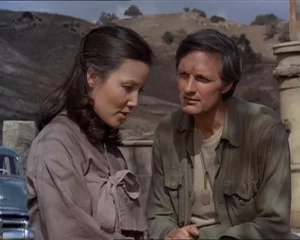
Throughout MAS*H, Margaret and Hawkeye maintained antagonistic relationship punctuated by moments of surprising tenderness. In “Comrades in Arms,” circumstances forced them together behind enemy lines overnight, creating intimacy that led to a brief romantic encounter. What made this episode’s romantic moments powerful wasn’t the physical intimacy but the emotional vulnerability both characters revealed.
Margaret admitted her fears and loneliness, dropping the “Hot Lips” persona to show the complicated woman beneath. Hawkeye revealed his own vulnerabilities and genuine respect for Margaret as a person rather than just a target for pranks. Their connection felt authentic because it emerged from specific circumstances—fear, isolation, shared danger—rather than manufactured romance. When they returned to camp and mutually agreed to pretend it never happened, the scene felt honest rather than disappointing. Some connections exist only in specific moments and trying to extend them beyond those moments diminishes rather than honors them.
Radar’s Dance with Nurse Able
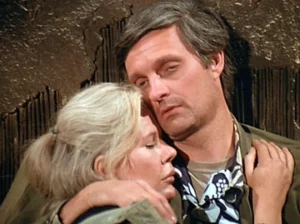
Radar O’Reilly’s innocent romance with Nurse Able provided one of MAS*H’s sweetest romantic moments. In “Love and Marriage,” Radar’s nervousness, his genuine affection, and his heartbreak when the relationship didn’t work out captured young love’s intensity and fragility. The scene where Radar and Nurse Able danced together, with Radar both thrilled and terrified, perfectly captured first love’s mixture of joy and anxiety.
What made this romantic storyline powerful was its honesty about Radar’s limitations. He wasn’t ready for adult relationship, and the show didn’t pretend otherwise. When things ended, Radar was hurt but not destroyed, learning that heartbreak is survivable and that not every connection leads to lasting relationship. This realistic portrayal of young romance—intense but ultimately temporary—honored the feelings’ authenticity while acknowledging they weren’t mature love.
Winchester and the French Piano Player
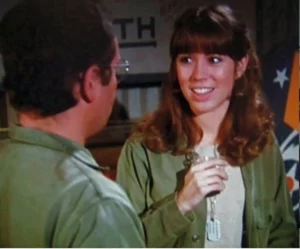
Charles Winchester’s brief relationship with a French pianist in “Morale Victory” revealed the aristocrat’s capacity for genuine romantic connection. Their shared love of classical music created immediate connection, and Winchester’s tenderness toward her contrasted sharply with his usual pomposity. Watching Winchester lower his defenses, allowing himself to be vulnerable and romantic, demonstrated that even the most armored people long for connection.
The relationship’s end—when the pianist returned to her fiancé—could have been melodramatic but instead felt honest. Winchester’s heartbreak was real, but he respected her choice, demonstrating emotional maturity beneath his usual bluster. This brief romance showed that meaningful connections don’t always lead to lasting relationships, but they change us nonetheless.
Colonel Potter and His Wife Mildred’s Letters
While never shown on screen together until late in the series, Colonel Potter’s relationship with his wife Mildred provided MAS*H’s model of enduring marriage. Potter regularly wrote letters to Mildred, sharing his day with tenderness and devotion that demonstrated decades-long love’s quiet power. His visible joy when receiving her letters, his casual references to shared history, and his absolute certainty about their relationship created a romantic through-line across multiple seasons.
The most powerful romantic moment came in “Letters,” when Potter read Mildred’s letter aloud and viewers heard her voice for the first time. Her words revealed a woman who understood her husband completely, who supported his work while missing him terribly, who maintained their connection through humor and honesty. This glimpse into their relationship demonstrated that romance doesn’t diminish after decades—it deepens into something more sustainable than passion but no less profound.
Klinger and Soon-Lee’s Cross-Cultural Love
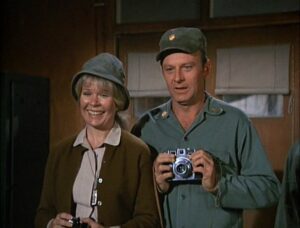
Maxwell Klinger’s relationship with Soon-Lee, introduced in the show’s final season, provided MAS*H with one of its most genuinely romantic storylines. Their courtship crossed cultural and language barriers, requiring genuine effort to communicate and understand each other. Klinger’s tenderness toward Soon-Lee, his patience with communication difficulties, and his willingness to stay in Korea after the war rather than abandon her demonstrated love as action rather than just feeling.
Their wedding in the series finale was one of few unambiguously happy romantic conclusions in MAS*H, and it earned its optimism through honest portrayal of the work required to build cross-cultural relationship. Klinger choosing to remain in Korea rather than finally getting the stateside discharge he’d spent years desperate to receive demonstrated that love sometimes means choosing new dreams over old ones.
BJ’s Near-Infidelity and Confession
One of MAS*H’s most honest romantic moments came when BJ Hunnicutt nearly cheated on his wife, then confessed the near-miss in a letter to Peg. This storyline could have been played for comedy or melodrama, but instead became a powerful examination of fidelity’s challenges during sustained separation. BJ’s temptation felt authentic—he was lonely, scared, and desperately missing physical intimacy. That he stopped before actual infidelity demonstrated character, but that he struggled at all demonstrated honesty.
The romantic power came from BJ’s decision to confess his near-betrayal to Peg despite safely getting away with it. His letter revealed understanding that intimacy requires honesty even when honesty is painful, that marriage survives through communication rather than just avoiding mistakes. This adult portrayal of marital challenge and the work required to maintain commitment across distance provided one of television’s most mature romantic moments.
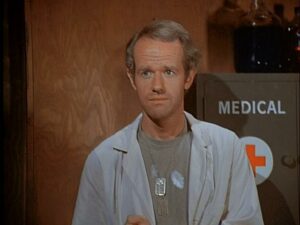
The Series Finale’s Goodbyes
The series finale’s various romantic farewells—BJ’s message to Hawkeye spelled out in stones, Margaret’s final kiss with multiple characters, Soon-Lee and Klinger’s hopeful beginning—created a tapestry of love in its various forms. The most powerful romantic moment might have been BJ’s “GOODBYE” spelled out for Hawkeye’s departing helicopter—a gesture of love between friends that transcended traditional romance but carried no less emotional weight.
These farewell scenes acknowledged that love takes many forms, that romantic love and platonic love and familial love all matter, all sustain us through impossible circumstances. The finale’s romantic power came from showing that surviving war requires love in all its varieties, that connection—romantic and otherwise—is what makes survival worthwhile.

Love’s Many Forms
These ten romantic moments demonstrate MAS*H’s sophisticated understanding that love in wartime looks different than peacetime romance but carries no less meaning. The show’s romantic moments were stolen kisses between surgeries, letters read repeatedly until worn, anniversaries celebrated alone, goodbyes that might be final, and connections that couldn’t survive war’s ending. They were imperfect, bittersweet, and profoundly human—proving that romance needs neither perfect circumstances nor guaranteed happy endings to move our hearts and remind us what makes life worth living.