MAS*H wasn’t primarily a romance series, but the love stories woven through eleven seasons added essential humanity to the show’s exploration of war’s impact. These weren’t typical television romances with perfect happy endings. They were complicated, messy, sometimes tragic relationships between people trying to find connection amid constant death and chaos. Some love stories offered hope, others ended in heartbreak, but all reminded viewers that even in hell, humans desperately seek intimacy and understanding. These ten relationships represent the full spectrum of love during wartime—passionate, tender, doomed, and unforgettable.
Hawkeye and Nurse Dish: The One Who Got Away
Hawkeye Pierce had countless brief romances throughout the series, but Nurse Dish represented something different—a woman he genuinely loved who he couldn’t have. Their relationship developed over several episodes, moving beyond physical attraction to real emotional connection. She understood his humor, matched his intelligence, and saw through his defenses to the wounded man beneath. But she was married, and despite their intense feelings, she ultimately chose to honor her commitment and return to her husband.
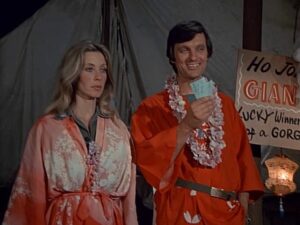
What made this love story so affecting was its realism. There was no dramatic villain keeping them apart, no external obstacle to overcome. Just the simple, painful reality that timing matters and good people sometimes fall for each other at the wrong moment. Hawkeye’s heartbreak felt authentic because the show didn’t try to villainize Nurse Dish’s husband or suggest she made the wrong choice. Sometimes love isn’t enough, and that truth resonates with anyone who’s experienced similar loss. The wistfulness in Hawkeye’s eyes whenever he remembered her captured how certain relationships haunt us forever, not because they were perfect but because we never got to see where they might have led.
BJ and Peg Hunnicutt: Marriage Tested by Distance
BJ Hunnicutt’s devotion to his wife Peg, waiting for him back in California with their daughter, provided the show’s most consistently portrayed marriage. Unlike many television depictions of faithful spouses, Peg wasn’t just a photograph and occasional letter—she felt like a real person whose presence shaped BJ’s every decision. His fidelity in an environment where casual affairs were normalized made him stand out, but the show never presented his commitment as easy or without temptation.
Several episodes explored the strain long separation placed on even strong marriages. BJ’s near-affair with a visiting nurse showed how loneliness and opportunity could threaten commitment. His guilt afterward, the way he confessed to Hawkeye and struggled with what he’d almost done, revealed marriage as active choice rather than passive state. The episode where technical difficulties prevented him from speaking to Peg on their anniversary, watching him break down in frustration and loneliness, captured how physical separation creates emotional distance no amount of love can fully bridge. Yet BJ persisted, writing endless letters, saving money for a call home, counting days until reunion. His marriage wasn’t television perfect; it was realistically hard work that he chose to keep doing. That made it beautiful.

Margaret and Donald Penobscot: When Dreams Become Nightmares
Major Margaret Houlihan finally seemed to have everything she wanted—marriage to a handsome lieutenant colonel who represented the military prestige she valued. The wedding episode felt like a fairy tale culmination of her journey from lonely woman seeking validation to confident bride. Then reality intruded. Donald proved to be a serial cheater, a narcissist who viewed Margaret as trophy rather than partner, someone fundamentally incompatible with the woman she was becoming.
The tragedy of this relationship wasn’t just its failure but what it revealed about Margaret’s internalized beliefs about her own worth. She’d convinced herself that military rank and social status equaled love, that she needed to change herself to deserve a man’s attention. Her devastation when the marriage collapsed came not just from losing Donald but from confronting how desperately she’d compromised her authentic self for a relationship that was never real. The scene where she sits sobbing, makeup running, finally admitting to Hawkeye that her marriage was a mistake, marked the beginning of her true transformation. Sometimes the most important love story is learning to love yourself enough to leave what’s destroying you.
Radar and His Virgin Innocence
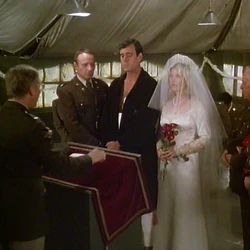
Radar O’Reilly’s awkward, fumbling attempts at romance provided some of MAS*H’s sweetest moments. His innocent crush on nurses who barely noticed him, his terror at actually getting romantic attention, his desperate need for connection mixed with complete inexperience created a poignant portrait of young love. When he finally lost his virginity to a nurse who treated the encounter as casual while it meant everything to him, the emotional aftermath captured how differently people can experience the same intimate moment.
What made Radar’s romantic storylines so moving was their honesty about how war accelerated young men’s coming-of-age in painful ways. He wanted romance, connection, maybe love, but the transient nature of the 4077th meant every relationship had an expiration date. His heartbreaks over women who rotated out or never took him seriously accumulated, gradually hardening someone who’d arrived almost childishly innocent. The show never mocked Radar’s romantic struggles despite playing them for occasional laughs. Instead, it honored his vulnerability and the courage required to keep trying despite repeated rejection. His story was every awkward young person’s first painful lessons about desire, rejection, and the gap between romantic fantasy and messy reality.

Hawkeye and Margaret: From Antagonism to Understanding
The relationship between Hawkeye and Margaret evolved more dramatically than perhaps any other on the show. They began as antagonists—she viewed him as an undisciplined troublemaker, he saw her as a uptight martinet. But over eleven seasons, genuine affection and respect developed beneath their constant bickering. They were never explicitly romantic in the conventional sense, but their connection contained more intimacy than many physical relationships on the show.
The turning point came during Margaret’s divorce, when Hawkeye provided comfort without his usual jokes or advances. She saw him as more than a clown; he recognized her as more than Hot Lips. From that point, their relationship deepened in subtle ways—the way they looked at each other during surgery, the protective instinct Hawkeye showed when Margaret faced danger, her willingness to confide in him about things she told no one else. The finale, when they shared a genuine goodbye acknowledging years of complicated connection, felt like two people who might have loved each other romantically in different circumstances instead becoming something equally valuable—truly understood friends. Their relationship proved that love takes many forms, and the bonds forged through shared trauma and mutual respect can run deeper than romance.
Colonel Potter and His Bride Mildred
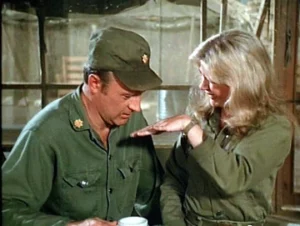
Potter’s marriage to Mildred, conducted entirely long-distance during his time at the 4077th, provided the show’s most mature love story. These weren’t young people discovering romance but a couple who’d built decades together facing the challenge of prolonged separation. Potter’s love for his wife manifested in daily rituals—painting her portrait, reading her letters multiple times, talking about her constantly to anyone who’d listen. His fidelity was so absolute that temptation never even registered.
What made this love story beautiful was its ordinariness. Potter wasn’t tortured or conflicted; he simply loved his wife and counted days until he could return to her. In a show full of complicated relationships and moral ambiguity, Potter’s uncomplicated devotion provided an anchor. The episode where he received a Dear John letter, believing Mildred had left him, showed how completely his identity was bound to their marriage. His devastation, followed by relief when the letter was revealed as a prank, demonstrated that even after decades, the prospect of losing your partner can feel like losing yourself. Their relationship reminded viewers that lasting love is possible, that commitment can endure separation, and that some people are lucky enough to find their perfect match.
Charles Winchester and French Singer: Beauty Meeting Beauty
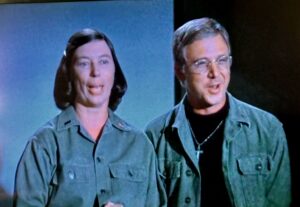
Charles Winchester’s brief romance with a French singer provided a rare glimpse of him genuinely vulnerable and happy. She appreciated his love of classical music, his cultured tastes, and his sharp intellect without requiring him to downplay these aspects of himself. For once, Charles didn’t need his usual defensive arrogance because he’d found someone who valued what he valued. Their connection was brief but profound, two sophisticated people discovering unexpected compatibility in a war zone.
The tragedy came when she had to leave, returning to her life while Charles remained at the 4077th. Their goodbye captured the particular sadness of wartime romance—these intense connections formed under extraordinary circumstances that probably couldn’t survive in the regular world. Charles’ heartbreak was especially poignant because it was so rare to see him emotionally open. She’d given him a glimpse of the life he might have had, the kind of partnership his soul craved, then disappeared. David Ogden Stiers played Charles’ grief with such restrained devastation that you felt decades of loneliness behind that single loss.

Klinger and His Multiple Failed Attempts at Love
Corporal Klinger’s romantic life provided both comedy and surprising pathos. His long-distance engagement to Laverne back in Toledo gradually fell apart as she moved on with her life while he remained trapped in Korea. His subsequent attempts to find love at the 4077th—falling for nurses, Korean women, anyone who showed interest—revealed desperate loneliness beneath his constant schemes to get discharged.
What made Klinger’s romantic storylines affecting was how they showed displacement’s emotional toll. He’d built an entire identity around getting home to the life he’d left, but that life was disappearing without him. Each failed romance was another reminder that time was passing, that he was missing his youth, that the world back home no longer included a place for him. When he finally found love with Soon-Lee in the final season and chose to stay in Korea after the war to help her find her family, it represented acceptance that you can’t go back—only forward into whatever new life circumstances create.

Father Mulcahy and His Calling
Father Mulcahy’s love story wasn’t with another person but with his vocation as a priest. Several episodes explored his occasional doubts, moments when he questioned whether he’d chosen correctly by taking vows that precluded romantic love. When an old flame appeared, representing the life he might have had, his struggle felt genuine rather than perfunctory. But ultimately, Mulcahy’s deepest love was for service, for providing comfort to suffering people, for living out his faith through action.
This unconventional love story reminded viewers that romantic partnership isn’t the only form of meaningful connection. Mulcahy’s devotion to his calling, his consistent sacrifice for others, his finding of purpose through service represented love in its most selfless form. The respect and affection the camp showed him in return proved that love can be reciprocated in non-romantic ways. His was a love story about finding meaning through commitment to something larger than yourself.

The Collective Romance: The 4077th as Family
Perhaps the greatest love story in MAS*H was the collective bond between everyone at the 4077th. Over eleven seasons, these disparate people became family in ways that transcended biology or romance. They celebrated each other’s victories, mourned each other’s losses, forgave each other’s failings, and chose each other day after day despite having every reason to walk away.
The finale’s extended goodbyes captured this perfectly—these weren’t just coworkers separating but people who’d loved each other through shared hell. BJ’s giant “GOODBYE” spelled in stones, Margaret’s tears saying farewell to her nurses, Potter saluting his people one final time, everyone hugging before helicopters took them to separate futures—these moments acknowledged that sometimes the deepest love comes from choosing to show up for each other when everything is terrible. That commitment, that persistent caring in impossible circumstances, proved that love’s truest definition is deciding someone matters and honoring that decision through action.