When MASH premiered in 1972, nobody expected a comedy set in a Korean War surgical hospital would become one of television’s most beloved shows. Yet for eleven seasons, the series delivered comedy gold through brilliant character interactions that still make audiences laugh decades later. The magic wasn’t just in the writing—it was in the chemistry between actors who understood their characters so deeply that every scene crackled with authentic energy. From elaborate pranks to quick-witted banter, from physical comedy to perfectly timed reactions, MASH created comedic moments that have become legendary in television history.
What separated MAS*H’s humor from typical sitcom fare was its foundation in character truth. The laughter emerged organically from personalities clashing, bonding, and surviving together under impossible circumstances. Every joke revealed something about who these people were and what they meant to each other. The comedy served a deeper purpose: helping doctors, nurses, and soldiers maintain sanity while surrounded by the insanity of war. These weren’t just funny scenes—they were survival mechanisms wrapped in laughter, making them resonate with emotional depth that purely comedic shows could never achieve.
Hawkeye and Trapper Steal Henry’s Desk
In “To Market, To Market,” Hawkeye and Trapper execute television’s most audacious theft when they trade Colonel Blake’s brand-new oak desk on the black market to secure desperately needed hydrocortisone. The genius of this scene lies in watching them maintain perfect innocence while Henry tears apart the camp searching for his beloved desk. Their performance combines deadpan delivery with barely suppressed smirking as they offer increasingly absurd theories about the desk’s disappearance. When they finally confess, justifying grand larceny with medical necessity, Henry’s exasperated acceptance showcases the show’s unique moral universe where the right thing often requires bending rules. The interaction between Alan Alda and Wayne Rogers demonstrates comedic partnership at its finest—their timing so precise, their chemistry so natural, that watching them conspire feels like eavesdropping on actual mischief rather than scripted comedy.
Five O’Clock Charlie’s Daily Bombing Runs
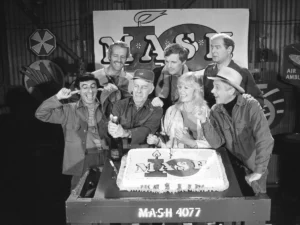
The recurring character of Five O’Clock Charlie—an incompetent North Korean pilot who attempts bombing the nearby ammunition dump every day at exactly five o’clock—provides absurdist comedy perfection. The hilarity comes from watching the camp’s evolution from terror to affection for this hapless enemy pilot who couldn’t hit a target if his life depended on it. When Frank Burns demands anti-aircraft guns to shoot Charlie down, Hawkeye and Trapper sabotage the effort because Charlie’s terrible aim has rendered him harmless and his persistence endearing. The scene where the entire camp gathers like spectators at a baseball game to watch Charlie’s daily failed attempt captures MAS*H’s sophisticated humor—finding humanity in enemies, revealing war’s absurdity, and celebrating incompetence when it prevents bloodshed. The payoff comes when our heroes actually help Charlie improve his aim so he might hit something and get reassigned, turning military logic completely upside down.
Klinger’s Outrageous Section 8 Schemes
Corporal Max Klinger’s endless attempts to earn a psychiatric discharge created some of television’s most memorable comedy. Jamie Farr’s portrayal of a man wearing everything from evening gowns to Carmen Miranda fruit-hat costumes elevated what could have been one-note joke into beloved character comedy. The brilliance lies not in the cross-dressing itself but in everyone’s weary familiarity with Klinger’s latest scheme. Colonel Potter’s deadpan reaction to Klinger appearing in a full Cleopatra costume, complete with asp, asking if Klinger registered his china pattern anywhere showcases the perfect straight-man response to escalating absurdity. Each failed attempt only increases Klinger’s determination—claiming alien citizenship, attempting to eat a jeep, insisting he’s in love with a lamp post. The running gag never grows stale because it reveals Klinger’s resourcefulness, desperation, and paradoxically, his growing dedication to his fellow soldiers even while scheming to abandon them.
Adam’s Ribs Obsession Reaches Fever Pitch
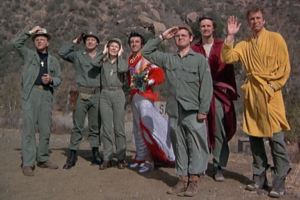
When Hawkeye becomes obsessed with getting authentic barbecue ribs from his favorite Chicago restaurant airlifted to Korea, the episode becomes a masterclass in escalating comedic obsession. Alan Alda’s performance captures a man driven to near-madness by monotonous military food, delivering increasingly passionate monologues about liver and fish with theatrical desperation. The comedy builds as Hawkeye actually succeeds in coordinating international rib delivery with the intensity someone might coordinate medical supplies. The interaction between Hawkeye’s passionate food speeches and everyone else’s bemused reactions creates humor through contrast. When the ribs finally arrive and the entire camp treats delivered barbecue like sacred relics, the scene transforms simple comedy into something more profound—a meditation on what small pleasures mean to people enduring hardship. Watching grown adults debate rib quality with scientific precision before that first reverent bite makes the absurd feel deeply human.
Deal Me Out’s Poker Game with Whiplash Wang
The all-night poker game in “Deal Me Out” showcases every character’s personality through their playing styles while guest star Pat Morita steals scenes as South Korean officer “Whiplash Wang.” Morita’s character attempting to master American slang while cleaning everyone out at poker creates comedy magic—his delivery of idioms with perfect timing but slight confusion generates genuine hilarity. When he cheerfully declares “Up yours, Frank!” having learned the phrase without understanding its full context, the table erupts in laughter that feels spontaneous rather than scripted. The episode’s brilliance lies in weaving multiple storylines around this marathon card game—Hawkeye and Trapper operating between poker hands, Frank’s incompetence, Klinger’s schemes—all centered on cards and conversation. The interplay between players, their trash talk, tells, and reactions creates a microcosm of the entire show’s dynamic, demonstrating how MAS*H could make simple situations endlessly entertaining through character chemistry.
Frank Burns Gets His Comeuppance Repeatedly
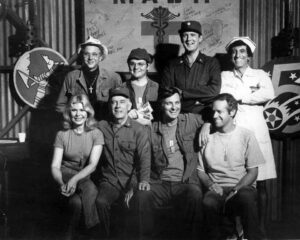
Larry Linville’s portrayal of Frank Burns created television’s most satisfyingly hateable character, making every instance of his humiliation absolutely delicious. Frank’s combination of pomposity, incompetence, and cowardice made him the perfect target for elaborate pranks. Countless scenes showcase Frank suffering various indignities—locked in footlockers, finding quarters filled with medical equipment, discovering uniforms dyed pink. The physical comedy of watching Frank sputter with indignation, his face progressively reddening as realization dawns, never grows old because Linville commits completely to every moment. One legendary scene features Frank attempting to report Hawkeye and Trapper to Blake, only to have his complaint undercut when Blake discovers Frank’s own violations. The beauty of Frank Burns comedy is its justice—every comeuppance feels earned because Frank is genuinely awful. Whether pompously lecturing about protocol before tripping over equipment or attempting to impress Hot Lips with bravado that immediately backfires, Frank provides endless schadenfreude that remains satisfying decades later.
Radar’s Innocent Reactions to Adult Situations
Gary Burghoff’s portrayal of Corporal Radar O’Reilly created comedy through innocence colliding with the adult world of military medicine. Radar’s naive reactions to sexual innuendo, alcohol, and romantic situations provided gentle humor that contrasted beautifully with the show’s more cynical edge. One memorable scene features Radar offering Dr. Freedman whiskey as if it were soda pop, his innocent hospitality clashing hilariously with the inappropriateness of offering psychiatrists alcohol. His tendency to blush, stammer, and retreat when conversations turned adult created running comedy that felt affectionate rather than mean-spirited. The genius of Radar’s character was making innocence funny without making it stupid—he was competent, intelligent, and essential to camp operations while remaining endearingly naive about worldly matters. His relationship with his teddy bear, his grape Nehi obsession, and his stumbling attempts to impress nurses created humor rooted in genuine sweetness, providing the show moments of pure lightness amid darker material.
Colonel Flagg’s Paranoid Lunacy
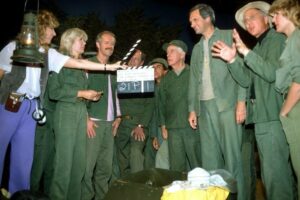
Edward Winter’s recurring character Colonel Sam Flagg, a paranoid CIA intelligence officer, brought manic energy that elevated every episode he appeared in. Flagg’s combination of muscular physicality, squinting intensity, and complete psychological instability created comedy through sheer unpredictability. His entrance scenes alone were worth watching—bursting through doors, jumping from windows, materializing from nowhere with wild conspiracy theories about communist infiltration. The interaction between Flagg’s insane certainty about enemy agents hiding everywhere and the camp’s weary tolerance of his madness created perfect comedic contrast. When Flagg would interrogate random soldiers with aggressive paranoia or perform karate demonstrations unprompted, the comedy came from everyone’s resigned acceptance of his lunacy. One memorable scene features Flagg punching himself in the face to demonstrate toughness, leaving the entire camp staring in stunned silence. Winter played Flagg with such committed intensity that his appearances became events—you never knew what crazy thing he’d do next, but you knew it would be hilarious.
Potter’s Folksy Wisdom Meets Pure Chaos
When Harry Morgan joined as Colonel Sherman Potter, he brought grandfatherly exasperation to the show’s comedy. Potter’s folksy expressions and horse metaphors clashing with surrounding chaos created a new dynamic. His patient tolerance of Hawkeye’s antics, Klinger’s schemes, and Winchester’s pomposity produced consistently funny moments rooted in bemused authority trying to maintain order in an asylum. One particularly memorable scene shows Potter attempting normal staff meetings while increasingly bizarre interruptions occur—Klinger in drag, emergencies, pranks—testing his legendary patience. His signature exclamation “Horse hockey!” became an iconic expression of military-appropriate frustration. The comedy worked because Morgan played Potter as genuinely competent and caring, making his befuddlement more endearing than angry. Watching Potter explain basic military common sense to Hawkeye, who cheerfully ignores it while maintaining perfect respect, created a relationship built on mutual affection despite opposing worldviews. Potter’s occasional participation in camp pranks—like joining schemes against pompous visiting generals—made those moments funnier because they were special rather than constant.
Winchester’s Aristocratic Superiority Gets Punctured
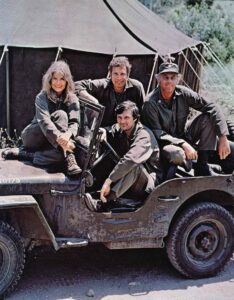
David Ogden Stiers’ Charles Emerson Winchester III brought sophisticated comedy through his Boston Brahmin superiority clashing with the 4077th’s egalitarian chaos. Winchester was actually competent, intelligent, and cultured, making his pomposity more nuanced than Frank Burns’ incompetent bluster. The comedy came from watching Winchester attempt to maintain civilized standards—proper dress, classical music, gourmet cuisine—in primitive conditions. His genuine horror at camp conditions, delivered with theatrical disdain, made even simple situations funny. When Hawkeye and B.J. punctured Winchester’s superiority with pranks or superior medical knowledge, his sputtering indignation felt different from Frank’s—Winchester knew he’d been beaten, his aristocratic facade cracking to reveal grudging respect underneath. One legendary storyline featured Winchester attempting to prove cultural superiority by performing with a local opera company, only to discover hidden talents among camp mates he’d dismissed as uncultured. The beauty of Winchester comedy lay in its complexity—he could be pompous and sympathetic simultaneously, his snobbery both ridiculous and occasionally justified, creating more sophisticated and ultimately more satisfying comedic moments.
MASH’s comedy endures because it was never just about getting laughs—it was about revealing human truth through humor. These ten scenes represent a fraction of the show’s brilliant funny moments, but they exemplify what made MASH special. The comedy emerged from authentic characters responding to impossible situations with humor as survival mechanism. Whether through elaborate pranks, perfect timing, physical comedy, or sharp dialogue, MAS*H proved that laughter and drama could coexist, that comedy could have depth, and that the funniest moments often reveal the deepest truths about human nature. Decades later, these scenes still make audiences laugh not just because they’re funny, but because they’re true.