MASH achieved something remarkable in television history—it depicted war not as adventure, heroism, or political statement, but as chaotic human tragedy that destroys everyone it touches. While most war stories focus on battlefield glory or clear moral victories, MASH showed the grinding reality of patching together broken bodies while the violence that created them continued endlessly. These ten episodes represent the show at its most unflinching, revealing war’s truths with a clarity that remains shocking decades later.
“The Bus” – War’s Random Violence
Season four’s “The Bus” captures war’s most terrifying quality—its complete randomness. When the 4077th staff become stranded in enemy territory with a broken-down bus, the episode transforms into a masterclass in sustained tension and mounting dread. What makes this portrayal so effective is the absence of heroics or clear enemies. The danger is omnipresent but invisible, coming from nowhere and everywhere simultaneously.
The episode brilliantly depicts how war creates constant low-level terror that grinds down psychological defenses. The staff aren’t facing dramatic battles—they’re simply exposed, vulnerable, and acutely aware that death could arrive without warning or reason. This reflects actual combat experience far more accurately than firefight sequences. Most people in war zones don’t die in cinematic confrontations; they die randomly, pointlessly, while doing ordinary things like riding a bus.
The psychological realism extends to how different characters respond to sustained danger. Some become hypervigilant, others retreat into dark humor, some freeze with fear, and others obsess over meaningless details to maintain control. These are authentic trauma responses that war veterans consistently report but which entertainment rarely depicts honestly. The episode shows war as tedious terror interrupted by moments of panic—the reality soldiers know but civilians rarely understand.
“Sometimes You Hear the Bullet” – The First Death Hits Different
This season one episode represents MAS*H’s first major tonal shift toward serious war commentary. When Hawkeye’s childhood friend dies on his operating table, the episode confronts something fundamental—war isn’t abstract tragedy; it’s specific people you know suddenly being gone forever. The title refers to the myth that you never hear the bullet that kills you, but the episode suggests something worse: sometimes you do hear it coming, and that knowledge doesn’t help.
What makes this episode’s war portrayal powerful is its focus on the personal cost of professional detachment. Hawkeye has maintained emotional distance from patients as a survival mechanism, treating bodies rather than people. When someone he actually knows dies, that defense collapses. The episode reveals how medical personnel in war survive psychologically—through carefully constructed emotional walls that occasionally crack with devastating consequences.
The B-plot involving a young soldier lying about his age to enlist adds another layer of war’s reality. He represents the countless young people who enter war with romantic notions and die before understanding what they’ve gotten into. Hawkeye’s decision to expose the lie and send him home is both mercy and tragedy—the boy wants to stay and “fight for his country” while Hawkeye knows that patriotic language obscures the grinding reality of watching friends die for unclear reasons.
“The Interview” – Soldiers Tell Their Own Stories
Formatted as a documentary-style interview with a news correspondent, this episode gives voice to soldiers describing their war experiences in their own words. The black-and-white cinematography and improvised-feeling dialogue create uncomfortable authenticity. Actors break the fourth wall and speak directly to the camera, creating intimacy that forces viewers to confront these people as real rather than characters.
What makes this portrayal devastating is its ordinariness. No one tells dramatic war stories—they describe boredom, frustration, homesickness, and the surreal disconnect of performing surgery while artillery pounds nearby. This reflects actual war correspondence where soldiers rarely discuss battles but instead talk about missing coffee, worrying about families, or the bizarre humor that emerges in terrible circumstances.
The episode’s genius lies in what it doesn’t show. We never see combat, only its aftermath in the operating room. This focus on consequences rather than action reveals war’s reality more honestly than battle sequences ever could. The surgeons describe casualties as an endless conveyor belt of broken bodies, each one representing a destroyed life and shattered family. War becomes not a series of dramatic moments but a grinding process of damage and repair that never stops and never means anything.
“Dear Dad, Three” – The Bureaucracy of Death
This early episode follows a single day at the 4077th, showing the routine nature of war casualties. What makes this portrayal powerful is the juxtaposition of mundane activities—paperwork, meals, casual conversations—with the constant arrival of wounded and dying soldiers. The episode reveals how war normalizes horror through repetition until processing death becomes just another administrative task.
The character of Captain Ugly demonstrates war’s dehumanizing process. A soldier arrives so severely wounded that his face is unrecognizable, requiring staff to invent a name for records. He exists in bureaucracy only as “Captain Ugly”—war has literally erased his identity. When he dies, the episode treats this not as tragedy but as routine outcome, another form to fill out and body to process. This bureaucratization of death represents war’s most insidious psychological damage.
The episode also confronts medical triage’s brutal reality—deciding who gets treatment based on survival probability rather than need. This moral calculus, where doctors must sometimes let saveable people die to save those with better odds, represents war’s cruelest demand on medical personnel. The episode doesn’t glorify these decisions or suggest they’re noble—it shows them as soul-destroying necessities that haunt people forever.
“Aid Station” – The Chaos of Front-Line Medicine
When Hawkeye and Margaret get trapped at a front-line aid station, the episode depicts combat medicine’s terrifying immediacy. Unlike the relative safety of the 4077th, aid stations operate within enemy artillery range with minimal equipment and constant danger. The episode shows medicine under fire as controlled chaos where nothing works properly and death is often inevitable regardless of skill or effort.
The portrayal includes details rarely depicted in war entertainment—the shortage of basic supplies forcing impossible choices, the physical exhaustion that makes hands shake during surgery, the sounds of combat so close that you can’t determine if you’re about to be hit. Margaret’s breakdown under pressure reveals how even experienced personnel reach psychological limits when stress becomes unbearable. Her vulnerability humanizes the military nurse stereotype, showing the real person beneath the uniform.
What makes this episode’s war portrayal exceptional is its refusal to provide comfort or resolution. Hawkeye and Margaret survive through luck rather than skill or heroism. Their survival is arbitrary, and the episode doesn’t pretend otherwise. War isn’t about the strong surviving and weak perishing—it’s about random chance determining who lives and who dies, rendering courage and competence often irrelevant.
“Preventative Medicine” – The Moral Compromise War Demands
This controversial episode confronts a question most war stories avoid—is it morally acceptable to harm one person to save many others? When a reckless colonel keeps sending men into pointless, deadly patrols, Hawkeye considers performing unnecessary surgery to remove him from command. The episode explores how war creates moral situations where all choices are wrong and inaction itself becomes a choice with consequences.
The episode’s brilliance lies in its refusal to provide easy answers. B.J. argues that doctors must never deliberately harm patients regardless of circumstances, while Hawkeye contends that letting soldiers die when you could prevent it violates the same principle. Neither position is clearly right; the episode shows war creating ethical dilemmas where traditional moral frameworks collapse. This reflects actual wartime experience where people face decisions no training prepared them for and where any choice requires becoming someone you never wanted to be.
The portrait of the colonel represents another war truth—dangerous incompetence often hides behind authority. He isn’t evil; he’s a mediocre officer who believes his own propaganda and can’t conceive that his decisions kill people. War enables such figures, protecting them through hierarchy while their mistakes accumulate bodies. The episode asks whether good people should break moral rules to stop bad people protected by systems, a question that haunts every war.
“Dreams” – The Psychological Toll Made Visible
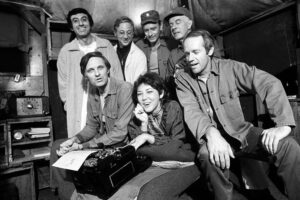
By presenting each character’s war-related nightmares, this surreal episode externalizes the psychological damage that accumulates invisibly. The dreams reveal what characters won’t or can’t consciously acknowledge—their trauma, guilt, fear, and grief. This approach to depicting war’s psychological cost is more honest than typical PTSD portrayals because it shows how trauma infiltrates subconscious thought before conscious symptoms emerge.
Hawkeye’s dream of operating on family members reveals his deepest fear—that emotional detachment is failing and everyone on his table is becoming someone he loves dying repeatedly. Margaret’s dream of being inspected and found wanting exposes how military culture demands impossible perfection while offering no support for inevitable failure. These nightmares aren’t dramatic; they’re anxiety manifestations that real trauma produces, showing how war damages people in mundane, grinding ways rather than single catastrophic moments.
The episode’s refusal to explain or resolve these dreams mirrors trauma’s reality. The characters wake disturbed but unable to fully process what their subconscious is trying to communicate. This accurately reflects how psychological damage from war often operates below conscious awareness, emerging in dreams, sudden emotional reactions, or inexplicable behavior changes that people can’t understand or control.
“The Moose” – War’s Effect on Innocence
When a Korean child befriends the camp seeking protection, this episode explores war’s impact on children forced to grow up in conflict zones. The child, nicknamed “The Moose,” has learned to navigate military bureaucracy, trade in black market goods, and manipulate adults for survival—skills no child should need. The episode shows how war destroys childhood itself, forcing children to become hard, calculating, and emotionally guarded.

The camp staff’s attempts to help ultimately fail because they can’t change the fundamental situation. They can provide temporary safety and kindness, but the war continues and the child must return to surviving within it. This reflects the profound helplessness war creates—even good people with resources often can’t fix the damage surrounding them. Their efforts provide brief respite but change nothing systemically.
The episode’s ending refuses sentimentality. The child leaves without dramatic goodbyes or life-changing revelations. War has taught him that emotional attachments are dangerous and that survival requires moving forward without looking back. This pragmatic hardness in a child represents one of war’s cruelest consequences—the destruction not of life but of the capacity to live fully.
“Quo Vadis, Captain Chandler” – When Reality Becomes Unbearable
This episode confronts a profound question—what happens to people who psychologically can’t survive war? A bombardier convinced he’s Jesus Christ arrives at the 4077th, his delusion a complete break from a reality too terrible to endure. The episode explores how some people escape war not through death or discharge but through psychological retreat into safer internal worlds where they don’t have to acknowledge what they’re experiencing or doing.
Sidney Freedman’s approach to Captain Chandler reveals both psychology’s limits and its compassion. He can’t cure the delusion because the reality it protects against remains. Removing the delusion without removing the trauma would be cruelty rather than healing. The episode suggests that sometimes psychological symptoms aren’t problems to solve but adaptations to impossible situations, and removing them without changing circumstances may cause more harm than good.
The parallel between Captain Chandler’s religious delusion and the military’s own faith-based rhetoric highlights war’s surreal quality. Everyone operates on beliefs disconnected from observable reality—Chandler believes he’s the Messiah while generals believe the war has meaning and purpose. The episode questions which delusion is more dangerous: the one that makes an individual dysfunctional or the collective one that makes war possible in the first place.
“Goodbye, Farewell and Amen” – War’s Ultimate Cost
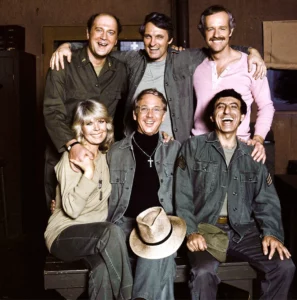
The series finale confronts the hardest war truth—some damage can never be repaired. Hawkeye’s breakdown and the revelation of what he witnessed forces acknowledgment that war doesn’t end when fighting stops. Psychological trauma continues long after, manifesting in ways that destroy people years or decades later. The finale refuses the comfort of healing or closure, showing instead that some experiences fundamentally break people and that “moving on” often means learning to function despite permanent damage.
The image of the 4077th dismantling and disappearing is deeply symbolic—the war ends but leaves nothing behind except empty ground where people suffered. There’s no monument, no lasting recognition, just the return to ordinary landscape that gives no hint of what occurred there. This reflects war’s temporal nature—it consumes everything while happening but leaves little physical trace, making it easy for those who weren’t there to forget or minimize what occurred.
The final shots of characters leaving separately rather than together acknowledges that shared trauma doesn’t necessarily create lasting bonds. People survive together but carry their damage individually, and often the healthiest response is to separate from reminders of what you endured. The finale depicts war’s aftermath not as triumphant return or tragic ending but as confused dispersal of damaged people trying to figure out how to keep living with what they’ve seen and done.
Why These Episodes Still Matter
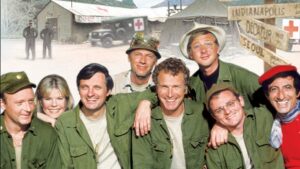
These ten episodes prove that MAS*H achieved something rare—honest war portrayal that respects both viewers and subjects. The show refused to sanitize, romanticize, or exploit war for entertainment while still remaining watchable and impactful. These episodes don’t tell you what to think about war; they show you what war does to people and trust you to draw conclusions.
The portrayals remain relevant because war’s fundamental nature hasn’t changed. Technology evolves but the human cost—death, trauma, moral injury, and psychological damage—remains constant. These episodes speak to every conflict because they focus on universal human experiences rather than specific political or historical contexts. They remind us that war stories should center on human cost rather than military strategy or political justification, and that honest portrayal serves memory better than propaganda or entertainment spectacle.